Taita Taveta County is stepping up rice production through improved seed, farmer training and local processing as Kenya seeks to bridge the gap between domestic rice production and consumer demand.
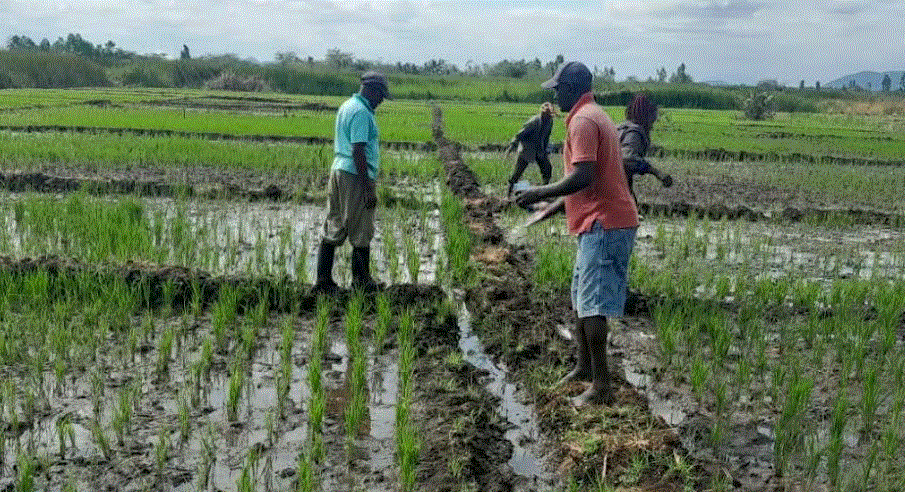
The county government, in partnership with the Kenya Red Cross, has distributed 3,920 kilogrammes of Komboka rice seeds to 196 farmers in Taveta Sub-County ahead of the October-November-December (OND) rains season.
Beneficiaries are drawn from Madarasani, Kimorigo, Eldoro and Patani Hill, where the intervention aims to improve yields, strengthen household food security and increase farmer incomes.
Kenya Red Cross, County Coordinator, Evelyn Kisamo, said the initiative would help farmers increase production and earn better returns from rice farming.
“We’ve targeted rice farmers with a new type of rice seed to increase production, improve food security, and make it possible for farmers to draw a meaningful living from their efforts,” Kisamo said.
She said the Kenya Red Cross was also supporting demonstration farms at Buruma in collaboration with the County Department of Agriculture and training Kiwalwa rice farmers to identify pests and diseases.
The training is intended to improve crop management, productivity and household food security, she added.
Taveta Sub-County Agriculture Officer Charles Onyango said the county was targeting yields of four tonnes per acre to increase production and supply its newly operational rice milling plant.
“This seed distribution aims to increase productivity to a target of four tonnes per acre. Ultimately, we want to have enough supply for our recently completed rice milling plant,” Onyango said.
The distribution builds on wider county efforts to expand rice farming and strengthen local processing.
In his 2025 State of the County Address draft, Governor Andrew Mwadime outlined plans to expand the Buruma rice scheme from 18,000 acres to 30,000 acres.
The county also reported, in its 2023–2025 three-year agriculture department scorecard, distributing 16.35 tonnes of fertiliser to 200 farmers affiliated to Uswi Cooperative in Mboghoni Ward to support food production.
Operationalisation of the rice milling plant in 2026 marks another step towards adding value to locally grown rice.
Sustaining its operations will, however, require adequate supplies of paddy rice and effective arrangements for receiving, processing and marketing farmers’ produce.
The county’s efforts come amid a national rice supply deficit that leaves Kenya reliant on imports to meet domestic demand.
The Agriculture and Food Authority estimates annual rice demand at 1.2 million tonnes, against domestic milled production of 182,030 tonnes. Rice imports reached 582,500 tonnes in 2025 at a cost of Sh23.7 billion, according to the authority.
Increasing production in rice-growing counties is therefore central to efforts to strengthen food security, reduce pressure on foreign exchange and retain more value within the domestic agricultural economy.
Rice is among the agricultural value chains prioritised under the national Bottom-Up Economic Transformation Agenda (BETA), which seeks to raise agricultural productivity, promote agro-processing and reduce reliance on imported food.
For Taita Taveta County and the country at large, the focus now shifts to expanding acreage under rice, ensuring access to improved seeds and affordable farm inputs, strengthening water management and improving farmers’ access to markets.
By Arnold Linga Masila