

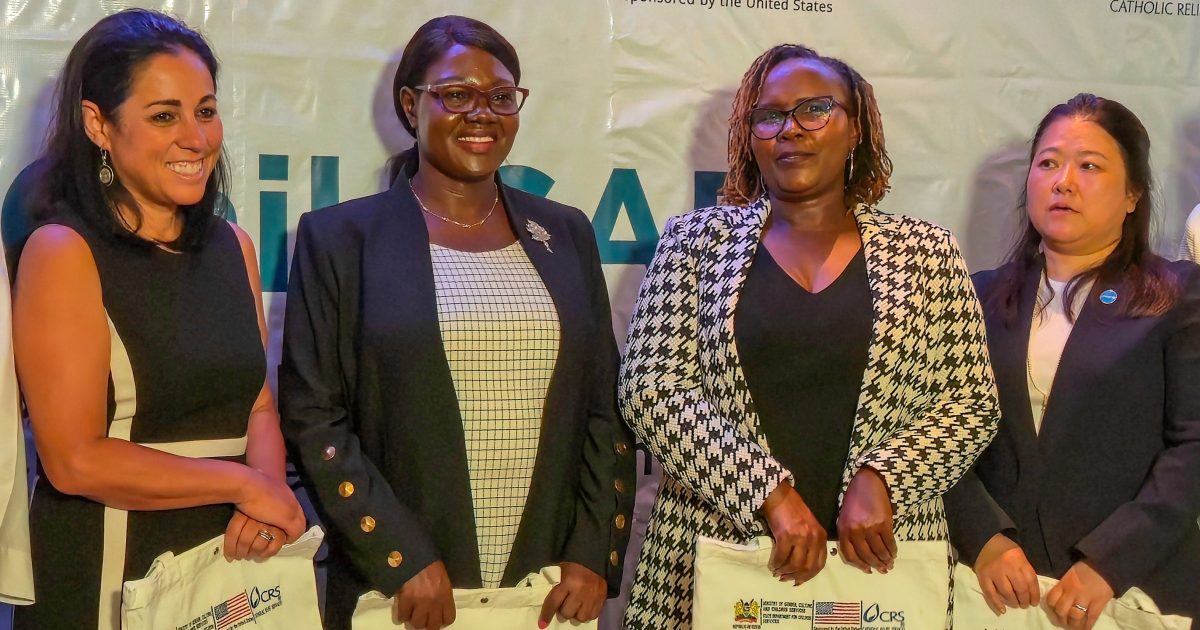
The United States Government has committed approximately Sh623 million (US$4.8 million) to strengthen child protection systems in Kenya, as the country intensifies efforts to address child abuse, neglect, and unnecessary separation of children from their families.
Specifically, the funding comprises US$3.8 million for Catholic Relief Services (CRS) programming and an additional US$1 million contribution to UNICEF, supporting interventions targeting vulnerable children.
The commitment forms part of the wider US$34 million ChildSAFE initiative, which is being implemented in nine countries to strengthen child protection systems and promote family-based care.
Speaking during the launch of the ChildSAFE Kenya Initiative in Nairobi, Principal Secretary (PS) for Children Services CPA Carren Ageng’o pointed out that the investment would complement government efforts to address the growing number of children requiring protection and support.
Ageng’o disclosed that Kenya recorded 222,267 child protection cases during the 2025/2026 financial year, with approximately 70 per cent involving parental neglect.
She further revealed that about 40,000 children were living in 902 childcare institutions across the country, with more than 70 per cent potentially eligible for reintegration into family- and community-based care.
“We must strengthen families and communities to ensure that children grow up in safe and supportive environments, rather than being placed in institutions when their needs can be addressed within their families,” urged the PS.
In addition, she highlighted that the government was prioritising family strengthening, foster care, and reintegration programmes as part of a broader shift towards family-based care.
Equally, the PS also announced plans to strengthen the Child Protection Information Management System (CPIMS), including the development of a digital application to improve the reporting, referral, and tracking of child abuse cases.
“Strengthening our reporting and case management systems will enable us to identify children at risk, respond to cases more effectively, and ensure that those in need receive timely protection,” Ageng’o explained.
The Government, she added, is also expected to introduce strengthened standards for childcare institutions by the end of November 2026 to improve accountability and the quality of care.
In her remarks, Heidi O’Bray, Health Lead at the Office of Foreign Assistance at the US Embassy in Nairobi, reaffirmed the American government’s commitment to supporting child welfare programmes, noting that the financial assistance formed part of broader international efforts to improve the safety and well-being of vulnerable children.
O’Bray outlined the US contribution of US$3.8 million towards CRS programming and US$1 million to UNICEF, while noting that the wider ChildSAFE initiative represented a US$34 million commitment across nine countries.
Conversely, CRS Kenya Country Representative Margaret Kahiga observed that the initiative would focus on strengthening child protection systems through early childhood development, family strengthening, and alternative care for children who could not safely remain with their biological families.
“Protecting children requires us to address the challenges facing families and communities while ensuring that vulnerable children receive the care and support they need,” stated Kahiga.
She also emphasised the importance of collaboration between government agencies, development partners and communities in preventing abuse, neglect and unnecessary family separation.
Samuel Ochieng, Assistant Director at the State Department for Children Services, on the other hand, maintained that strengthening child protection infrastructure was essential in improving the identification, reporting and management of cases.
He highlighted the need to enhance case management, improve referral and escalation mechanisms, map childcare institutions, and strengthen foster care and family reintegration services.
Ochieng equally stressed that better coordination among institutions would improve the response to reported cases and ensure vulnerable children received appropriate interventions.
Concurrently, Khadija Karama, Technical/Deputy Programme Director at Changing the Way We Care (CTWWC) Kenya, reiterated that strengthening family-based care was central to preventing unnecessary institutionalisation of children.
“Strengthening families and community structures is critical in preventing unnecessary separation of children from their parents and ensuring that every child grows up in a safe and supportive environment,” said Karama.
She therefore called for sustained investment in family and community support systems to ensure children received appropriate care while remaining in safe family environments.
Meanwhile, the ChildSAFE Kenya Initiative brings together Government agencies, development partners and community organisations to strengthen child protection systems, improve response mechanisms, and promote sustainable family-based care for vulnerable children.
By Sharon Njeru and Nancy Omondi
