The government is seeking to overhaul Kenya’s livestock production and veterinary service systems through two proposed policies, aimed at improving animal productivity, disease control, food safety and farmers’ access to markets.
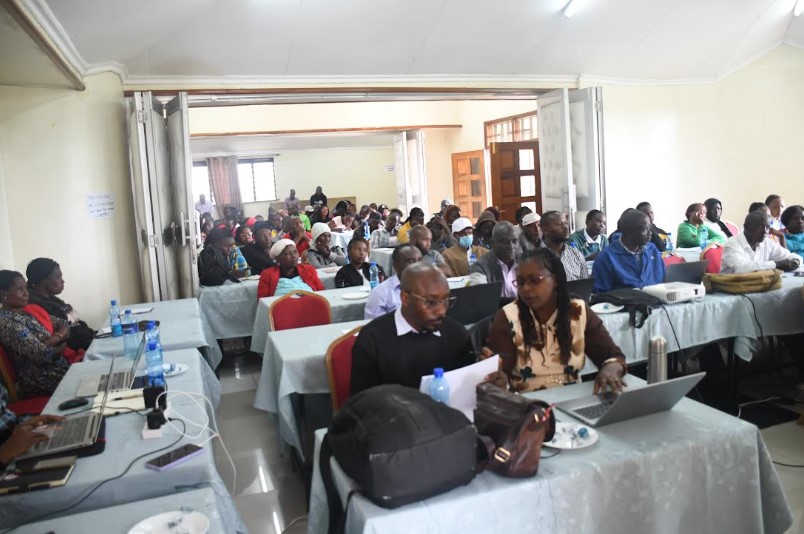
The proposals were subjected to public scrutiny in Nakuru, as livestock farmers, veterinary professionals and government officers examined the draft Livestock and Veterinary Policies before their submission to Parliament.
The consultative exercise at the Kenya School of Agriculture in Soilo sought stakeholder feedback to update Sessional Paper No. 2 of 2020 on Veterinary Policy and Sessional Paper No. 3 of 2020 on Livestock Policy.
The modifications aim to align the sector with the current legal provisions and emerging global market dynamics.
To ensure a detailed review, the forum was split into two simultaneous technical sessions led by senior policy directors from the State Department, focusing on regulation and commercialization respectively.
In her presentation, Dr. Brigit Muasa led stakeholders through the proposed updates to the Veterinary Policy that will ensure strict animal disease control frameworks and sanitary standards that will ensure Kenya secures premium international meat markets.
“We are updating our policies to strengthen disease-free zones and enforce strict animal traceability,” she stated.
According to Dr Muasa, the framework will clamp down on the abuse of veterinary drugs to combat Antimicrobial Resistance (AMR).
She further noted that the policy will tighten regulations governing veterinary professionals to eliminate unqualified practitioners from the value chain.
The Livestock Policy session focused on value addition, chain commercialization, data registration and feed quality control and was spearheaded by Salome Nyaga.
Nyaga explained that the policy review would pave way for robust legal structures, including the operationalization of the Livestock Inputs and Products Regulatory Authority (LIPRA).
“Farmers have consistently lost investments due to substandard commercial feeds and predatory market behaviors. Through LIPRA, the government will strictly regulate animal feed distribution and protect local producer margins,” she affirmed.
She further highlighted the integration of the electronic Animal Identification and Traceability System (ANITRAC), which will map livestock from local farms directly to processing plants.
Nakuru County agricultural stakeholders, including dairy cooperative representatives and livestock keepers, welcomed the policy updates, but urged the national government to ensure smooth devolution of extension services and subsidised inputs.
The consultation brought together Veterinary and Livestock County Directors from Nakuru, Kajiado, Kericho, Laikipia, Bomet, Nyahururu, Baringo and Samburu. Veterinary officers and livestock production officers also participated in the exercise.
The State Department for Livestock Development organised the countrywide consultations to obtain views and recommendations from stakeholders.
The submissions are expected to inform revisions to the proposed policy frameworks before they proceed to Parliament for debate and consideration.
The draft Livestock Policy seeks to transform the sector from largely subsistence-oriented production into a competitive, commercially driven and climate-resilient industry.
It identifies improved animal genetics, affordable quality feeds, better breeding services, stronger extension systems and expanded markets as priorities.
The document also proposes stronger collaboration between national and county governments, private-sector investment and improved access to credit and livestock insurance.
It recognizes that livestock development requires coordinated interventions across production, processing, marketing, research and animal health services.
The proposed Veterinary Policy, focuses on strengthening animal disease surveillance, veterinary laboratory services, food safety, animal welfare and regulation of veterinary practice.
It also seeks to improve coordination among institutions responsible for livestock, wildlife, aquatic animals and companion animals.
The two policies address challenges that have continued to constrain the sector, including inadequate veterinary infrastructure, limited staffing, weak disease surveillance, high feed costs and fragmented institutional responsibilities.
Agriculture and Livestock Development CS Mutahi Kagwe, in the foreword to the draft Livestock Policy, says the review recognizes the contribution of livestock to Kenya’s economy and household livelihoods.
He identifies cooperation between the two levels of government and the private sector as essential to achieving the policy objectives.
Livestock Development Jonathan Mueke PS in the policy preface, says the review responds to emerging challenges and seeks to create an enabling environment for effective service delivery and sustainability.
Kenya’s livestock industry has significant economic importance. The draft Livestock Policy estimates that the sector contributes approximately 12 per cent of national Gross Domestic Product and 40 to 42 per cent of agricultural GDP.
It also supports employment and household incomes, particularly in arid and semi-arid areas, which cover more than 80 per cent of the country.
The Kenya National Bureau of Statistics’ 2026 Economic Survey reported that animal production generated approximately Sh733.3 billion in 2025, up from Sh675.2 billion in 2024.
This growth highlights the sector’s economic value and the need to address constraints affecting productivity and commercialization. However, production remains vulnerable to animal diseases, feed shortages and climate-related shocks.
The draft Livestock Policy estimates national feed availability at approximately 25 million tonnes of dry matter against an annual requirement of 55 million tonnes.
It also identifies substantial losses arising from poor feed conservation and storage. The Food and Agriculture Organization (FAO) has also documented the impact of drought on pastoral livelihoods.
Its March 2026 report on Kenya described how prolonged dry conditions affected pasture, livestock body conditions and household incomes in several arid counties.
The agency consequently emphasised timely animal health interventions and support to vulnerable pastoral communities.
The Veterinary Policy further adopts the One Health approach, which recognizes the links between human, animal and environmental health.
Stronger disease surveillance, laboratory capacity and veterinary public health systems can help detect animal diseases early, reduce the spread of zoonotic infections and protect consumers of animal products.
The proposed policies also identify gaps in veterinary staffing and extension services, which affect farmers’ access to professional advice.
The Livestock Policy estimates that one extension worker serves approximately 1,000 farmers, compared with the FAO-recommended benchmark of one for every 400 farmers.
Stakeholder recommendations from the countrywide exercise will inform the final proposals before submission to Parliament, where legislators will consider the frameworks and their implications for livestock producers, veterinary professionals and government institutions.
The effectiveness of the policies will ultimately depend on implementation, adequate financing and clear responsibilities between national and county governments.
The proposed reforms could improve livestock productivity, protect animal and public health, expand market opportunities and strengthen the livelihoods of farmers across Kenya.
by Jane Ngugi and Jefther Afuyo