African governments have been urged to develop policies that protect ocean resources and resolve frequent conflicts.
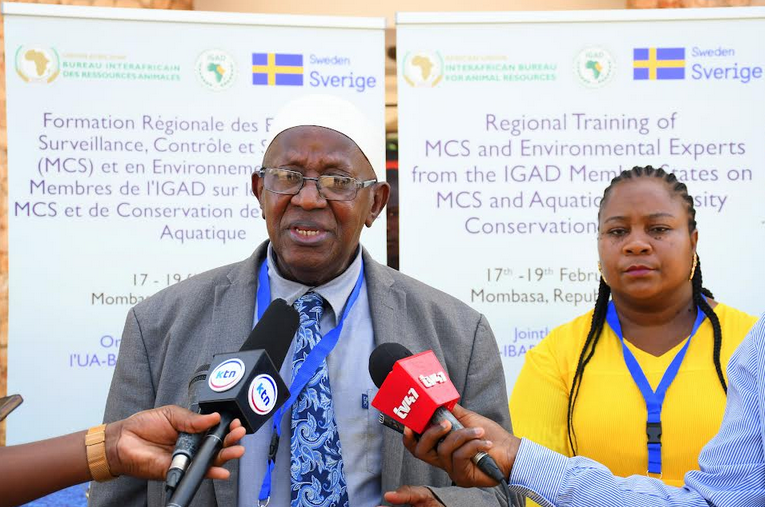
African Union Inter-African Bureau for Animal Resources (AU-IBAR) Fisheries Management and Blue Economy Expert Mohamed Seisay said there is an urgent need for African countries to have regulations that could effectively coordinate various marine resources like fishing, shipping, tourism and energy.
Seisay encouraged formulation of Marine Spatial Planning (MSP) to manage and monitor coastal and marine areas leading to better enforcement of regulations, improved data collection and more effective decision-making.
“MSP is also crucial in resolving conflicts arising from the competing uses of ocean space and its resources,” said the AU-IBAR official.
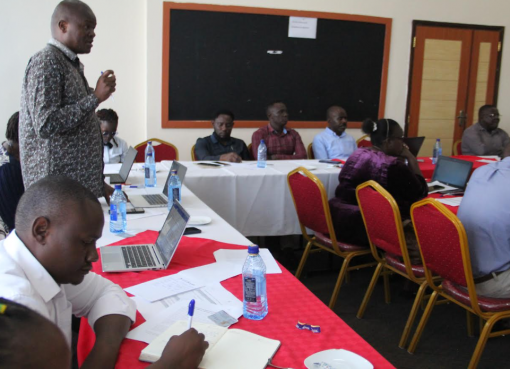
Seisay was speaking during the Regional Training Workshop for Monitoring, Control and Surveillance (MCS) Personnel from the IGAD Region at PrideInn Paradise Resort in Mombasa County.
He said the absence of structured plans and proper regulations has not only led to conflicts but also resource degradation.
Marine Spatial Planning is crucial for organizing human activities in ocean spaces to balance economic development with environmental sustainability. It reduces conflicts between users, protects ecosystems and fosters sustainable blue economy.
Kenya is at an advanced stage towards developing its first Marine Spatial Planning that covers the country’s entire ocean space and aims to coordinate various marine uses through a public data driven process.
After a series of stakeholders’ engagement forums, the final MSP draft is expected to be submitted to the Cabinet for approval.
The MSP approved by the Cabinet in March 2024 is spearheaded by the State Department for the Blue Economy and Fisheries in collaboration with other stakeholders including the State Department for Shipping and Maritime Affairs. The Plan process is being supervised by the State Department for Physical and Land Use Planning.
It is being funded by the Kenya Government and the World Bank through the Kenya Maritime Fisheries Socio-economic Development (KEMFSED).
By Mohamed Hassan