In Kericho, the lush tea fields roll endlessly toward the horizon — a landscape of calm beauty that hides the quiet anguish of many residents battling invisible wounds of the mind. Mental health experts say the county is fast becoming a microcosm of a national crisis, where depression, anxiety, and suicidal thoughts are emerging as the silent epidemics of a stressed society.
Counselling psychologists working in the South Rift region warn that untreated mental health conditions are driving many Kenyans, especially young people, to the brink.
They point to deep-rooted stigma, economic strain, relationship challenges, and substance abuse as common triggers in the unfolding crisis. Interventions recommended by experts include early psychological screening in schools, community sensitisation campaigns, and the establishment of safe spaces for open dialogue.
Psychologists also advocate for integrating mental health services into primary healthcare centres to make professional care more accessible.
“Mental illness is no longer confined to clinical wards. It lives among us, in our homes, our churches, and our workplaces,” said Edwin Gitau Kibe, National Secretary of the Kenya Counselling and Psychological Association (KCPA). “When one in every four Kenyans is struggling silently, it means this is not a personal issue; it is a community emergency that calls for collective intervention. We encourage peer support programmes, structured counselling sessions, and continuous training for community volunteers as practical solutions,” he added
From his professional standpoint, Kibe says counselling should now be viewed as an essential service, not a luxury. He cautions that many Kenyans, out of desperation, still turn to untrained individuals for help. “The human mind is fragile. Only qualified and licensed professionals should handle mental health care. Wrong interventions can worsen trauma instead of healing it. We also recommend awareness campaigns to help people identify certified counsellors and psychologists,” he noted.
Across Kericho’s urban estates and rural villages, community health volunteers report a rise in suicide attempts, particularly among young men. Dr Enock Orina Ondari, chairperson of KCPA Nakuru Chapter, says most suicide cases are preventable if communities learn to recognise the warning signs early. He recommends setting up mobile counselling units, hotlines for crisis intervention, and mentorship programs for vulnerable youth.
“In many cases, people who die by suicide have made several prior attempts. That period between the first attempt and the fatal one is a window of intervention. We must use it,” Dr Ondari explained. “Our men must be encouraged to open up and seek help. Community-based support groups, men-focused counselling sessions, and family therapy are effective interventions we are promoting.”
Counselling psychologists in the region are now advocating for mental health education at the grassroots, starting in schools and churches. Reverend Charles Musambai, Secretary of KCPA Nakuru County, says faith institutions should take the lead in destigmatising mental illness and offering emotional support. “We encourage training clergy to recognise psychological distress, host mental health workshops, and provide confidential counselling to parishioners,” he noted.
“Every seven minutes, somewhere in the world, someone takes their life. Behind every case is a story of pain that could have been treated if there was understanding, not judgment,” he said. “The church and the family must create safe spaces for confession, healing, and hope. Community intervention programs and collaborative networks with health professionals are crucial in this regard,” said the Reverend.
At the African Institute of Research and Development Studies Kericho Campus, guidance counsellor Evans Kemboi has witnessed the impact of academic pressure, financial hardship, and social expectations on students. He says many youths are afraid to admit they are struggling because they fear being labelled weak. “Counselling is not a sign of weakness. It is an act of courage. We encourage peer mentoring, student support clubs, and structured resilience training to empower students,” Kemboi affirmed.
Kericho’s mental health burden is also shaped by its economic fabric. The tea-based economy, while vibrant, has seasons of instability that often expose families to stress and uncertainty. Counselling psychologists say financial anxiety, alcohol dependency, and domestic strain have become recurring themes in therapy sessions. Interventions include community skill-building programmes, family therapy sessions, and awareness campaigns to reduce substance abuse.
According to the Kenya Demographic and Health Survey 2022, access to mental health care in Kericho remains limited, with most facilities lacking dedicated counsellors or psychiatric support. Psychologists warn that without proper county-level investment in psychosocial infrastructure, the region risks losing more lives to preventable causes. They advocate for county-funded mental health clinics, continuous professional development for counsellors, and policy enforcement to ensure psychological services reach underserved areas.
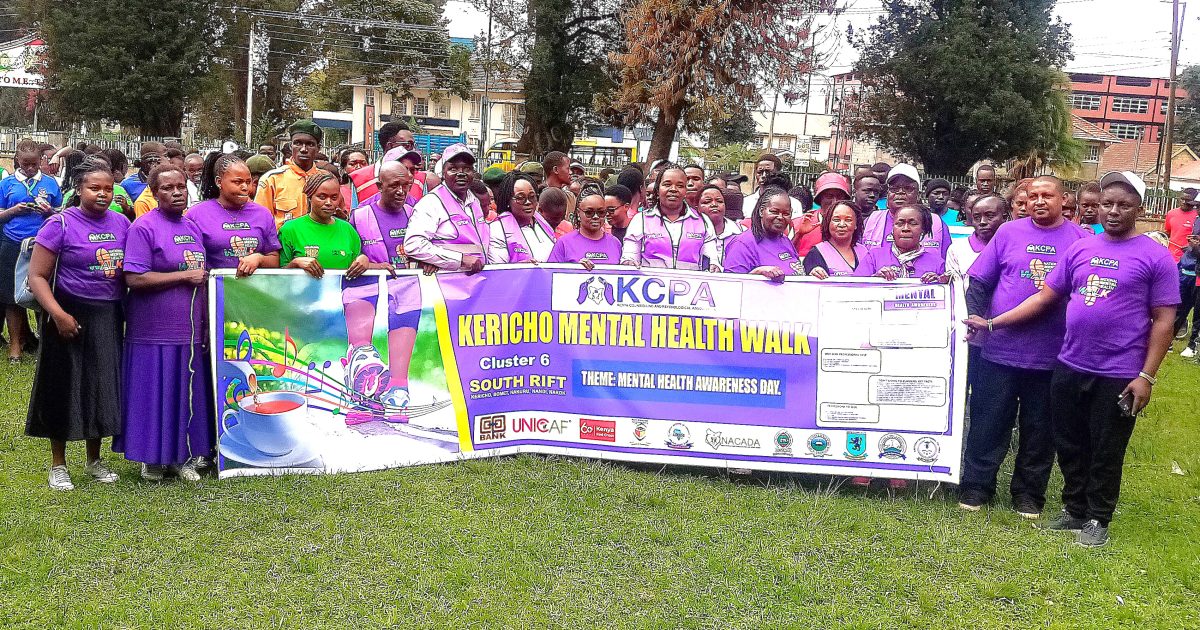
Still, amid the growing concern, there is hope. Counselling professionals, health workers, and local partners like the Kenya Red Cross and NACADA are working to expand awareness programmes. The KCPA has pledged to intensify community outreach, targeting schools, workplaces, and churches with training on early detection and intervention. They also recommend helplines, mobile mental health units, and workshops to equip community members with basic counselling skills.
“Mental health is not just a medical issue; it is a human issue,” said Kibe. “When communities choose compassion over stigma, they save lives. Healing begins when we talk and when actionable interventions are in place,” he adds.
As Kericho’s counsellors continue to walk alongside survivors, the message resonates far beyond the hills: Kenya’s mental health crisis can be reversed, but only if society listens, learns, and implements practical interventions to save lives.
By Gilbert Mutai