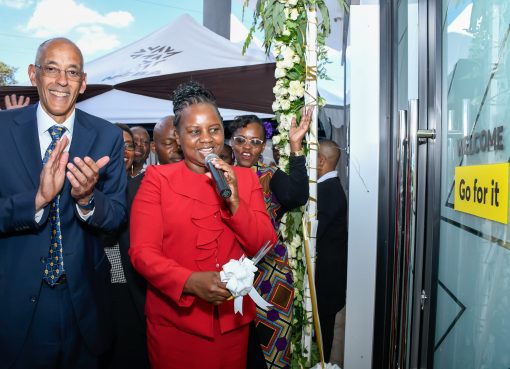
The Common Market for Southern and Eastern Africa (COMESA) has organised a four-day sensitization workshop that has drawn small-scale traders from Kenya and Uganda.
Addressing the press, its Head of Governance, Peace, and Security Dr. Otia Etyang said COMESA, which has 21 member countries, is commonly known for trade, but they have a robust and very active peace division which is in charge of promoting peace and security in the region.
“One of the programmes we are implementing is trade in order to promote peace, especially at border points,” he said.
“This is the programme we have been implementing for quite some time now in this region. We have been able to implement in Busia, and now in Malaba, and the expectation is to sensitize cross-border traders in terms of their rights, their roles, in terms of promoting peace and security in the region and also in collaboration with other government agencies,” Dr. Otia added.
“Through this, we shall strengthen cross-border committees. We shall also be able to address the issues they have encountered in the region. COMESA has developed quite a number of policies and regulatory frameworks that are supposed to enhance cross-border trade and also sensitize them on those specific frameworks, including commercial trade,” he elaborated.
Dr. Otia said issues raised by the small-scale traders from Kenya and Ugandan would be addressed urgently, adding that COMESA governance, peace, and security division would also pick on some issues raised and have them addressed through their programmes.
He cited scarcity of funds as a major challenge facing COMESA, noting that they depend on contributions from member states, but their membership is also facing economic challenges.
“In terms of contributions, we don’t have enough funds for our programmes and resources are becoming scarce. USAID pulled out, thus affecting our programmes in one way or another,” he noted.
Dr. Otia further said trade without harmonized policies by member states, non-tariff barriers that make traders lose money, and payment of unofficial revenue to county governments, especially in Kenya also posed major challenges.
Chairlady Malaba Uganda Cross-border Cooperatives Amanga Dinah said Kenyan cooperatives’ traders were free to go farmers in Uganda, but Ugandan traders are not allowed to do the same in Kenya.
Her Kenyan counterpart Lorna Okitoi said Malaba is the busiest border town that clears over 1200 trucks per day, but lack of information on trading rights and inadequate training was its undoing.
Okitoi urged COMESA to facilitate adequate training and literacy empowerment trainings.
She added that entrants are not trained, with inherent challenges emanating from effects of exchange rates, limited capital conditions, fluctuating market prices, different policies and regulations, children smuggling between the two countries, and poor markets.
Malaba Uganga Trade Information Officer Sam Kwemein said the lack of modern markets especially in Kenya was the main hindrance hampering international trade.
“We import a number of labour from Uganda in homes and in search of employment opportunities and other foreign countries which is in line with East African Community’s free movement of labour and services,” Kwemein said.
Uganda SACCO Treasurer Echairi Harriet said the lack of sanitisation infrastructure was contributing to a low population of mothers doing cross-border businesses because of monthly menses and children’s care, noting that such groups needed markets with safe places.
Secretary Betty Okuni said there is a lack of cold rooms for some perishable products and lack of markets in Malaba Kenya, streetlights and scanners for transit cargo.
By Absalom Namwalo