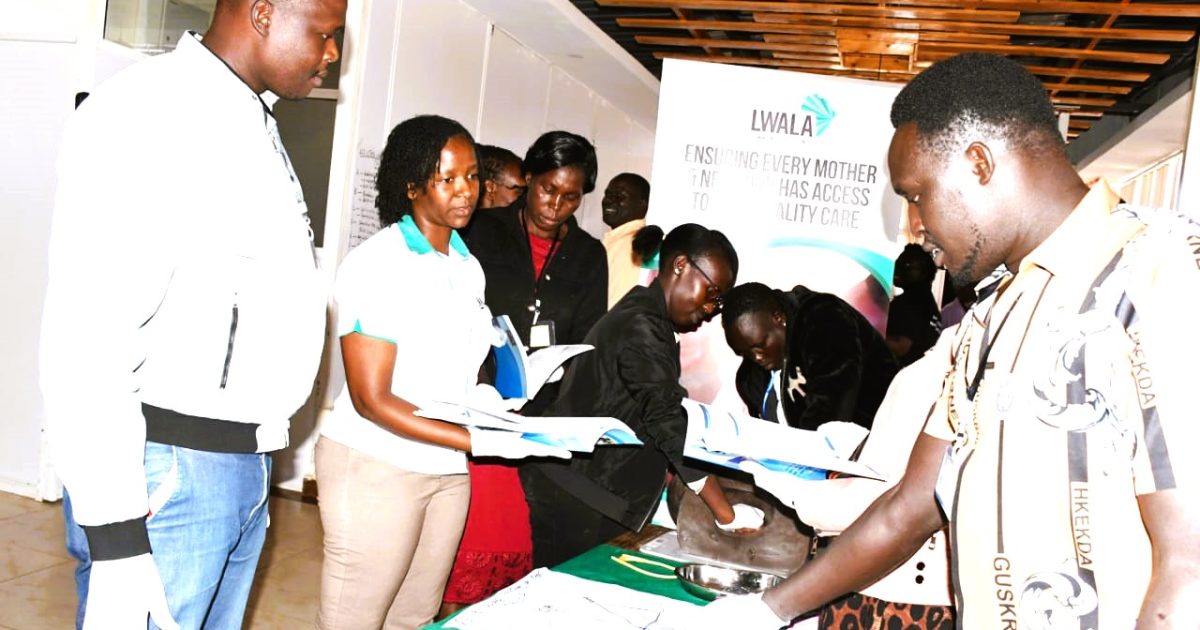
West Pokot County has launched a five-day training aimed at enhancing Emergency Obstetric and newborn Care (EmONC).
The initiative also aims to improve on the management of maternal and newborn complications and subsequently reduce maternal and infant mortality.
The training is being implemented by the Division of Reproductive, Maternal, Newborn, Child and Adolescent Health (RMNCAH) Organization in collaboration with the West Pokot County Government’s Department of Health and Lwala Community Alliance.
Through the support of Lwala Community Alliance, 65 frontline healthcare providers from all six sub-counties of West Pokot are being trained as facility-based Emergency Obstetric and Newborn Care (EmONC) mentors. The trained mentors will in turn train other healthcare workers in their respective health facilities.
Speaking during the training, Dr. Samuel Ooga, a National Emergency Obstetric and Newborn Care (EmONC) trainer from the Ministry of Health under the Division of Reproductive, Maternal, Newborn, Child and Adolescent Health (RMNCAH), said the ministry was committed to ending preventable maternal and neonatal deaths through continuous capacity building of healthcare workers and the adoption of low-cost, lifesaving innovations.
“These include the use of the Non-pneumatic Anti-Shock Garment (NASG), uterine balloon tamponade, V-drapes, and heat-stable carbetocin, which has proven to be a game changer in saving the lives of women during childbirth,” Dr. Ooga said.
He outlined key national commitments, including achieving zero preventable maternal and neonatal deaths, eliminating harmful practices such as teenage pregnancies, early marriages, Female Genital Mutilation (FGM) and Gender-Based Violence (GBV), and ensuring zero unmet need for family planning services.
Dr Ooga noted that nearly 80 percent of maternal deaths occur within healthcare facilities, largely due to inadequate skills among healthcare providers, late initiation of antenatal care and shortage of human resources for health, insufficient infrastructure, and lack of essential medical commodities.
West Pokot Reproductive Health Coordinator, Consolata Siree, said the County has already sensitized 65 healthcare workers on the prevention and management of postpartum hemorrhage (PPH) and is currently training another 65 frontline providers on EmONC with support from Lwala Community Alliance.
Ms. Siree noted that bleeding during pregnancy and childbirth remains the leading cause of maternal reproductive complications in the County, adding that the training will enhance the skills and capacity of healthcare workers, to manage complications arising during pregnancy, childbirth, and the postnatal period.
“Bleeding remains a major contributor to maternal health in West Pokot County. Training healthcare providers is a critical step towards reducing maternal and neonatal deaths,” she said.
She further revealed that through the support of Lwala Community Alliance, the County has received 102 Non-pneumatic Anti-Shock Garments (NASG), which have been distributed to 47 health facilities across the County to help manage severe bleeding and save mothers’ and newborns’ lives.
“Non-pneumatic Anti-Shock Garments are used as first aid and emergency intervention to prevent and manage hypovolemic shock, especially from obstetric hemorrhage,” Siree explained.
She expressed gratitude to the County government, Lwala Community Alliance and the Ministry of Health for strengthening partnerships and providing technical support throughout the training.
Elvis Wekesa, a nurse at Serewo Health Centre in Kacheliba Constituency, assured the community that healthcare workers are now better equipped to provide quality maternal and newborn healthcare.
“We have been trained and we want the community to know that every health facility in West Pokot is capable and committed to offering quality maternal care and addressing the needs of all mothers,” he said.
A nurse at Tamugh Health Centre in Pokot Central, Agneta Cheyech, also thanked the County government and Lwala Community Alliance for equipping health workers with valuable knowledge and skills.
She urged the expectant mothers to seek professional care during childbirth, warning that home deliveries pose serious risks to both the mothers and newborns.
“I encourage all mothers to give birth in health facilities, rather than at home, as home deliveries can have serious or fatal consequences for both the mother and newborn,” Cheyech warned.
The County Director of Health, Dr. Solomon Kokwo, commended the partnership between the Ministry of Health, Lwala Community Alliance, and the West Pokot County Government, noting that the EmONC training is a critical investment in strengthening the County’s health system.
Dr. Kokwo emphasized the county’s commitment to improving access to quality maternal and newborn health services, adding that the County government continues to invest in human resources for health, essential medical commodities, and health infrastructure to support safe childbirth and reduce preventable maternal and neonatal deaths.
By Anthony Melly