The number of African countries planting biotech crops has more than doubled in the last five years, increasing from three in 2018 to eight in 2024.
This follows the growing awareness by farmers on the continent of the potential benefits of genetically modified (GM) crops.
The 8 countries currently growing GM crops include Kenya, Ethiopia, Ghana, Malawi, Nigeria, Sudan, Eswatini, and South Africa, which have approved the cultivation of at least one of four transgenic (GM) crops: cotton, maize, soybean, and cowpea.
However, delays in introducing advanced maize, cotton, and potato varieties to Kenyan farmers have cost the nation an estimated Sh20.4 billion in missed opportunities for superior returns to farmers and improved pricing for consumers over the past five years, a new study reveals.
This staggering loss has denied the country vital opportunities to boost food security, farmer incomes, and environmental health, and is exacerbated by persistent misinformation campaigns that hinder science-based progress.
The report, titled “The Cost of Delay,” done in collaboration by the Breakthrough Institute, the Alliance for Science, the African Agricultural Technology Foundation (AATF), ISAAA (International Service for the Acquisition of Agri-biotech Applications), and the International Potato Center (CIP), further projects that these three advanced crop varieties could inject Sh60.7 billion into Kenya’s economy over the next three decades if adopted without further delays.
Estimates in the study are based on the significant potential of these advanced varieties to deliver higher crop yields, boost farmer profits, reduce reliance on expensive pesticides, and ultimately lower food prices for consumers.
Dr Willy Daniel Kyalo, lead author, says that by increasing yields, these advanced varieties help protect Kenya’s precious forests and biodiversity by reducing the need for new farmland, while simultaneously cutting greenhouse gas emissions that fuel global climate change.
“This report clearly shows that embracing advanced crop varieties in Kenya would generate substantial economic benefits,” he added.
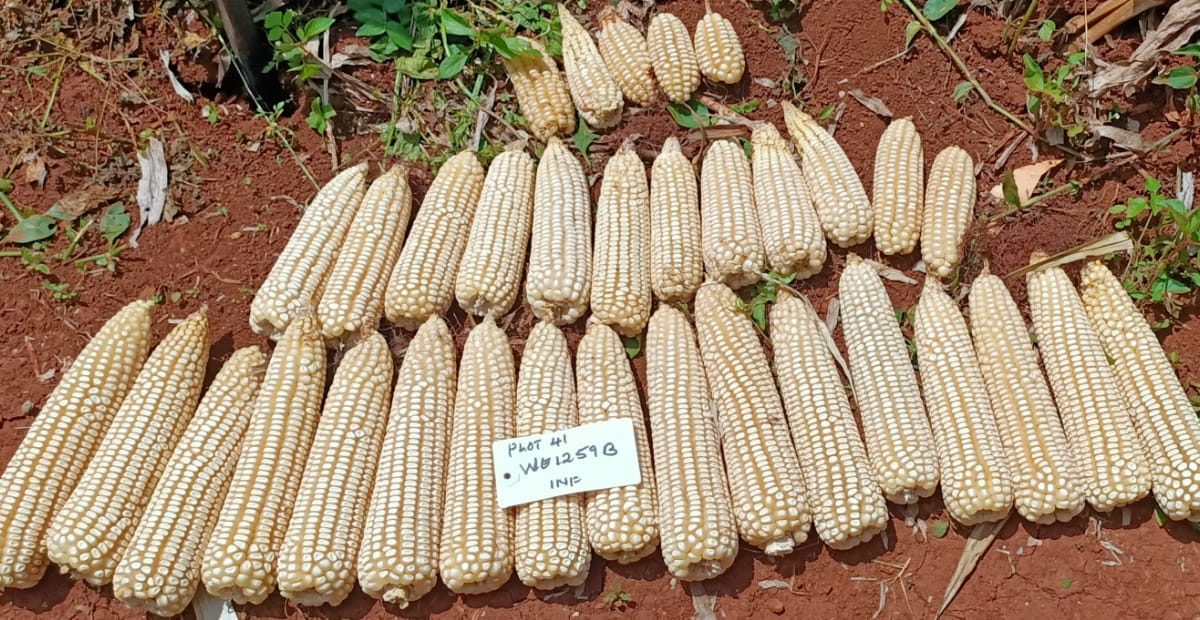
An example is that advanced maize varieties, developed by local scientists, naturally resist pests like the stem borer, which also protects the crop from mold that produces aflatoxin, a dangerous toxin linked to liver cancer, and therefore, embracing biotech crops means improved food safety and public health for all Kenyans.
In addition, adopting advanced maize and cotton could significantly reduce Kenya’s greenhouse gas emissions by 0.2 percent to 0.7 percent of the national total, significantly contributing to the fight against climate change.
Prof Joel Ochieng, Secretary General of the Kenya University Biotechnology Consortium (KUBICO), says that misinformation is also harming food security in the country.
“As Kenya grapples with ongoing food deficits, misinformation campaigns are actively harming science-based efforts to help local farmers improve yields for staple crops,” he noted, adding that news outlets, social media, and even some political leaders are misleading the public with inaccurate and irresponsible statements about advanced crop varieties.
KUBICO, Prof Ochieng said, is a guild of biotechnology and biosafety experts who want to set the record straight that the crops are safe and essential for our food security.
The Sh20.4 billion figure represents the estimated cost of delaying the introduction of three advanced crop varieties—insect-resistant (Bt) cotton and maize and late blight disease-resistant potatoes for a period of just five years after the varieties were developed through the collaborative efforts of African scientists, supported by organisations including AATF.
Significantly, Kenyan scientists developed the two advanced Bt maize varieties locally through a public-private partnership, utilizing biotechnology that was donated royalty-free.
Vitumbiko Chinoko, manager of AATF’s Open Forum on Agricultural Biotechnology (OFAB) program and co-author of the study, said that global evidence consistently shows that advanced crop varieties, with their superior pest and disease resistance, can significantly boost yields and incomes.
“This research now quantifies their immense economic value to Kenya and the steep price we pay for delays. AATF chose to focus research efforts on these three crops because they are so important for achieving food security and better livelihoods for smallholder farmers in Kenya,” Chinoko added.
Dr Emma Kovak, Senior Food and Agriculture analyst at the Breakthrough Institute, urged Kenyan policymakers to prioritize the timely commercialization of these and future advanced crop varieties.
She further recommended increasing funding for agricultural research and development to adapt more advanced varieties for local cultivation and boosting regional seed production capacity to give farmers more choices.
Kenya successfully commercialized advanced Bt cotton, which resists the destructive bollworm pest, in 2020. Three advanced Bt maize varieties, offering protection from devastating fall armyworm and stem borer pests, are currently awaiting Cabinet approval.
The advanced potato, designed to combat late blight disease, is undergoing final field trials, moving closer to commercialisation.
“These advanced crop varieties are specifically designed to empower Kenya’s smallholder farmers, who make up 70 percent of our maize growers who regularly battle stem borer and fall armyworm, losing between 15 and 20 percent of their harvest annually, while 98 percent of our potato farmers face the devastating late blight disease, which can wipe out 100 percent of their crop,” Chinoko emphasised.
According to Chinoko, advanced crop varieties offer a safe, effective, and often more affordable alternative to traditional pesticides, which can be costly and require specialized application.
According to the study, specifically, five years of delays in adopting advanced maize have cost Kenyan farmers and consumers Sh8.7 billion, a loss largely due to the continued need for expensive pesticides.
“Had we adopted earlier, farmers could have produced an additional 194,000 tonnes of maize, equivalent to about 25 percent of Kenya’s 2022 maize imports,” Chinoko said.
Commercialization of advanced potatoes is projected to bring Sh21.2 billion in benefits to Kenyan farmers and Sh10.9 billion to consumers over the next 30 years.
The study, however, says that while advanced crop varieties offer powerful tools to address critical challenges like pests and diseases, they are just a part of a broader solution for Kenya’s agricultural ecosystem and not a silver bullet but a vital component alongside good agronomic practices, access to markets, and supportive policies to achieve comprehensive food security and farmer prosperity.
“We view these findings as an urgent call to action for the Kenyan government, offering valuable lessons not just for our nation, but for other African countries facing similar agricultural challenges,” Chinoko said.
Kenyan scientists follow a rigorous and transparent process for developing advanced crop varieties, strictly regulated by the Biosafety Act and the National Biosafety Authority (NBA).
The NBA’s regulatory process considers both robust scientific assessment and public input, with recent countrywide consultations to gather views. To ensure full transparency, Kenyan law mandates clear labeling for all advanced crop products.
Globally 76 countries have adopted biotech crops, and 31 countries plant them (including the U.S., Canada, China, Spain, and Brazil), and an additional 45, including European Union nations, import them for food, feed, and processing.
by Wangari Ndirangu