Kenyans have been urged to donate blood regularly so as to save lives.
According to an official working with the Kenya Tissue and Transplant Authority, Oriki Michira, donating blood not only helps to save lives of patients in hospital where the donation takes place but also benefits patients in other hospitals countrywide.
Michira, who has been certified as the highest blood donor in Kajiado, revealed that regular blood donation ensured that there was enough blood in blood banks for use during emergencies such as accidents or maternal hemorrhage.
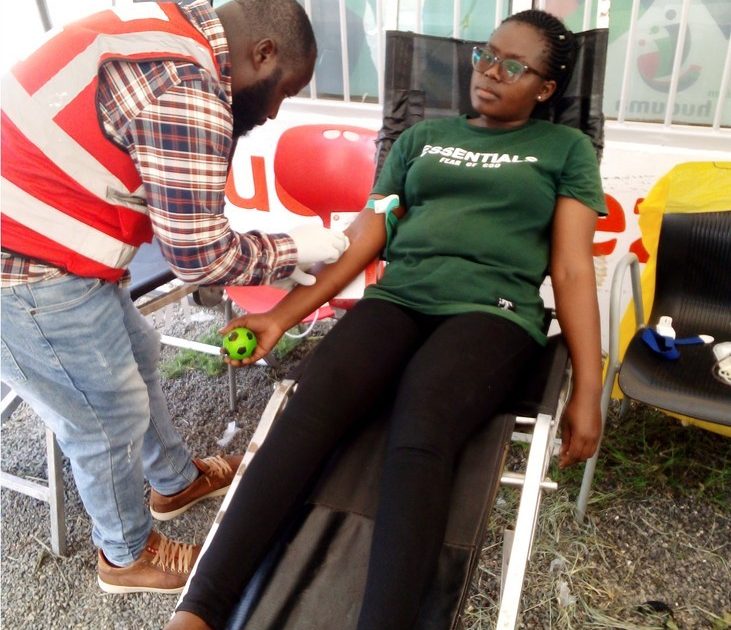
Speaking in Kajiado town during a blood donation drive organized by Huduma Centre in conjunction with the Kajiado Referral Hospital, Michira demystified the misconceptions surrounding blood donations and called on Kenyans to donate blood and help save lives.
“Blood donation helps save lives. I have participated in 17 blood donations so far and my hope is that I achieve my personal target of 100 blood donations by the time I am 50 years old”, Michira said.
Dr. Martin Kaunda encouraged Kajiado residents to donate blood assuring them that the process was safe, simple and painless.
Kaunda emphasized the importance of blood donation drives and their impact on the smooth running of the health care system.
He applauded the community for coming together and supporting a cause geared towards saving lives.
“With a target of 50 donations, we are hopeful for a successful donation process that will boost our blood banks and ensure there is enough supply in case of emergencies,” he said.
The blood donation drive commenced with the filling out of questionnaires that availed any health information to the doctors available at the event. With tests ranging from weight measurements to blood pressure, potential donors were informed on their eligibility to participate in the donation process.
The questionnaires also facilitated the follow-up programs where donors are later informed of any health risk they might have after extensive tests have been conducted under the Kenya Tissue and Transplant Authority.
The event also served as a consultation service where volunteers were able to access health advice and information on their blood counts, blood types, state of blood pressure, weight management, allergies and diet plans to increase blood counts.
To curb myths and misconceptions about blood donation process which often stalls the process the healthcare officials were available to answer any questions.
Assistant Manager, Huduma Centre, Kajiado, Rodgers Mukithia, advocated for the blood donation process, citing the advantages to the donors too.
“Undiscovered ailments are often discovered in blood donation events like this. It is better to know now in order to facilitate proper health care early,” said Mukithia.
According to the World Health Organisation (WHO), globally, over 81 million units of whole blood are donated annually
The World Health Organization’s Africa region has seen a slight increase in the average donation rate from 4.1/1000 to 4.9/1000 population between 2006 and 2018.
However, with the impact of Covid-19, these numbers have gone down, hence the importance of voluntary unpaid blood donors, who are a key source of safe and adequate blood supply.
By Lauryn Nailantei