The Ministry of Environment, Climate Change and Forestry is rolling out tree-growing and planting initiatives in schools across the country through establishing nurseries in order to raise both tree and fruit tree seedlings.
The initiative aims at inculcating a culture of tree growing among schoolchildren to conserve the environment and support livelihoods through income from the sale of seedlings and improved nutritional components from fruit tree seedlings.
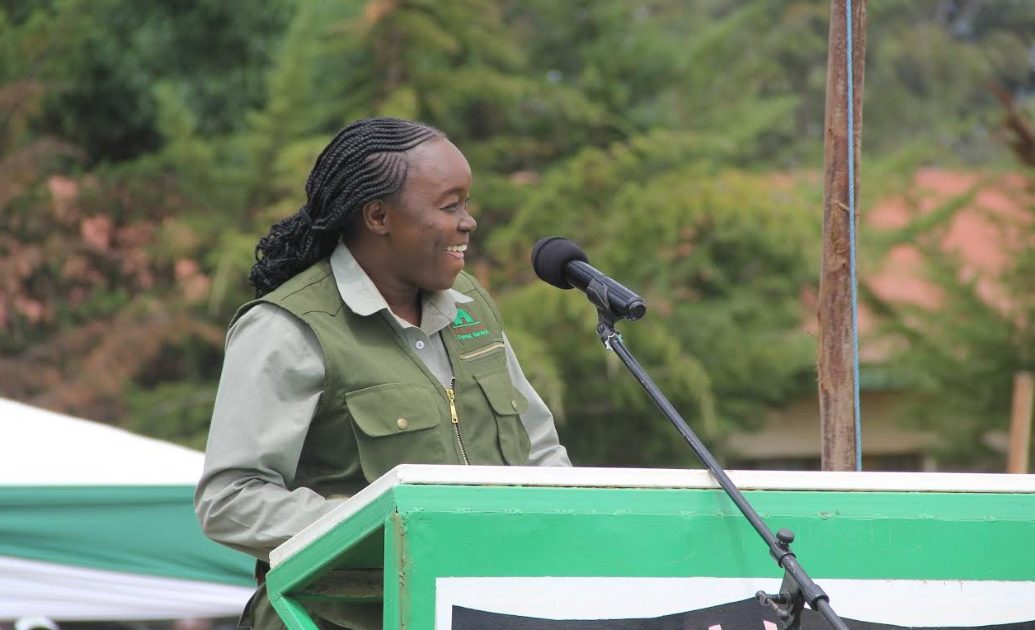
Speaking when she led the tree planting exercise at Wareng’ High School in Eldoret, Uasin Gishu County, Environment Cabinet Secretary Dr Deborah Mulongo Barasa emphasised the need to impart a culture of tree growing to school children to ensure sustainability in terms of environmental conservation from generation to generation.
She noted that the programme will contribute to achieving the 15 billion trees target as per the presidential directive, which is looking forward to restoring degraded land, boosting water conservation and promoting biodiversity.
“Far beyond that, when you look for instance, at fruit trees, they are going to address food security issues and also the commercialisation of some trees for timber and non-timber for medicinal purposes, among others. We are looking forward to leveraging on that platform to improve tree coverage and a culture of tree growing continues from the students at this level,” she noted.
The CS underscored the fact that by embracing a whole-of-government approach and working together with the private sector with this initiative to plant and grow trees with partners like the Chandaria Foundation, the Mpesa Foundation, and the KCB Foundation, among others, they will be able to achieve the 15 billion trees target by 2032.
Dr. Barasa highlighted some innovations undertaken to improve coverage like aerial seeding and other measures like fencing to avoid encroachment by human activities, animal invasion and avoiding other issues that will cause the falling down of trees when they are not yet mature.
She mentioned that the wonderful culture where they are teaching the students as the next generation will ensure that they have sustainable tree growing in the schools and communities.
She added that they are really optimising coverage of trees to conserve the environment, restore the ecosystem and maintain it.
“We are happy to see that schoolchildren are doing a great job. We started in the morning by planting fruit trees so that they have an orchard to improve food security and also the nutritious component of fruits,” said Dr. Barasa.
The school had built a tree nursery through the support of the Chandaria foundation where they had raised more than 50,000 seedlings while awaiting another 100,000 coffee seedlings and 50,000 indigenous trees from the Kenya Forest Service and partners.
The students are doing 70 per cent fruit trees as they incorporate other indigenous species to promote biodiversity and other beneficial outcomes like medicinal uses.
CS Dr. Barasa encouraged Kenyans, the private sector, foundations, among others, to help in cleaning and ensure a healthy and safe environment through tree planting and growing.
In terms of supporting school administrations in tree growing, she said they are preparing the seeds for them to raise in their nurseries so that they can be able to plant in the school environment and also sell them to community members, which will serve as a source of income which can be utilised to sponsor students from vulnerable backgrounds.
“We are encouraging partners to buy from schools like this because that is how they will have an income-generating activity and that money will be used to provide scholarships for them,” noted Dr. Barasa.
Noting that the tree-growing initiative is currently at 800 million so far, closing in on the 1 billion mark, the CS acknowledged that there is some kind of public resistance to tree growing, which requires public education through community involvement and ownership because they need to understand the importance of the exercise.
She raised concern over the 12 per cent Kenyan tree cover as compared to some countries which are doing well, noting that it is very critical if it could reach a certain stage where the lands will be deserted, leaving room for some challenges with degradation and others.
In her remarks Smart Mechanised Agriculture & Climate Action for Humanity & Sustainability (SMACHS) Foundation Chief Executive Officer (CEO) Charlene Ruto said that they are encouraging young people to embrace environmental conservation as a way to earn a source of income.
She recalled success stories of schools like The Lenana, where they are doing 500,000 tree seedlings which are taken off by partners like KCB Foundation and Mabati Rolling Mills (MRM), doing it as a way to conserve the environment while at the same time earning a source of living.
“When I visit some of these schools, there are a lot of challenges faced by students, especially in paying school fees but we are looking at tree growing in a long-term perspective as an investment; sustainable sources like tree nurseries can be a key source in helping raise school fees for the vulnerable students,” noted the SMACHS Foundation CEO.
“Young people are the leaders of tomorrow but also the leaders of today; the leadership journey starts now and today with them running that tree nursery to earn income and conserve the environment,” added Ms Ruto.
The SMACHS Foundation aims to empower Kenyan youth through smart, climate-smart agriculture by equipping them with the skills and knowledge to address food security and climate change challenges.
They focus on sustainable farming practices, resource management, and environmental stewardship, using innovative techniques and technologies.
By Ekuwam Sylvester