The European Union (EU) has challenged counties along the coastal region to scale up their investments in the Blue Economy to fully exploit their potential.
The union wants more investments channeled to the sector which was largely untapped to create job opportunities and attract investors who could spur sustainable growth of the coastal economy and the country at large.
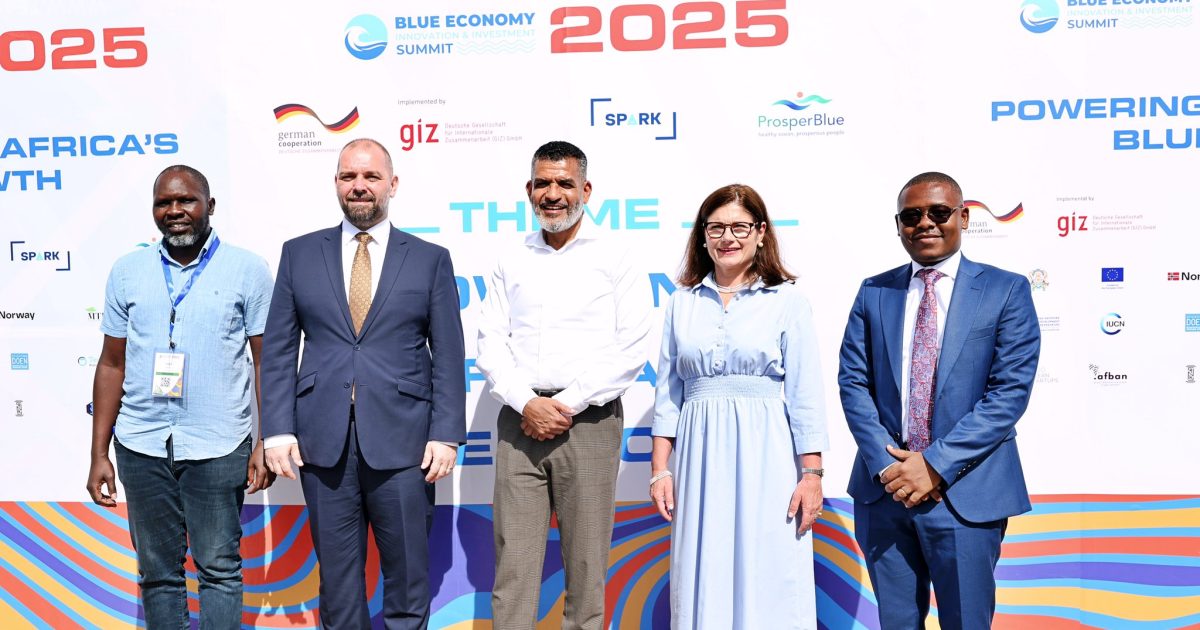
Speaking during the Blue Innovation and Investment Summit in Mombasa, organized by Sote Hub, EU Ambassador to Kenya Henriette Geiger lauded the progress made through the EU-funded Go Blue Project, noting that businesses started under the initiative are thriving with solid profit margins.
“EU believes in the Blue Economy. We have put our money, our efforts there, but we are also very much supporting Kenya to take a look at the potential that the Blue Economy has. We believe that Kenya has endless potential in the Blue Economy, but it doesn’t see it. To a big part, I think Kenya has turned its back on the sea,” she said.
The EU Ambassador emphasised that the country ought to recognise the immense potential it has for the youth to access opportunities. She affirmed that the EU will assist the government in realising the potential. The EU has financed Kenya’s Blue Economy Strategy.
“It is very important to have a regulatory environment that is nurturing and facilitating investments and innovations. It cannot stand on its own, one foot into the other,” stated the EU Ambassador.
The EU Ambassador was taken aback that the country still imports fish, as there are many opportunities in the country for fishing and aquaculture.
“There is much potential. I have spoken with the Trade Minister on this because we have a free trade agreement with Kenya. Kenya can export to the EU fresh fish, duty-free. The EU is the biggest consumer for fresh fish in the world. Here, you have endless potential in a market that is increasing.”
The envoy also called for stronger public awareness and community advocacy around the Blue Economy, urging Kenya to integrate inland waters into its strategies and align national efforts with international environmental sustainability goals.
“The EU is also pushing for a legally binding global plastics agreement because our seas, our oceans, are drowning in plastic waste,” she stated.
To bolster regional efforts, the EU has launched the Sh8.8 billion Sustainable Western Indian Ocean Programme (SWIOP), covering nine African countries: Kenya, Comoros, Djibouti, Madagascar, Mauritius, Mozambique, Seychelles, Somalia, and Tanzania.
The programme will support ocean management, promote sustainable blue economies, and protect marine ecosystems and coastlines.
“Kenya needs to grow if it has such a young population, with an average age of 19 years. Jobs have to come from somewhere. We have to grow the blue space to provide jobs and opportunities, especially here at the Coast.”
Federal Republic of Germany Deputy Head of Mission to Kenya, Alexander Fierley, noted that the Blue Economy presents a strategic avenue for sustainable, inclusive, green, and climate-resilient growth for the country and Africa.
He affirmed Germany through the German Corporation for International Cooperation (GIZ) to promote the Blue Economy since it is a vital engine for job creation.
David Ogege, Director of Sote Hub, says that the yearly summit offers a platform for the private sector and the government to engage, bringing together over 600 delegates.
by Sadik Hassan