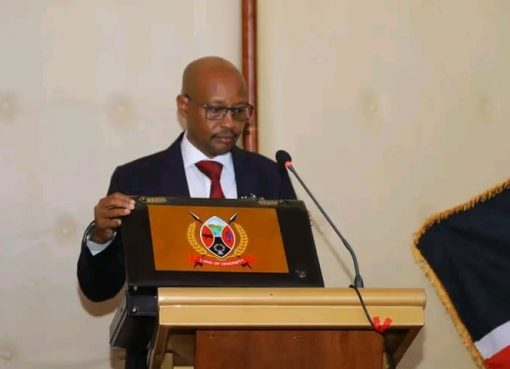
The Principal Secretary for Medical Services, Dr. Ouma Oluga, has reaffirmed the government’s commitment to ensuring that all Kenyans have access to skilled, motivated, and well-supported healthcare workers’ services.
Speaking at the official opening of the 42nd Annual Scientific Congress of the Kenya Cardiac Society in Mombasa, Dr. Oluga emphasised that the government is keen to ensure healthcare workers receive fair remuneration that reflects their work and responsibilities.
“We are very keen on ensuring that there are adequate numbers of healthcare workers, and that we can assess the quality of the work being done,” said the PS.
He underscored the need for collaboration with universities to develop a competent health workforce capable of delivering cardiovascular care services, both in prevention and treatment.
“It is very important that you look at how you can be able to help us determine what that means. What is right comes from you, not from us,” he challenged the cardiologists.
On the issue of commodity security, Dr. Oluga noted that the COVID-19 pandemic taught valuable lessons such as even well-designed healthcare systems can be severely disrupted by pandemics, wars, lockdowns, or currency challenges.
To enhance the availability of health products and technologies, he said the government is promoting local manufacturing. “So that we move commodities from 23 per cent of our essential list that we manufacture locally to 50 per cent,” said the PS.
He also noted that formulary committees are being established to align procurement with clinical needs. These committees will comprise 80 per cent doctors, 10 per cent policymakers, and 10 per cent suppliers and logistics experts.
“So that then we are clear that what patients need is what is bought or what is manufactured,” explained Dr. Oluga.
The Ministry of Health is also progressing well with digitisation with the roll out of the Integrated Health Information and Technology System. All public health facilities are being digitised, and private facilities were urged to plug into the digital health superhighway.
“That helps us with data that we can use for policy making and resource deployment. It also helps us in improving efficiency in the health care system,” he said.
By Sadik Hassan