Interior Cabinet Secretary Kipchumba Murkomen has reaffirmed the government’s commitment to improving citizen registration services across the country, with special consideration of vast and pastoralist counties such as Narok.
Speaking during the Jukwaa la Usalama forum in Narok, CS Murkomen said the government is working to ensure that every sub-county has a fully functional citizen registration office.
These offices will handle vital services, including the registration of births and deaths, as well as National Registration Bureau operations for national identification cards.
“We have noted with concern that Narok County, which has ten sub-counties, has only three operational stations for birth and death certificate registration. It is important that each sub-county has a citizen registration service office,” the CS stated.
Murkomen explained that the shortage of registration points has long inconvenienced residents, forcing them to travel long distances to access services.
This challenge is especially acute in pastoralist areas, where mobility and remoteness hinder service delivery. To address this, the Ministry has introduced mobile registration desks and vehicles fitted with live capture machines.
These units will visit Manyattas and remote settlements to register residents aged 18 and above who have yet to acquire identification cards.
The mobile process will only require a fingerprint officer, a chief, and a registrar to complete the registration on-site.
Murkomen noted that the county already has 19 registration centres in urban areas for ID processing, but the mobile units will ensure no resident is left behind due to distance or terrain.
“We have procured mobile registration machines to ensure we reach citizens in their localities. We are determined to register all eligible adults, including those in the most remote parts of this county and similar regions across the Country,” he said.
The CS also highlighted recent reforms aimed at making national identification more accessible, particularly in border counties like Narok.
He confirmed that the requirement for a vetting process, which in the past delayed or denied applications in some regions, has been lifted.
Furthermore, the government has abolished the Sh300 fee for ID issuance, making the process entirely free for first-time applicants.
“Because of the reforms that happened, the President declared that we give out IDs for free. The unnecessary vetting procedures that were affecting this county have been removed. Now, many people will get IDs like any other region without discrimination,” Murkomen explained.
Murkomen emphasised that these changes are part of a broader strategy to increase registration coverage, strengthen citizen data systems, and ensure that all Kenyans can access government services and exercise their rights.
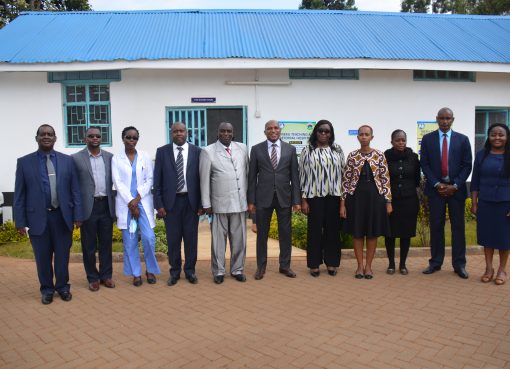
The Jukwaa la Usalama forum brought together local leaders, administrators, and community representatives to discuss security, governance, and service delivery matters in the county.
By Lamech Willy.A