The government has intensified efforts to revive the cashew nut subsector, targeting increased production, value addition, and improved incomes for farmers across key growing regions.
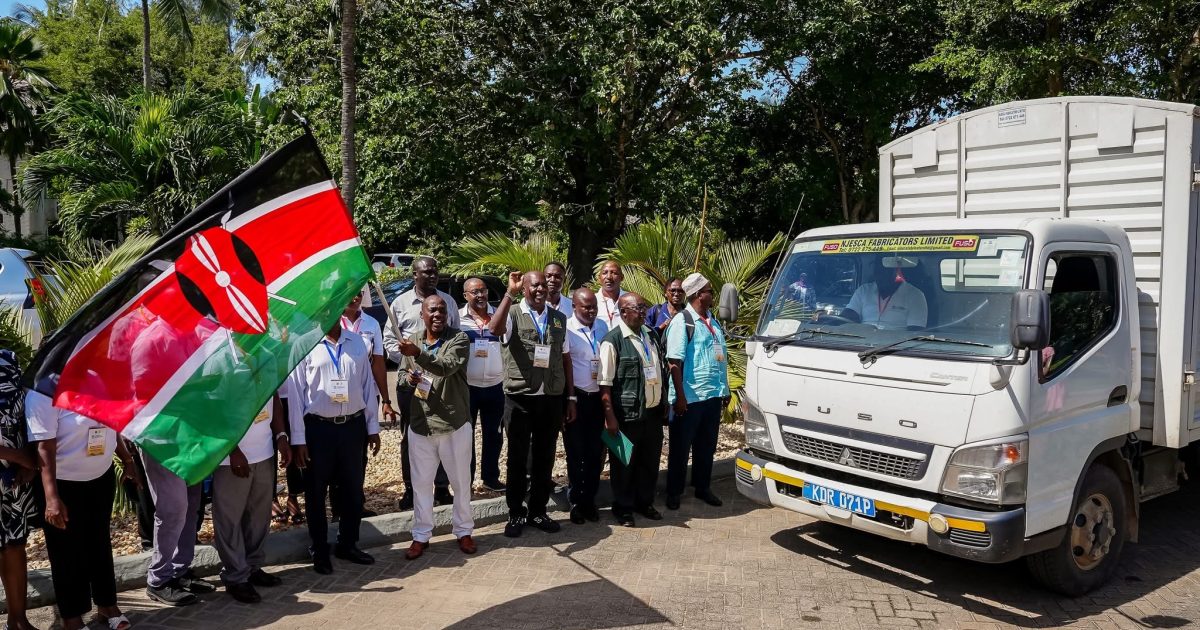
Principal Secretary (PS) for Agriculture Dr. Paul Ronoh, speaking during a national cashew conference in Kwale, emphasized that food security remains central to the government’s agenda and is critical to both economic stability and national security.
“Food security is a serious security issue. If there is no food, there is no peace. That is why this administration has placed agriculture at the center of its priorities,” said Ronoh.
He noted that the cashew nut subsector, once a strong performer in the 1970s, has declined sharply, with production now standing at about 9,000 metric tons annually despite supporting more than one million households across 15 counties.
“We are not here for theories. We are here for action and what works. The recommendations from this conference must translate into real change for farmers on the ground,” he added.
As part of the recovery plan, the government through the Agriculture and Food Authority (AFA) will distribute two million improved cashew seedlings across Coastal, Eastern, and Western regions, targeting production of over one million metric tons within five years, an intervention expected to grow the sector’s value from Sh520 million to about Sh60 billion.
Ronoh also urged farmers to adopt early-maturing varieties. “Why invest in trees that take five to six years to mature and give low yields when new varieties can produce within two years? We must move to what works,” he said.
Agriculture and Food Authority (AFA) Director General Dr. Bruno Linyiru said the Authority is scaling up efforts to support farmers through improved seedlings, extension services, and value-addition initiatives.
“We are focusing on high-yielding, early-maturing varieties that can significantly improve productivity and farmer incomes within a short period,” said Linyiru.
He noted that AFA is working closely with county governments to expand cashew farming into new regions while strengthening traditional growing zones along the Coast.
“We are collaborating with counties to ensure farmers access quality seedlings, training, and market linkages. Our goal is to make cashew farming commercially viable again,” he said.
Linyiru added that value addition remains a critical component of the revival strategy, with farmer groups already being supported to process cashew products.
“We are building capacity for farmer groups so they can add value and access better markets, including formal retail chains,” he explained.
AFA Chairman Cornelly Serem called for stronger collaboration between government, private sector, and development partners to unlock the full potential of the cashew value chain.
“Reviving the cashew subsector requires a coordinated approach. We must invest in production, processing, and market systems to ensure farmers get maximum value,” he said.
He stressed the need to shift from exporting raw cashew nuts to processed products.
“Value addition must happen locally so that farmers earn more and we create jobs,” he added.
Farmers welcomed the initiative but called for sustained support and implementation of resolutions agreed at the conference.
Fauzia Kassim, a cashew farmer from Kwale County, said farmers are encouraged by the renewed focus on the crop but urged leaders to follow through on their commitments.
“As farmers, we are happy that leaders have come together to discuss cashew farming. We now want them to uphold and follow up on what will be agreed here,” she said.
Fauzia noted that farmers continue to face challenges in production and marketing, calling for support to improve yields and access better markets.
She said the lack of a structured market has forced farmers to sell their produce to middlemen at low prices. “Right now, we sell cashew nuts to local buyers at about Sh70 per kilo, which is not fair considering the effort we put in,” she said.
Fauzia, who owns 80 cashew trees, expressed optimism about the distribution of improved seedlings.
“I am excited to receive the new variety that takes about two years to mature. This will really help us improve production,” she said.
She also urged the government to ensure the distribution of quality seedlings that can thrive in local conditions. “We want good cashew seeds that will grow well and give us better yields,” she added.
The three-day conference has brought together stakeholders from government, the private sector, research institutions, and international partners to develop a strategic roadmap for the cashew nut subsector.
Stakeholders expressed optimism that the renewed focus on the cashew value chain will boost farmer incomes, enhance food security, and contribute significantly to Kenya’s economic growth.
By Chari Suche