The Kenya Medical Practitioners and Dentists Council (KMPDC), working closely with the Digital Health Agency (DHA) and Social Health Authority (SHA), has identified and closed over 728 non-compliant facilities and downgraded 301 facilities through digitization.
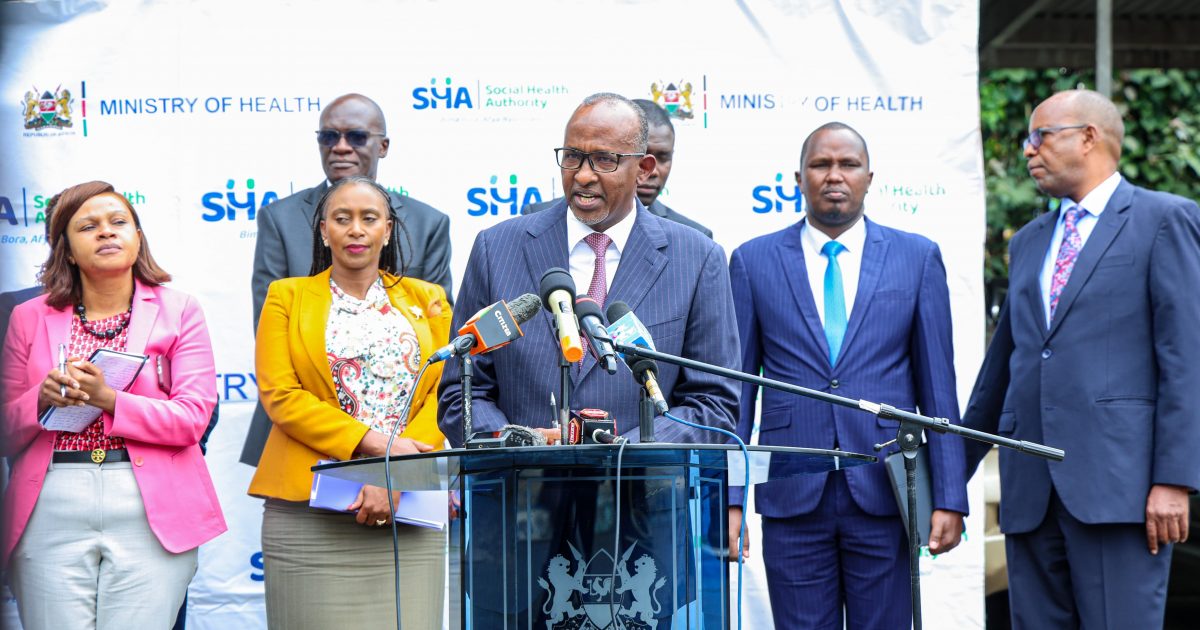
Health Cabinet Secretary Aden Duale said Monday that they are eliminating unlicensed facilities operating across the country to guarantee quality of care for citizens.
Giving an update on the Taifa Care Rollout in his office, the CS said that the government’s digital transformation, through the Comprehensive Integrated Health Information System and implemented by the Digital Health Agency, is the foundation of an efficient and transparent healthcare system.
“We are digitizing all aspects of healthcare, from patient records to facility operations, to eliminate fraud, reduce inefficiencies, and ensure seamless service delivery,” Duale said.
He explained that the comprehensive integrated health information system enables real-time data sharing between hospitals and national and county governments, improving decision-making and accountability across the health sector.
The CS added that they are phasing out paper records completely and that patient interaction, prescriptions, and transactions will be digitally recorded and tracked, significantly reducing opportunities for manipulation and theft.
“Our track-and-trace technology for medicines will monitor every drug’s journey from manufacturer to a uniquely identified patient at the facility level, ensuring fake drugs never reach Kenyans. Diversion of publicly financed medicines will be eliminated through this technology,” Duale noted.
“Mombasa, Embu, Kirinyaga, Nairobi, Nandi, Elgeyo Marakwet, Samburu, Garissa, Taita Taveta, Makueni, Migori, Kakamega, Bungoma, Tharaka Nithi, Meru, Nyandarua, and KDF facilities are in the process of digitizing,” he disclosed.
The CS reiterated the government’s commitment to ensuring that commodities are available across all our public health facilities, and in order to achieve this, key reforms are underway in KEMSA, focusing on improving commodity availability, restoring trust, enhancing transparency, and improving operational efficiency in the public health supply chain.
“To sustainably fund commodities, the government has recapitalized KEMSA, enabling it to stock essential commodities for the FY 2025/26 budget. Additionally, the Ministry of Health has secured a Sh10 billion revolving credit facility to guarantee uninterrupted access to essential medicines and health products,” Duale said
The CS confirmed that as of Monday 16th, June 2025, 23,674,672 Kenyans had enrolled in TaifaCare, with 28,679 new registrations yesterday. He added 5,483,160 Kenyans had undergone Means Testing to determine their premium contributions.
Means Testing is a transformative feature of SHA, guaranteeing fairness in contributions. No longer will a mama mboga pay the same as a CEO, and each Kenyan’s contribution is assessed based on income, ensuring that vulnerable populations are catered for just like those who contribute more.
“SHA has contracted 9,365 healthcare facilities nationwide, which include 5,219 public, 3,650 private, and 496 faith-based (FBO) facilities, to enable service access with a total of 5.7 million Kenyans enjoying services across PHCF and SHIF,” he explained.
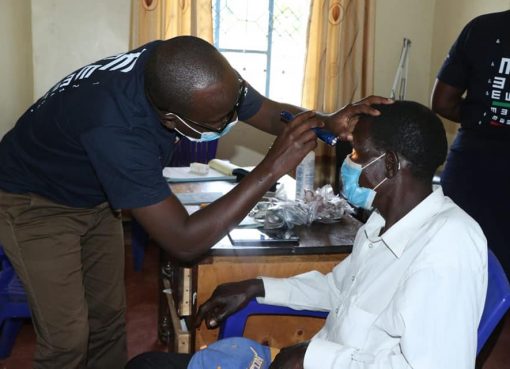
Through the Primary Healthcare Fund (PHCF), the CS confirmed that 3.6 million Kenyans have received free treatment for common illnesses, including malaria, pneumonia, injuries, and mental and eye health services, while expectant mothers have also accessed antenatal and postnatal care.
The CS said that in the 2025/26 health budget, they have allocated Sh 6.2 billion to support UHC contract health workers, Sh1.75 billion to clear long-standing medical arrears, Sh 4.2 billion to onboard and deploy new interns—doctors, pharmacists, and clinical officers and 3.2 billion for the Community Health Promoter’s training and stipends.
“We are also investing Sh13 billion to strengthen primary healthcare and Sh8 billion in emergency, chronic, and critical illness. These aren’t just numbers on paper, they are investments in our people’s lives,” Duale said
The CS assured of the government’s unwavering commitment to delivering quality, affordable healthcare to every Kenyan through Taifa Care, the new universal health system that is people-centered and is under the President’s Bottom-Up Economic Transformation Agenda.
By Wesley Omondi and Seif Ndung’u