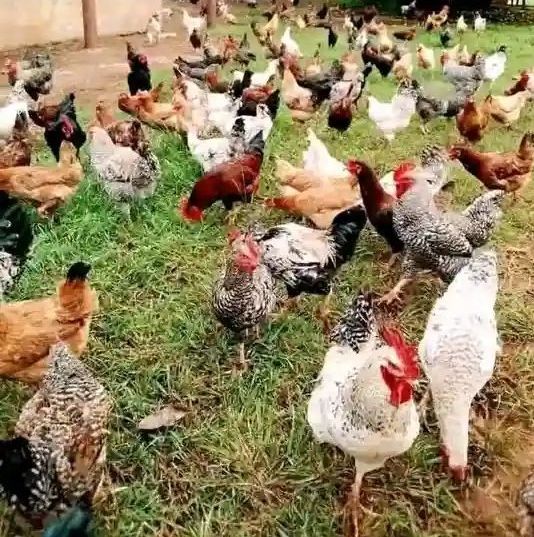
A poultry farmer in Meteitei Location, Tinderet Sub County, is demonstrating how innovation at the farm level can significantly reduce production costs after adopting a hybrid poultry rearing system that blends free-range and enclosed methods.
Jack Koech, who keeps more than 800 birds comprising layers and a smaller number of indigenous breeds, says the approach has transformed his enterprise from a high-cost venture into a more sustainable and profitable agribusiness.
By allowing part of his flock to forage during the day while maintaining another in a controlled housing system, he has managed to strike a balance between productivity and cost efficiency.
“Before adopting this system, I depended entirely on commercial feeds, and my daily feeding costs were averaging Sh. 6,000,” he said.
“Right now, I spend between Sh3,200 and Sh3,500 per day because a good number of the birds get part of their nutrition from the environment.”
He explained that the enclosed unit, which houses high-producing layers, was constructed at a cost of approximately Sh. 250,000. The structure includes proper ventilation, laying boxes, feeders, and automated drinkers to maximize efficiency.
On the other hand, the free-range section required a much smaller investment, about Sh50,000, mainly for perimeter fencing, simple shelters, and security enhancements to protect the birds from predators.
The farmer further revealed that he has embraced on-farm feed formulation to cushion himself against fluctuating market prices.
While a 70-kilogramme bag of commercial layers mash currently retails at about Sh3,200, he produces his own feed at an average cost of Sh2,400 per bag by sourcing and mixing ingredients such as maize germ, sunflower cake, fish meal, and lime.
“This alone saves me close to Sh800 per bag, and in a month, I use over 30 bags, so the savings are significant,” he noted.
Water management has also played a role in reducing operational expenses. By installing a rainwater harvesting system, the farmer has cut his monthly water bill by nearly Sh2,000.
Additionally, poultry waste is recycled as organic manure on his vegetable farm, eliminating the need for chemical fertilizers that would otherwise cost him about Sh3,000 monthly.
The hybrid model has also opened up market advantages. Eggs from the free-range birds are sold at a premium price of Sh16 each, compared to Sh12 for those produced under the enclosed system.
“Consumers are increasingly conscious about what they eat. Free-range eggs are seen as healthier and tastier, so I get better returns from them,” he said.
At peak production, the farm produces about 15 trays of eggs daily. With each tray retailing at an average of Sh320, the farmer earns approximately Sh4, 800 per day, translating to over Sh144, 000 in monthly revenue.
The Sub County Livestock Development Officer, Daniel Kibet, lauded the farmer’s approach, terming it a practical solution to the high cost of poultry production in the region.
“The hybrid poultry system is one of the most effective models for reducing input costs while maintaining productivity,” said Kibet.
“Feed alone accounts for between 60 and 70 percent of total production costs in poultry farming. Any strategy that reduces reliance on commercial feed directly boosts profitability.”
He explained that under a fully enclosed system, a farmer keeping 500 birds can spend up to Sh. 90,000 per month on feed.
However, with a hybrid approach, the cost can drop to between Sh45,000 and Sh55,000 depending on the level of supplementation and farm management practices.
“This is a reduction of nearly 40 to 50 percent, which is quite substantial for small- and medium-scale farmers,” he added.
Kibet also pointed out that the system enhances bird welfare, as free-range poultry benefit from natural sunlight, exercise, and a diversified diet, factors that contribute to stronger immunity and improved product quality.
However, he cautioned farmers against neglecting biosecurity measures, noting that free-range systems can expose birds to diseases if not properly managed.
“Farmers must ensure routine vaccination against diseases such as Newcastle, Gumboro, and fowl typhoid,” he said.
They should also invest in simple biosecurity measures like footbaths, controlled access to poultry houses, and proper sanitation.
The Meteitei farmer has heeded this advice by maintaining a strict vaccination schedule, which costs him about Sh. 5,000 monthly.
He has also reinforced his fencing and introduced supervised ranging to minimize losses from predators.
Labour costs on the farm have also reduced under the hybrid system. Initially, he employed two full-time workers at a combined monthly cost of Sh20,000. With the new system requiring less intensive supervision during the day, he now spends about Sh12,000 on labour.
“In total, my monthly operational costs have dropped from roughly Sh150,000 to about Sh95,000,” he said, adding, “That difference has made the business much more viable.”
Kibet encouraged more farmers in Tinderet Sub County to adopt the hybrid system, especially in the face of rising feed prices and economic uncertainties.
“This is a model that aligns well with our local conditions, where many farmers have access to land. It promotes sustainability, reduces costs, and improves resilience in poultry farming,” he said.
He added that the livestock department is stepping up extension services to train farmers on best practices in hybrid poultry production, including feed formulation, disease control, and housing.
By Sammy Mwibanda