Improved poultry farming is transforming livelihoods in Molo, where residents are increasingly embracing improved Kienyeji chicken production as a reliable and low-cost source of income.
Farmers say chicken rearing has become a preferred livelihood activity due to its small space requirements, quick returns, and lower production costs compared to other forms of livestock farming.
Experts note that improved Kienyeji chickens are more resilient to disease, adaptable to local conditions, and more profitable because they produce both meat and eggs.
Unlike broilers, which require expensive commercial feeds and intensive management, improved indigenous breeds thrive on locally available feeds and semi-free-range systems.
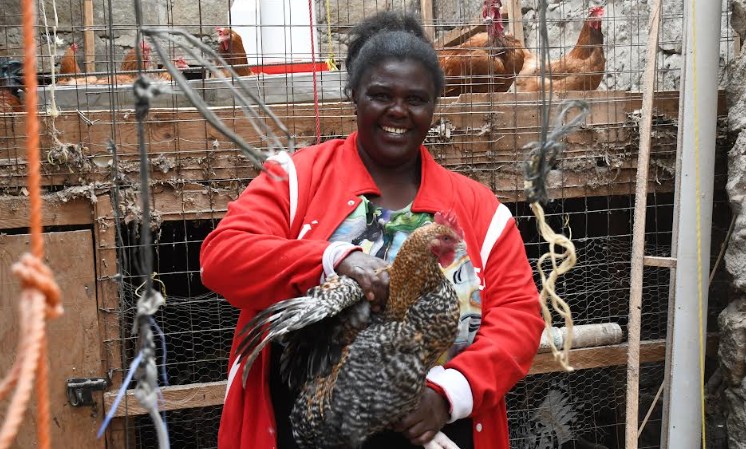
In Molo town, farmer Lucy Ichuga has become a model for successful poultry farming after transitioning from large-scale Irish potato farming to improved chicken production.
Ichuga, popularly known as “Lucy wa Kuku” on social media, said she embraced poultry farming after attending a farmers’ open day at the Kenya Agricultural and Livestock Research Organization (KALRO) centre in Njoro, which introduced her to modern poultry management practices.
Since then, she says her farming journey has taken a positive turn, with chicken farming proving more profitable and less demanding than crop production.
“Before I got these skills at KALRO, I was farming potatoes on a large scale. It was a profitable business, but I cannot compare it to chicken farming,” she said.
She noted that poultry farming offers quick financial returns, as chickens reach market weight within about three months, allowing farmers to generate income in a short period.
“With chickens, even on a small piece of land, you can start production. Within three months, you already have your cash,” she added.
Ichuga emphasised the importance of research and proper management in poultry farming, particularly maintaining clean and dry litter to ensure bird health and productivity.
She explained that poor litter conditions can negatively affect poultry health, leading to diseases such as coccidiosis and reduced growth rates. Clean bedding, she said, reduces ammonia levels, prevents respiratory illnesses, and improves feed conversion efficiency.
The mother of three has since become a local resource person, training other farmers on modern poultry techniques. Her small one-bedroom home reportedly hosts more than 600 birds, demonstrating the profitability of intensive poultry farming when properly managed.
Other farmers in Molo have also raised concerns over the high cost of production, particularly expensive animal feeds. They have called on the government to reduce taxes on imported feed ingredients to make poultry farming more affordable.
Current feed prices in Kenya remain high, with a 50kg bag ranging between Sh3,100 and Sh4,500 depending on the brand and type. Layers mash averages between Sh3,500 and Sh3,900, chick mash between Sh2,750 and Sh4,150, and broiler starter between Sh3,800 and Sh4,965.
Farmers say feed costs significantly reduce profit margins, especially for small-scale producers.
“In a month, each chicken consumes about 1 kg of feed. This shows how much investment is required before birds reach market age at around three months,” said Ichuga.
Farmers are also calling for government intervention to regulate the influx of eggs from neighbouring countries such as Uganda and Tanzania, saying the imports have increased competition and reduced local earnings.
Improved Kienyeji breeds such as KARI/KALRO Improved, Kuroiler, Rainbow Rooster, Sasso, and Kenbro are becoming popular in Kenya due to their faster growth rates, higher egg production of between 150 and 300 eggs annually, and improved disease resistance.
These breeds mature within four to five months and are well suited for semi-free-range systems, making them ideal for small-scale farmers seeking sustainable income.
Ichuga expressed optimism about expanding her poultry enterprise, saying she hopes to acquire more land to scale up production and meet growing market demand.
She continues to encourage farmers in the region to adopt improved farming technologies to enhance productivity and profitability in the poultry sector.
Captions
By Absalom Namwalo