The Government has been urged to expand digital partnerships and strengthen enabling policies that can accelerate agricultural transformation and improve food security across the country.
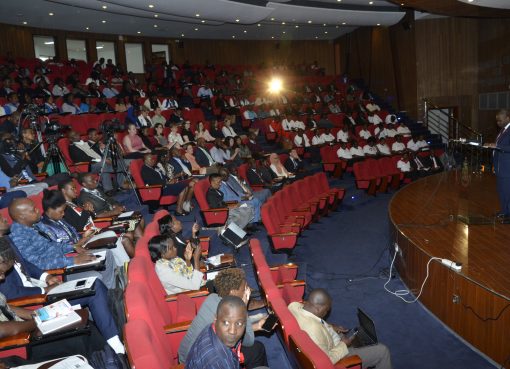
This call came as Mercy Corps’ AgriFin programme marked 10 years of driving digital innovation and financial inclusion for smallholder farmers across Africa and Asia during the AgriFin Learning Event held in Nairobi.
Mercy Corps Vice President Melaku Yirgu said Kenya continues to demonstrate leadership in advancing agricultural technology and inclusive growth through digital innovation and partnerships.
“Over the past decade, AgriFin has transformed the landscape through partnerships and evidence-based learning, we now have more than 150 partners working with AgriFin and reaching over 18 million smallholder farmers across Africa and Asia,” Yirgu said.
He noted that the programme has provided valuable insights into how governments and the private sector can work together to create cohesive policies that adapt to local realities.
“Agriculture is not a one-size-fits-all sector, different countries have unique contexts and policy frameworks, and success depends on building partnerships that fit those differences.” Yirgu said.
Yirgu praised Kenya’s progress as a regional hub for technology and agricultural innovation, saying Nairobi remains central to Africa’s digital transformation.
“Kenya’s potential is enormous, but we must ensure that millions of smallholder farmers benefit directly from these innovations through access to advisory services, finance, and markets,” Yirgu said.
Financial Sector Deepening (FSD) Kenya Chief Executive Officer, Tamara Cook, lauded Kenya’s continued investment in technology-enabled food systems and the collaborative model fostered through the AgriFin initiative.
“AgriFin has succeeded because it brings together agriculture, finance, and information technology, which are often treated separately, we are to feed our nations and improve livelihoods, these three sectors must work in synergy,” Yirgu said.
Cook noted that while Kenya’s digital finance ecosystem has made great progress, barriers such as limited infrastructure, climate shocks, and high operational costs remain.
“The challenges we face today are more complex than they were when AgriFin began, we must double down on collaboration between agriculture, finance, and technology to build resilience,” she said
She emphasised the critical role of government in designing policies that enable agri-food systems to thrive.
“Government has an important role to play in developing policies that promote agri-food systems from taxation and biodiversity to water management and climate-smart agriculture,” Cook said.
She called for smarter use of public and donor funds to leverage private capital.
“In an era where development funding is shrinking, governments must deploy resources strategically to attract private investment,” she added.
On food security, Cook said Kenya’s abundance of resources offers a strong foundation for agricultural growth.
“It is tragic that food insecurity persists in such a resource-rich country. We must ensure that Kenya’s natural resources are used to support sustainable food systems that feed farmers, families, and communities,” she said
Mercy Corps AgriFin Programme Director, Sieka Gatabaki, said Kenya’s digital readiness and policy support have made it a model for agricultural innovation.
“Kenya has shown remarkable leadership in enabling technology-driven farming systems, through partnerships with the private sector, investors, and government, AgriFin has worked to strengthen smallholder farming systems over the past decade,” he said.
He explained that AgriFin’s work has focused on ensuring that innovations are designed from a farmer-first perspective to ensure relevance and sustainability.
“We must empower farmers to identify challenges affecting their productivity and connect them with innovations that meet their needs,” he said.
Gatabaki added that governments across Africa are increasingly creating environments that support innovation, with Kenya standing out for its adaptability and digital infrastructure.
“We are seeing more openness among policymakers to support digital innovations and public-private partnerships, this mindset shift is key to strengthening food security and agricultural resilience,” he said.
He further highlighted the growing influence of artificial intelligence (AI) in improving agricultural decision-making and reducing costs for financial inclusion.
“Technology is an enabler, not an end, it has helped reduce the cost of reaching farmers and developing products that were previously harder to manage,” he said.
Briter Founder and Director, Dario Giuliani, said while private investment in agri-tech continues to grow, collaboration between governments, investors, and innovators is crucial to achieve large-scale impact.
“Start-ups alone cannot solve Africa’s food security problem, we must adopt a systems approach where policy, research, and innovation work together to create sustainable solutions,” Giuliani said.
He noted that while few African agri-tech firms have listed publicly, partnerships and joint ventures are emerging as more practical routes for scaling innovations.
“We should redefine what growth means for agri-tech companies, public listings are not the only success metric. Collaborations with universities, research institutions, and corporates can drive sustainable development.” Giuliani said.
Giuliani urged African governments to maintain open dialogue with private investors and innovators to ensure alignment between policy and enterprise needs.
“Policy still plays a massive role, for it to be effective, policymakers must speak the same language as the private sector and innovators,” he said.
Participants commended Kenya’s leadership in supporting digital transformation, which has positioned the country as a model for sustainable agri-tech growth in the region.
As AgriFin enters its second decade, stakeholders committed to deepen collaboration with the government, scale up digital innovations for farmers, and strengthen food systems to address climate change, market resilience, and food security challenges.
By Naif Rashid and Samuel Kivuva