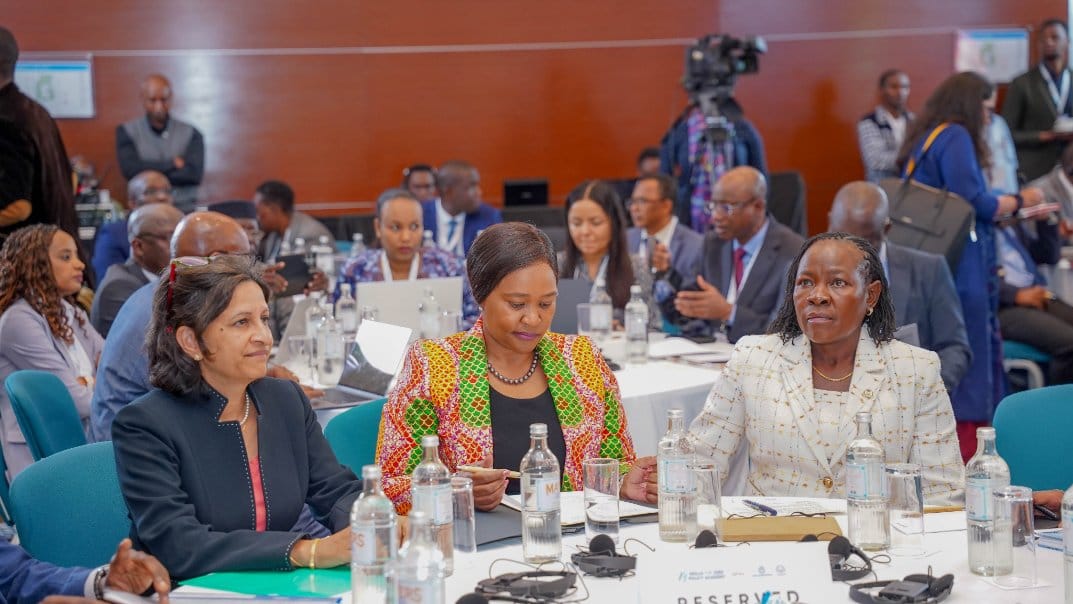
The government has called for urgent reforms in skills development to align training with labour market demands and unlock job opportunities for millions of young Africans.
Speaking during the opening of the Africa Skills for Jobs Policy Academy in Nairobi, Cabinet Secretary for Tourism and Wildlife Rebecca Miano said Kenya is prioritizing skills development under the Vision 2030 and the Bottom-Up Economic Transformation Agenda (BETA) as a driver of industrialization and inclusive growth.
“The government is redefining skills training by expanding access to technical and vocational education and training (TVET). We are targeting an increase in enrolment from 700,000 to two million students by the end of this year,” Miano said.
She added that the government was keen on strengthening partnerships with relevant industry players to ensure graduates acquire digital, technical and entrepreneurial skills that match current and emerging job markets.
Miano said the reforms were designed to boost productivity, attract investment and promote technological advancement.
The CS emphasised that skilled workers were not only essential for firms’ competitiveness, but could also become innovators driving Africa’s industrialization.
She encouraged delegates to use the forum to strengthen collaboration and share good practices in demand-driven skills development.
Education Cabinet Secretary Julius Ogamba said Africa’s industrialization depended on transforming TVET systems to be more responsive to labour market needs.
In a speech read on his behalf by Principal Secretary in the State Department for Technical and Vocational Education and Training, Dr. Esther Muoria, the CS stressed the need for African countries to adopt reforms that would make TVET the first-choice pathway for learners.
“For Africa to industrialize, we must make TVET agile, demand-driven and closely linked with industry. TVET institutions must prepare not only job seekers but also innovators and entrepreneurs,” Ogamba said.
He urged governments to raise the profile of TVET, commit to policy reforms, and strengthen linkages between training institutions and the private sector.
He commended President William Ruto’s administration for major milestones in the TVET sector, including equipment support, recruitment of trainers, and partnerships supported by the World Bank through the EASTRIP programme.
Ogamba said African countries must work together to recognize and promote TVET as a key driver of youth empowerment and a catalyst for economic growth.
World Bank Vice President for the People, Mamta Murthi said the global skills shortage was a threat to growth and competitiveness in developing economies.
She noted that 1.2 billion young people would enter the labour market in developing countries over the next decade, with success dependent on whether they acquired job-relevant skills.
“In Africa, the paradox is clear. Employers say they cannot find the skills they need, while young people say they cannot find the jobs they want. This mismatch is a major challenge,” Murthi said.
She added that education and training systems often fail to equip young people with problem-solving skills and practical competencies, while opportunities for upskilling adults remain limited, particularly for women and disadvantaged groups.
Murthi said the World Bank was focusing on jobs and workforce development through three approaches; building a stronger data agenda to guide skills investment, designing sector-focused training programmes in agribusiness, energy, health, tourism and manufacturing, and increasing private sector involvement in defining and delivering job-relevant skills.
“The private sector must take a leading role in governance and on-the-job training, because employers know best what is needed in the market,” she said.
World Bank Regional Vice President for Eastern and Southern Africa Ndiame Diop said Africa was at a critical point where its demographic surge could either drive economic growth or deepen unemployment.
“Africa must accelerate, diversify and sustain growth if we are to unlock the continent’s full potential. At the current growth of 3.5 per cent projected for 2025, we cannot reduce poverty or create sufficient opportunities,” Diop said.
He explained that Africa’s GDP grew by only 3.3 per cent on average in 2024 and is projected to rise to 4.3 per cent in 2026, barely above population growth.
He observed that 22 per cent of African youth are neither in education nor employment, underscoring the need for economies to create jobs linked to training.
Diop said Africa must avoid jobless growth and instead build diversified economies that expand opportunities in higher productivity sectors.
He added that the skills gap remained one of the biggest obstacles, noting that 86 per cent of 10-year-olds in sub-Saharan Africa cannot read and understand a simple text.
“Employers must be at the centre of defining curricula and shaping training. Young people need clear pathways through schools, apprenticeships and higher education, linked to labour market demand,” he said.
He cited the World Bank-supported E-Skills Programme in Kenya, Ethiopia and Rwanda which raised graduate employment within six months from 47 to 80 per cent through closer collaboration between training institutions and industry.
He urged governments, private sector actors and training providers to build ecosystems that connect skills development to employment opportunities.
Private sector players also shared their experiences at the forum. Amal Hassan, founder of Nigeria’s Outsource Global, said Africa had the human capacity to compete in the outsourcing industry but needed to strengthen training and infrastructure.
She described how she built one of Africa’s largest outsourcing companies employing more than 2,500 workers to serve international clients.
“There is a huge international demand for talent, but Africa must bridge the gap between training and industry needs. By creating ecosystems that link training providers, recruitment agencies and technology platforms, we can meet this demand,” Hassan said.
She explained that her company created training programmes tailored to industry needs, enabling Nigerian youth to secure employment in software engineering, customer service and other outsourced services. Her firm has since expanded operations to Kenya to serve a growing regional and global market.
Delegates underscored that building resilient, demand-driven skills systems must remain at the centre of Africa’s development agenda, noting that coordinated action among governments, the private sector and development partners is essential to translate the continent’s demographic potential into sustainable jobs and inclusive growth.
By Naif Rashid