Kenyans have been urged to take advantage of government-backed loans, grants and business opportunities, to establish and expand enterprises, create employment and improve their livelihoods.
Principal Secretary (PS) for Economic Planning, Dr. Bonface Makokha, and PS for Micro, Small and Medium Enterprises, Susan Mang’eni, said increased uptake of government empowerment programmes, would help residents become economically independent and reduce poverty.
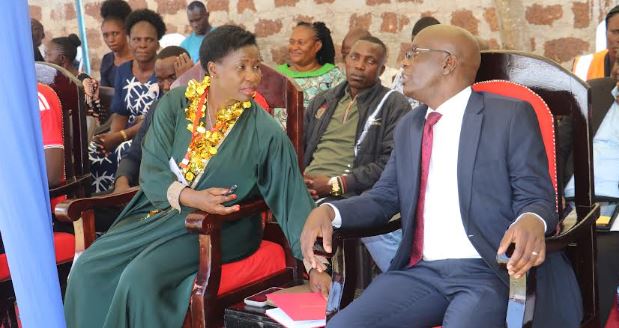
Speaking during a church service at Neno Evangelism Church in Port Victoria, Busia County, Dr. Makokha expressed concern over the low uptake of the Women Enterprise Fund in many Sub-county despite the allocation of funds to support women-led businesses.
“Bunyala Sub-county for instance receives Sh3 million for the Women Enterprise Fund, but statistics show that people are not taking-up the loans. Last month, only Sh750,000 was disbursed because our people are not applying for these loans, yet they are meant to help us. This is a pattern that is witnessed across many Sub counties in our country. We cannot thrive and build ourselves when we fail to take advantage of government funding, especially when most of it is interest-free,” he said.
He also announced the completion of registration of the Brethren Grassroots SACCO, which will bring together spiritual leaders across the country, to promote savings, investment and access to credit.
“We have already registered the Brethren Grassroots SACCO, which will bring together spiritual leaders across the country. This will enable them to save, invest and access loans to support various economic activities. We want to eliminate poverty among our people by creating a culture of saving,” he said.
Dr. Makokha further urged Members of Parliament, to ensure timely implementation of projects funded through the National Government Constituencies Development Fund (NG-CDF), noting that the government had put measures in place to facilitate timely disbursement of funds.
He said the government was releasing KSh5.1 billion monthly to facilitate constituency development projects, citing improvements in education infrastructure in several constituencies, including Budalang’i.
Mang’eni urged residents, particularly women, youth and persons living with disabilities, to register for the National Youth Opportunities Towards Advancement (NYOTA) and Access to Government Procurement Opportunities (AGPO) programmes to benefit from business training and government procurement opportunities.
She said the government had reserved 30 percent of public procurement opportunities for these groups, adding that the current financial year’s Sh4.8 trillion budget included an estimated Sh1 trillion in procurement opportunities.
“Thirty per cent of the procurement opportunities translates to about KSh300 billion, which should benefit women, youth and persons living with disabilities. This is an opportunity for our people to register, acquire the necessary skills and participate in government tenders,” she said.
Mang’eni said NYOTA and AGPO training would be conducted online over a 10-week period, after which participants would receive certificates. She added that fees for business registration and AGPO certification, would be waived to encourage more people to participate.
She further revealed that the government was developing a framework to address delayed payments to contractors through invoice discounting, which would enable eligible businesses to receive payments within 60 days.
Meanwhile, Budalang’i MP, Raphael Wanjala, urged parents to prioritise their children’s education by enrolling them in schools within the constituency to strengthen local learning institutions.
“We have many schools performing well academically in our Sub-county that need our support. We cannot continue taking bursaries to schools outside the sub-county while our own institutions remain in poor condition. Enrolment in our schools has remained low despite having enough schools to accommodate our learners,” he said.
Wanjala also challenged young people to explore alternative sources of livelihood, including technical training and entrepreneurship, amid declining fish stocks in Lake Victoria.
“For many years, fishing has been our main source of income, but this has changed because there are fewer fish in the lake. This calls for alternative ways of earning a living. Our youth need technical training to acquire skills that can help them secure employment and become self-reliant. They should also apply for government loans and grants to start businesses because these funds are meant to benefit them,” he said.
By Salome Alwanda and Rodgers Omondi