The Kericho County Government has launched the distribution of 1,484 curriculum materials for Pre-Primary One (PP1) and Pre-Primary Two (PP2) to Early Childhood Development and Education (ECDE) centres across the county.
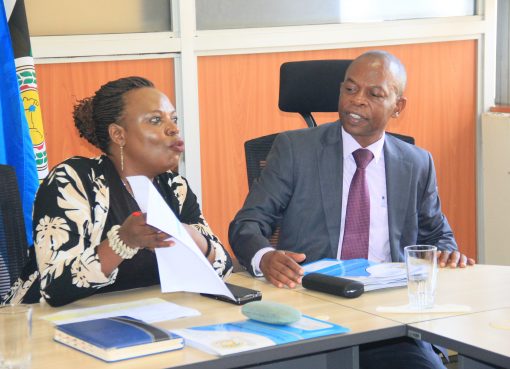
The materials were launched by the County Executive Committee Member (CECM) for Education, Culture and Social Services, Judith Chepkorir Chirchir, who was accompanied by the Chief Officer for Education, Richard Tonui, and ECDE Director Hellen Tele.
According to the county government, the materials are intended to provide ECDE teachers with standardized resources to guide classroom instruction and support learning among young children. The distribution covers both PP1 and PP2 curriculum materials and is expected to benefit ECDE centres across the county.
Speaking during the launch, Chirchir said the distribution was part of efforts by the county government to strengthen early childhood education by ensuring teachers have the necessary teaching and learning resources.
She said access to appropriate curriculum materials would support teachers in delivering lessons in a structured manner.
Chirchir urged ECDE teachers to make effective use of the materials and ensure that learning activities respond to the needs of children at the pre-primary level.
She said the county government would continue supporting ECDE teachers and learners through provision of resources and other interventions aimed at improving learning conditions.
The county government identifies pre-primary education as one of its responsibilities under the devolved system of government.
The distribution comes at a time when the county is implementing various programmes aimed at improving ECDE services.
The County Government’s Annual Development Plan for the 2026/2027 financial year lists the equipping of ECDE centres, as a programme aimed at improving the quality of teaching and learning, with a target of equipping 900 centres with chairs, tables and textbooks.
The county development plan also provides for capacity building of ECDE teachers, with a target of 1,422 teachers under the 2026/2027 programme. The plan identifies teacher capacity building as an intervention for improving knowledge and skills among ECDE personnel.
In June 2026, the county government reported that it had constructed 129 ECDE centres and ablution blocks over a three-year period and employed 1,137 ECDE teachers on permanent and pensionable terms. It also reported having 30 ward ECDE coordinators and programme officers to strengthen management and supervision of ECDE services.
The county has also been investing in digital learning for ECDE. In June, the county government said it was training programme and ICT officers who would subsequently train more than 1,000 ECDE teachers on digital learning and e-learning. The programme was being implemented in partnership with Education for Digital Understanding (EIDU).
Nationally, the Ministry of Education identifies pre-primary education as a function of county governments under the Fourth Schedule of the Constitution.
The national government, through the Ministry of Education, retains responsibility for education policy, standards and curriculum, while counties are responsible for pre-primary education and childcare facilities.
The Kenya Institute of Curriculum Development (KICD) states that the revised PP2 curriculum builds on competencies acquired at PP1 and focuses on areas including pre-literacy, pre-numeracy, motor and cognitive development, as well as social and emotional skills.
The curriculum designs also provide expected learning outcomes, learning experiences, core competencies, values and assessment guidance.
KICD’s PP1 curriculum design is similarly intended to guide the implementation of the Competency-Based Curriculum at the foundation level and prepare learners for transition to PP2.
The Institute’s official curriculum materials cover learning areas including language activities, mathematics, creative arts and environmental activities.
The latest distribution also comes after concerns were raised over shortages of learning materials in some ECDE centres during an education oversight exercise in Kericho in June.
The Senate Standing Committee on Education, which visited the county, cited inadequate infrastructure, shortages of learning materials, feeding challenges and management issues among concerns requiring attention.
The distribution of the 1,484 curriculum materials therefore adds to the county’s ongoing measures to equip ECDE centres and support teachers in implementing the pre-primary curriculum.
The county government has previously included the supply of ECDE learning materials, classroom equipment, teacher training and infrastructure development among its education programmes.
by Humphrey Edwin