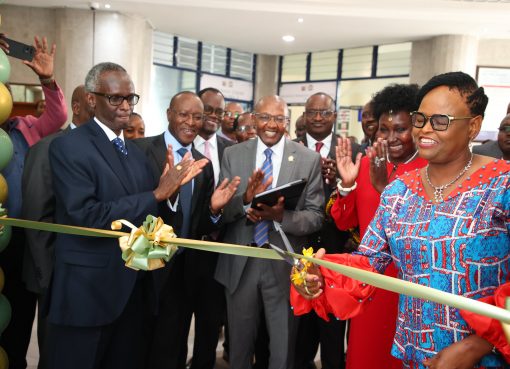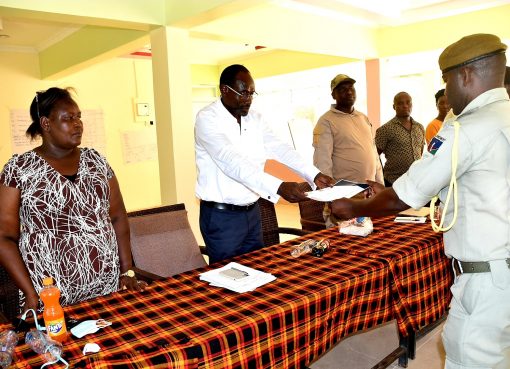
Kisumu County has stepped up efforts to reduce non-revenue water (NRW) to below 20 per cent following the handover of new equipment to the Kisumu Water and Sanitation Company (KIWASCO).
Deputy Governor Mathew Owili, who represented Governor Anyang’ Nyong’o at the event, said the county was determined to sustain recent gains that have seen NRW drop from about 41 per cent to 28 per cent.
“As we hand over this equipment, we are giving KIWASCO a target of 20 per cent. This is achievable and will place Kisumu among the best-performing utilities in the country,” said Dr Owili.
He noted that reducing NRW—treated water lost through leakages, illegal connections and inefficiencies not only improves the financial health of the utility but also ensures more residents access clean and reliable water.
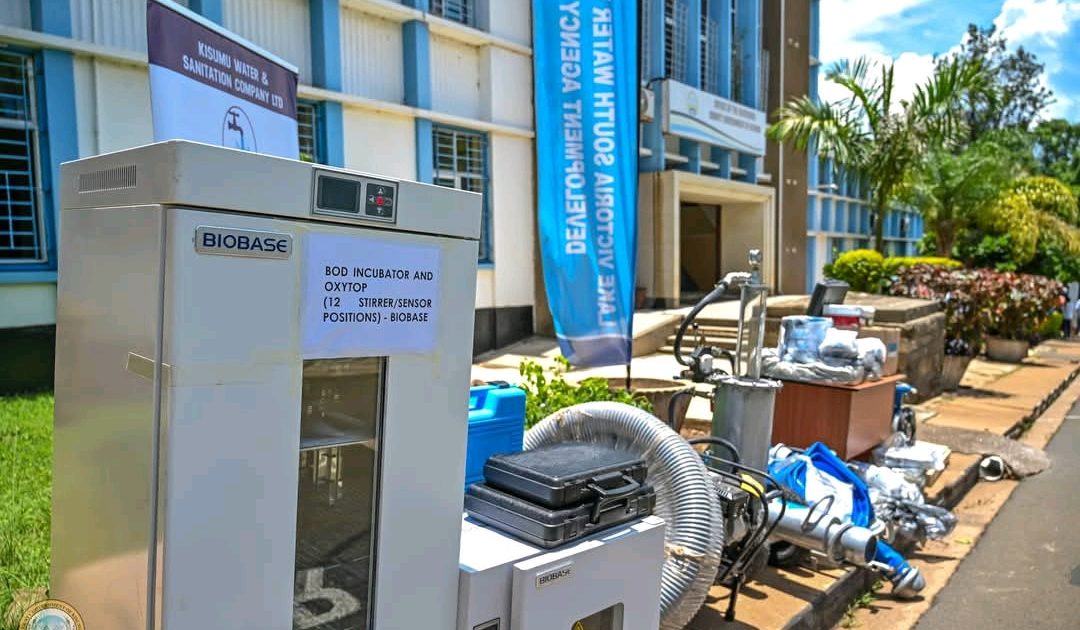
The equipment was donated to KIWASCO by the Lake Victoria South Water Works Development Agency (LVSWWDA) as part of ongoing efforts to strengthen water and sanitation services in the lakeside city.
LVSWWDA Chief Executive Officer (CEO) Jacqueline Kemunto said the handover marks a key step in tackling non-revenue water and improving system efficiency.
The assets include a double-cabin pick-up vehicle for NRW field operations, assorted water quality monitoring equipment for laboratory analysis, two vacuum sludge pumps for handling faecal waste, and electromagnetic flow meters to monitor water flows within pipelines—critical tools in detecting losses and improving system accountability.
The programme, she added, has also delivered additional infrastructure, including 7.1 kilometers of water supply network, 25 kilometres of sewer pipelines with over 600 manholes, a jet flush truck for sewer maintenance, and a sewer pumping station along Nairobi Road.
The initiative is supported by development partners, including the French Development Agency (AFD) and the European Investment Bank (EIB).
A representative from AFD, Melanie Grignon, said the partners were closely monitoring progress of the project, particularly interventions targeting non-revenue water.
“We are really glad to be here and to see that the project is moving forward, particularly on the non-revenue water components. It will be a big achievement for water operations in Kisumu,” she said.
County Executive Committee Member (CECM) for Water, Environment, Climate Change and Natural Resources, Judith Oluoch, said the programme was already delivering measurable results.
“What we lose as a county is close to 280,000 cubic metres of water every month due to wastage. From over 40 per cent, we are now at 28 per cent. This shows the impact of the ongoing interventions,” she said.
Oluoch added that the newly acquired equipment will enhance the county’s capacity to detect leaks, respond to bursts and monitor water quality, while also calling on residents to report cases of water wastage.
On his part, KIWASCO representative Nicholas Moseti said the utility is confident of meeting regulatory targets with the additional support.
“We have moved from over 40 per cent to about 30 per cent, and last month we achieved 28 per cent. With this equipment, we are looking at going below 25 per cent and even pushing towards 20 per cent,” he said.
He noted that the national NRW average stands at about 45 per cent, placing Kisumu ahead of many utilities in the country.
By Chris Mahandara