Kuria region is a blessed land with fertile farmlands and abundant rains compared to any other place in Migori County; unfortunately, it is also an area shrouded in mysteries and secrets buried beneath the evils of deep insecurity and retrogressive traditions and cultures.
Sandwiched between the Migori River on the east and the Mara River on the west and bordering Trans-Mara Sub-County in Narok County on the south and the Republic of Tanzania on the west, the region shares all sorts of negativities that stops the heartbeat of an ordinary mortal.
The area is predominantly occupied by the Kuria tribe made up of four clans (Abagumbe, Abairege, Abanyabasi and Abakira) spread across two constituencies of Kuria East and Kuria West with four sub-counties and 12 wards
Top issues weighing down the region are insecurity ranging from cattle theft to fights over farmlands, the infamous Female Genital Mutilation (FGM), illegal businesses and smuggling of goods and products like bhang and ethanol along the border.
These problems have continued to portray the area in a bad light, yet non-Kuria people have continued to troop into the area to acquire land for farming and patching homes.
To make matters even worse, the never-ending wars between members of the Kuria community involving the indigenous from the sister clans have escalated the evil spirit of clannism among the people, making it even more difficult for the security apparatus to understand the community’s complex nature.
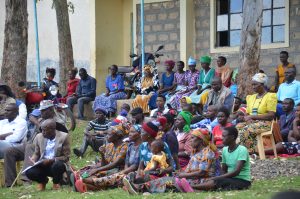
Photo 1: Nyanza Regional Commissioner, Florah Mworoa, speaking during a security baraza at the Biasumu Primary School in Nyabasi West Ward-Kuria East Sub-County on Tuesday, November 4, 2025. She urged the two factions of Kuria clans to desist from violence and embrace peace.
Recent case is the infighting between the two clans of the Bwirege and Nyabasi that accused each other of cattle theft, leading to the death of one person and scores of community members injured.
The infights also led to the early closure of Biasumu Primary School in Nyabasi West Ward, Kuria East Sub-County, badly interfering with the third-term national examinations and the daily routine of undertaking farming activities for fear of unexpected retaliatory attacks.
The inter-clan wars escalated too high prompting the Nyanza Regional security team, led by the Nyanza Regional Commissioner (RC), Florah Mworoa, to visit the area and have a public security baraza at the school in a bid to address the matter.
The security baraza came after the assistant chief from Kugitimo Sub-Location in Kuria East Sub-County was shot dead by unknown people a month ago, with no arrest being made, posing a serious security question.
During the meeting, Ms Mworoa noted that it was only through community dialogue, integration and proper security coordination that a community can live in harmony, cautioning the two warring communities for name-calling. She said that a thief is a criminal and should not be classified as a community thing.
According to a resident of Biasumu village, Mr Kechoko Kibiriti, the two clans should not allow a few individuals involving in cattle theft syndicate from both communities to jeopardise peace, love and unity that the local villages have enjoyed for years.
“We cannot farm, do business or even attend to our sick in hospitals for fear of being attacked,” decried Mr Kibiriti during an interview with KNA.
He explained that what started as the theft of one head of cattle in January this year developed into a large-scale syndicate of organised crime of cattle theft among the two communities that accused each other of hiding their kin’s involved in the criminal activities.
But how did a place full of agricultural and livestock-rearing potential, blessed with good fertile soils, good climate, and abundant rainfall, find itself in this mess?
Kibiriti stressed that the Kuria community bears the greatest responsibility for making life difficult for themselves, adding that the community should rather embrace information sharing that may lead to flushing out the criminals.
“Community policing is the first line of defence in fighting insecurity because the community can share crucial information that assists the security apparatus to pursue and arrest the perpetrators,” he emphasised.
He laments that the region has received government officials who appear inept and with disciplinary issues, posted in the area as a punishment because of the hostility and insecurity in the region.

Kuria has become a place where our community is forced to spend the night with their animals in the house or enclosed spaces just to protect their animals from thieves; a community fighting so hard to shade these negative vice, yet it’s the same people from my own community that orchestrate the same crimes, Mr Kibiriti rued.
A community living in fear, yet God has blessed them with fertile lands that can not only generate agricultural income but also sustain livestock and, in other places, mining activities, he continued.
The area has turned to be a place where even the local fear living within their own localities.
Gone are the days when Kuria land boasted being a darling place where every person craved to buy land and settle.
The now larger population of the Kisii and Kikuyu communities who trooped to the region and found it a haven in the early days now say that it is time to rethink their stay there and warn those who have the ambition to settle there to hold on.
Peter Ombuna, a local businessperson at Ntimaru centre says that he was hoping to buy land and settle with his family, but with the recent insecurity scourge, he has shelved the ambition.
Ombuna says that failure by the political class to speak in one voice is the reason why some of the issues, especially insecurity and FGM, cannot be addressed.
From the Peace Declaration of Tarime and Awendo to a lot of meetings between the two communities of Kipsigis and security personnel, peace remains elusive in the region with promises to maintain peace, harmony, and security by the warring communities being broken now and then.
The Awendo and Tarime Peace
Our founding fathers had foreseen the future problems of this nation, and they kept propagating the narrative of peace, love and unity through the Harambee slogan and ‘fuata nyayo’. But 61 years down the line, the same problems are still lingering with the Kuria people with despair and little hope on the horizon.
If men can fear staying in their homesteads, women unable to do home chores and farming, and children unable to finish their examinations, then there is a bigger problem that needs to be addressed. The security alone cannot be able to solve the challenges of a community if the community itself cannot accept and be willing to discuss and open up about its problems.
As the security apparatus tries to solve the insecurity problems in Kuria, it’s high time that the community gets involved in the fight through community policing, holding barazas and being each other’s keeper to safeguard their social and economic interest and make their place a safe haven.
By Makokha Khaoya and George Agimba