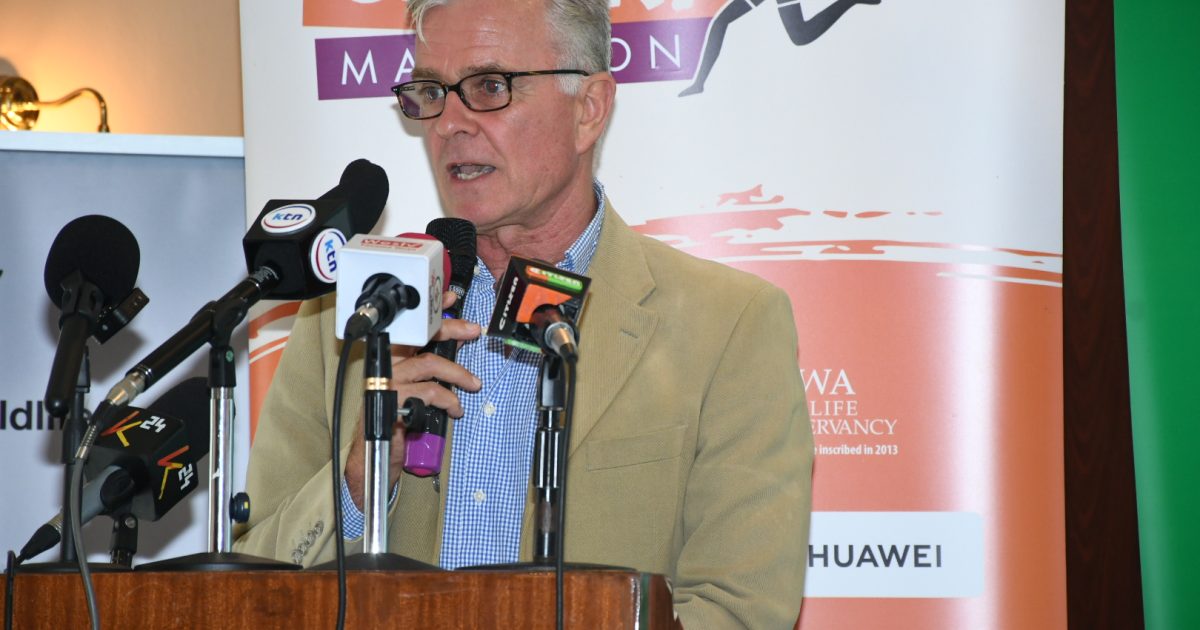
The 26th edition of the Lewa Safari Marathon has been officially launched, with organisers highlighting its continued role in raising funds for wildlife conservation and community development initiatives across the country.
Speaking during the launch, the Chief Executive Officer (CEO) of Lewa Wildlife Conservancy, Mike Watson, described the marathon as more than a sporting event, noting that it has become one of Africa’s most powerful conservation platforms.
Watson explained that the marathon brings together individuals, organizations and corporate partners committed to protecting wildlife and improving livelihoods for communities living near conservation areas.
“The event is far more than a race; it is one of Africa’s most powerful platforms for conservation, bringing together people, purpose and partnerships to protect wildlife and transform communities across Kenya,” he reiterated.
Notably, the marathon is scheduled to take place on June 27, 2026, at Lewa Conservancy in Laikipia County, attracting both local and international participants.
According to Watson, the marathon continues to deliver tangible benefits to conservation and community programmes supported through the initiative.
He further revealed that the 2025 edition attracted more than 1,400 runners from Kenya and around the world, raising approximately $228,000 to support conservation efforts.
“These funds are not abstract; they translate directly into impact,” Watson emphasised.
Importantly, the CEO explained that proceeds from the marathon support the protection of endangered species such as rhinos, elephants, lions and the critically endangered mountain bongo found in Kenya.
Watson further added that the funds help facilitate ranger patrols covering thousands of kilometers to safeguard forests, marine ecosystems and wildlife habitats while promoting peaceful coexistence between communities and wildlife.
Beyond conservation, he highlighted that the marathon also supports a range of social programmes aimed at improving the welfare of communities living near conservation areas.
Specifically, the CEO pointed out that thousands of children benefit from education support programmes, while communities gain access to healthcare services and livelihood opportunities through initiatives such as sustainable agriculture, clean water projects, and women’s microenterprise schemes.
Watson at the same time attributed the long-standing success of the marathon to strong partnerships with corporate sponsors and conservation organizations that have supported the initiative over the years.
He expressed appreciation to leading sponsors including Safaricom and Huawei for their sustained commitment to conservation and community development.
“Safaricom has supported the marathon since its inception over two decades ago, while Huawei has partnered with the initiative for nearly two decades,” disclosed the CEO.
In addition, Watson also acknowledged the contribution of other partners and organizations that continue to support the marathon and its conservation outcomes.
As preparations begin for the 2026 event, he reported that organisers are focused on expanding the reach and impact of the marathon by strengthening support to conservation partners and community programmes across Kenya.
“We want to continue demonstrating that conservation can and must deliver benefits for both people and wildlife,” he asserted.
Meanwhile, the launch event also highlighted conservation efforts aimed at protecting the endangered Grevy’s zebra, whose population has been under threat due to habitat loss and climate challenges.
In his remarks, the Director of Research and Impact at the Grevy’s Zebra Trust, Dr David Kimiti, underscored the importance of community participation in conservation efforts.
Dr Kimiti explained that communities living in wildlife habitats play a crucial role in monitoring and protecting the species.
“The best people to monitor these areas are the communities that live there,” he remarked.
The Director noted that young warriors from Samburu and Rendille communities are actively involved in conservation efforts through initiatives that promote traditional stewardship of wildlife and rangeland management.
According to Dr. Kimiti, conservation teams also rely on technology such as the Spatial Monitoring and Reporting Tool (SMART) to collect field data on sightings and population trends of the Grevy’s zebra.
The data helps researchers monitor population demographics, including foals, juveniles and adult animals, to determine whether the population is growing.
In this regard, Dr Kimiti revealed that the target population growth rate for the species in the region was set at 30 percent, a milestone conservationist has managed to surpass in recent years.
“Since we started working with marathon funding, we have seen improvement, and last year we recorded about 37 percent, which indicates a growing population,” he observed.
However, Dr Kimiti cautioned that conservationists must remain vigilant as new threats continue to emerge, including climate-related challenges such as prolonged droughts experienced in recent years.
He as well emphasized the need for continued collaboration among conservation organizations, communities, and partners to ensure the long-term survival of endangered species.
In the meantime, registration for the 2026 Lewa Safari Marathon will open on March 27, with organisers inviting runners, walkers and partners from across the globe to participate in the event.
Watson encouraged participants to take part in the marathon, noting that every step taken contributes to protecting Kenya’s wildlife and supporting communities living alongside it.
By Nicholas Ochieng