As the world observed the International Men’s Day on Wednesday, the general consensus is that society needs to take the welfare of men more seriously.
The Day was first observed in 1999 in Trinidad and Tobago by Dr Jerome Teelucksingh in honour of his father’s birthday.
But what started as a local fete in the tiny Caribbean nation of 1.3 million inhabitants has today spread to more than 80 countries, becoming a global platform to encourage a deeper understanding of roles men play in the community.
This celebration’s objective is to recognize men who contribute to society through kindness, responsibility, and leadership, and highlights their roles in families, communities, relationships, childcare, and environmental responsibility.
In addition, the day focuses on men’s physical, emotional, and mental health; issues that are often left unspoken.
But as the world was observing the day, some leaders and a section of Nyeri residents feel there is a need to relook at how society views the place of men and identify whether the male gender is on the brink of being marginalized.
Some also feel that while the boy child was once a celebrated personality in the yester years, postmodernism and women affirmative action may soon take out men from the scene in both the social and economic sector.
They argue that men continue to struggle in silence because society pays little attention to their challenges.
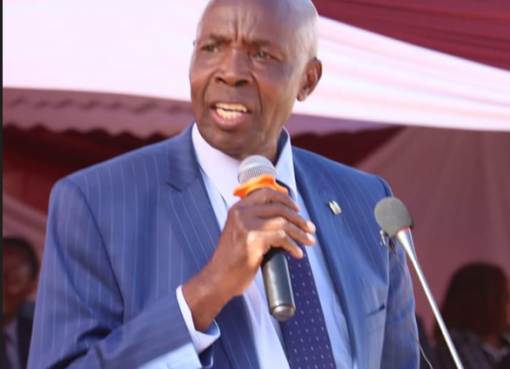
Nyeri Central Deputy County Commissioner, Ngunyi Maina, noted that while the rest of the world were celebrating the achievement of men, few people in Kenya were even aware such an event existed.
He stated that most men lack information about such celebrations since unlike women, the former do not have strong ambassadors to champion their issues.
“The International men’s day is recognized across the world, but unfortunately many men do not know it exists. Women have champions, advocates, and organizations that push for their day. They fight for themselves but men do not have the same structure,” he pointed out.
“In this country, we hear more about empowering the girl child. That is good, but the boy child has been left behind. Many men today are frustrated because their issues have not been addressed”.
The administrator explains that even in most Kenyan schools, pupils grow up hearing more about the girl-child, a clarion call that ends up confining the boy into the corridors of silent neglect.
He cites such ‘discrimination’ as a leading cause that has contributed to the conflicts plaguing many families today with men being the aggressors rather than defenders of the family unit.
He said some men have given up on marriage, relationships, and responsibilities because they feel unsupported, and this has led to serious social consequences.
“In Nyeri Central, we are even seeing the effects (of neglecting the male gender) in schools. There are schools that used to have 400 students, but now they have only about 60 learners. This decline is about frustration and broken families. We must look out for men, they need to feel celebrated and appreciated,” advises Maina.
Local artist Mike Folly shares similar views.
He says nowadays men do not feel valued and the society only acknowledges them when they die.
He terms such recognition as mere lip service without substance and therefore worthless.
“People don’t listen to men. We feel more neglected than any of the creatures God made. Even an animal is perhaps appreciated much better. The boy child is only remembered upon demise. If we empower women, let us not forget men. We also need support,” he said.
On his part Peter Mwangi says men suffer secretly because society expects them to be stoics and immune to the storms and vagaries of life.
But he faults this notion terming it a misguided and too presumptuous since both women and women habour similar humane attributes with the same breaking points when pushed to the brink.
“People think men are invincible when it comes to stressful conditions but this is a very simplistic reasoning. We hide everything because we are scared of looking weak. We need places where we can talk freely. Sadly, such havens rarely exist in our modern society,” he argues.
Grace Wanjiku, a shop attendant, now wants more to be done and address issues that affect men in order to make their life worthwhile just like their female counterparts.
Ms Wanjiku says no society can survive while neglecting to take stock of their contributions and the need to safeguard their welfare not only for now but for posterity.
“Men protect, provide, and guide their families. They try their best even when life becomes tough and unbearable. Celebrating men does not sideline women. Everyone needs love,” she explains.
And as the debate rages on whether men need similar attention as women, the reality is that more and more men are paying the ultimate price after failing to live to the standards of a world where there is little affirmative action for the boy child.
In May this year statics from the County Commissioner’s office indicated more men had resorted to committing suicide rather than confront the realities and uncertainties of life.
Former Nyeri County Commissioner Ronald Mwiwawi had indicated that on average, a life was being lost on a daily basis in Nyeri through suicide.
Shockingly almost all those taking their lives happened to be men.
The administrator said his office has now decided to take over the crisis as a matter of urgency through a team of professionals who were leading an onslaught against the vice in areas like Kieni East, Kieni West and Mukurwe-ini that are hardly hit by the challenge.
“Almost every day I am losing a human being and even the way our men are killing themselves is just by hanging outside their homestead. I have gone public telling men to visit my office. Men are walking into my office and explaining their sad stories. A man walks to my office and tells me he had even bought a rope with which to hang himself. It’s really sad,” said Mwiwai while chairing a Service Delivery meeting for Heads of Department on May 28.
The County Commissioner called for concerted efforts in addressing the menace before it got out of hand or turned out to be an existential threat for men.
By Samuel Maina and Diana Odipo