It sounded like a fantasy for many in Migori County when the devolved government began enticing local farmers to embrace dairy farming with the sole aim of boosting milk and meat production in the region in 2024.
However, what was regarded eight years ago as an impossible investment has now turned into a reality in the area, with local farmers reaping big dividends in terms of huge incomes from milk and meat production.
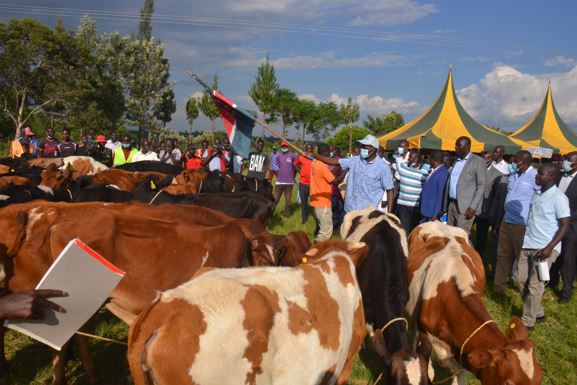
It all started with the county government’s multi-million initiative of donating dairy and beef cattle to farmer groups at the ward level, which saw at least 48 groups of farmers receiving 84 high-breed cattle worth over Sh97 million.
Among the distributed livestock in all the 48 wards were hundreds of in-calf heifers and Sahiwal bulls given out to help boost milk and meat production within the region.
During the distribution exercises presided over by top county officials, farmers were exhorted to jealously guard the animals while caring for them at their homes in order to give them good income.
The animals would only thrive in an environment where they are not exposed to diseases; they were informed about all steps for good dairy cattle husbandry, which information was well heeded, resulting in the current huge dividend.
County leadership was keen to promote milk and meat production by giving farmers upgraded breeds and encouraging them to diversify from the indigenous breeds.
In addition, the good working relations with partners made it easy for the County government to draw on well-thought-out programs that have addressed the recurrent shortfalls in milk and meat production in the region.
“This could only be possible through supplying farmers with the improved type of cattle,” says Migori Deputy Governor Joseph Mahiri, who added that milk and meat production now stands at over 60 percent of the region’s annual requirement.
Migori County had always faced a serious shortfall in milk production, only producing 25 million litres of milk annually, which is way lower than the demand of 88 million litres per year.
To bridge the gap, the region has been importing milk from far-flung regions of Kericho, Kisii, Nandi, Transmara, and even as far as Tarime in neighboring sister country, Tanzania.
Migori County Executive Committee (CEC) Member in charge of the Agriculture, Livestock, and Fisheries portfolio, Lucas Mosenda, says the programme to offer farmers the upgraded cattle breeds is an initiative embedded in the county development blueprint and would ensure that farmers get the right animals to elevate their economic status.
The programme entails an effort to give out high-breed cattle in all the eight constituencies within the region up to the ward levels, said Mosenda, adding that each of the 48 wards will receive two animals.
Farmers are organized in a way that calves sired from animals given to a group will be distributed amongst the group members, he explained.
A beneficiary farmer, Christine Robi, appreciates the gesture and promised to take care of the group animals by firmly following the advice from experts to help fulfill the dream of the county.
“This will reduce our over-reliance on milk from other regions,” she noted during a brief interview with KNA, adding that the animals she received from another farmer in a rotational group agreement are now giving her at least 20 litres of milk every day.
Another farmer who benefited from the programme, Mr. Elisha Okola from Oruba Village in South Kanyamkago Ward, got a calf from a member of his farmers’ group and now owns four dairy cattle, giving him over 50 litres of milk daily.
“The sales are good, and I am able to educate my children and take care of the family well from the proceeds of milk sold,” he told KNA.
Similar uplifting stories can easily be replicated in all the 48 wards within the devolved unit, and the general mood is that dairy and meat production in the region is fast-growing and soon the area will be a net exporter of milk and meat.
By George Agimba