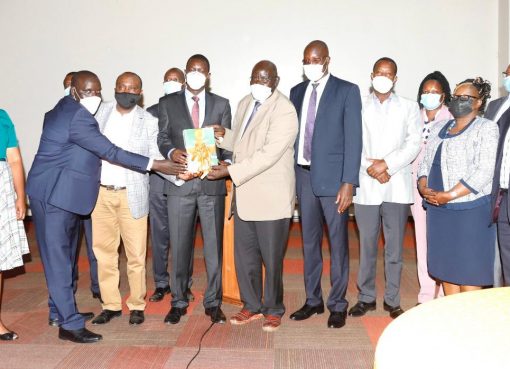
The Ministry of Health has stepped up efforts to strengthen the implementation of Universal Health Coverage (UHC) through stakeholder consultations aimed at addressing challenges affecting healthcare service delivery and improving access to quality medical services.
The ministry on Friday held a stakeholder engagement forum in Eldoret town, bringing together healthcare professionals, private health partners and members of the public to assess progress made in implementing UHC and gather recommendations on areas requiring improvement.
The town hall meeting, held under the theme “Strengthening Service Delivery for Universal Health Coverage”, provided a platform for participants to raise concerns and make proposals on healthcare financing under the Social Health Authority (SHA), digitisation of primary healthcare services and public-private partnerships in the health sector.

Speaking during the forum, Principal Secretary for the State Department for Medical Services Dr Ouma Oluga said the engagement was part of efforts to decentralise the discussions and resolutions of the National Kenya Health Summit held in August 2026.
Oluga said the ministry had embarked on countrywide consultations to establish how the ongoing health sector reforms were being experienced by Kenyans and identify emerging challenges requiring policy and administrative interventions.
He noted that the engagements were intended to bring the government closer to healthcare providers, hospitals, patients and communities to ensure that all stakeholders understood and actively participated in the implementation of UHC.
The PS observed that discussions during the Eldoret forum had largely shifted towards practical service delivery challenges, including lengthy patient registration and data-entry procedures, availability of medicines and the experiences of patients seeking treatment in public health facilities.
He said concerns raised by healthcare providers over the time taken to enter patient information into the SHA system would be addressed to make the process more efficient and minimise delays in service delivery.
Oluga also acknowledged concerns raised by patients over discrepancies between medicines listed under the health financing system and those available at health facilities, saying such issues were among the areas the ministry was keen to address through stakeholder engagements.
On healthcare financing amid the gradual exit of development partners, the PS urged Kenyans to register with SHA and contribute towards the scheme, saying sustainable financing was critical to the success of UHC.
He maintained that the government was committed to ensuring that the new healthcare financing framework remained the central pillar in funding medical services.
Meanwhile, Kenya Medical Practitioners, Pharmacists and Dentists Union (KMPDU) Secretary General Dr Davji Atellah called on the government to increase budgetary allocations to the health sector to cushion public hospitals against potential funding shortfalls as donor support declines.
Atellah said although increased SHA registration and contributions were necessary to expand the healthcare financing pool, the government must also take greater responsibility for financing health services through increased public investment.
He called for the government to honour the 2001 Abuja Declaration commitment requiring African countries to allocate at least 15 per cent of their annual national budgets to healthcare.
The KMPDU boss expressed concern over the financial pressures facing national referral hospitals, including Kenyatta National Hospital, Kenyatta University Teaching, Referral and Research Hospital and Moi Teaching and Referral Hospital, warning that inadequate funding could disrupt service delivery.
He said increased allocations were also necessary to facilitate the recruitment of additional healthcare workers, particularly doctors, to address staffing shortages in major referral facilities.
Atellah proposed the employment of more than 1,000 doctors in national referral hospitals, noting that existing staffing gaps had forced some doctors to work in both public and private wings of the facilities.
He observed that efforts to restrict doctors in national referral hospitals from undertaking private practice within or near the facilities should be accompanied by a clear government plan to recruit additional personnel to ensure uninterrupted services.
The union official further warned that failure to address funding and staffing challenges could trigger industrial unrest in the health sector.
He said KMPDU was engaging Parliament and other stakeholders to push for increased healthcare allocations, noting that budgetary commitments made during negotiations sometimes failed to translate into actual funding after consideration by parliamentary committees.
Atellah argued that healthcare professionals needed stronger representation in Parliament to ensure that budgetary allocations reflected the actual human resource and operational requirements of the sector.
He, however, welcomed the town hall engagement, describing it as an important accountability platform where healthcare stakeholders could openly question the government, identify gaps and jointly develop solutions.
He said sustained dialogue between the Ministry of Health and healthcare professionals was essential in translating policy commitments into tangible improvements in service delivery.
Atellah also called for continued engagement on the improvement of SHA’s benefit package to ensure that patients received appropriate medical services whenever they visited health facilities.
He emphasised that goodwill from the government needed to be matched with concrete action, particularly in addressing the funding, staffing and operational challenges affecting public hospitals.
By Ekuwam Sylvester and Fredrick Maritim