Muraga Technical Training Institute in Tharaka Nithi County has unveiled a raft of income-generating initiatives in response to a government directive requiring TVET institutions to develop innovative ways of raising revenue and reducing reliance on state funding.
The Institute’s Principal Ms Purity Murithi said the shift comes at a time when the institute has been struggling with unreliable funding following the introduction of the new higher education financing model.
She noted that implementation of the model was delayed by conflicts and court cases, resulting in students admitted under it missing out on capitation and accumulating large fee arrears.
“Previously, we relied on government capitation and grants, but this stopped after the new funding model. Higher Education Loans Board (HELB) became our only major source, yet last financial year it came at only about 70 percent,” she said.

With the current economic hardships affecting disbursements, she added, some students now owe up to Sh70,000, and these debts among others, coupled with slow cash flow tend to ground operations on several occasions.
To keep the institution afloat and comply with the government’s directive, Muraga TTI has rolled out several commercial projects and the Board of Management has already approved a policy on income-generating activities, with each department tasked with developing at least one venture.
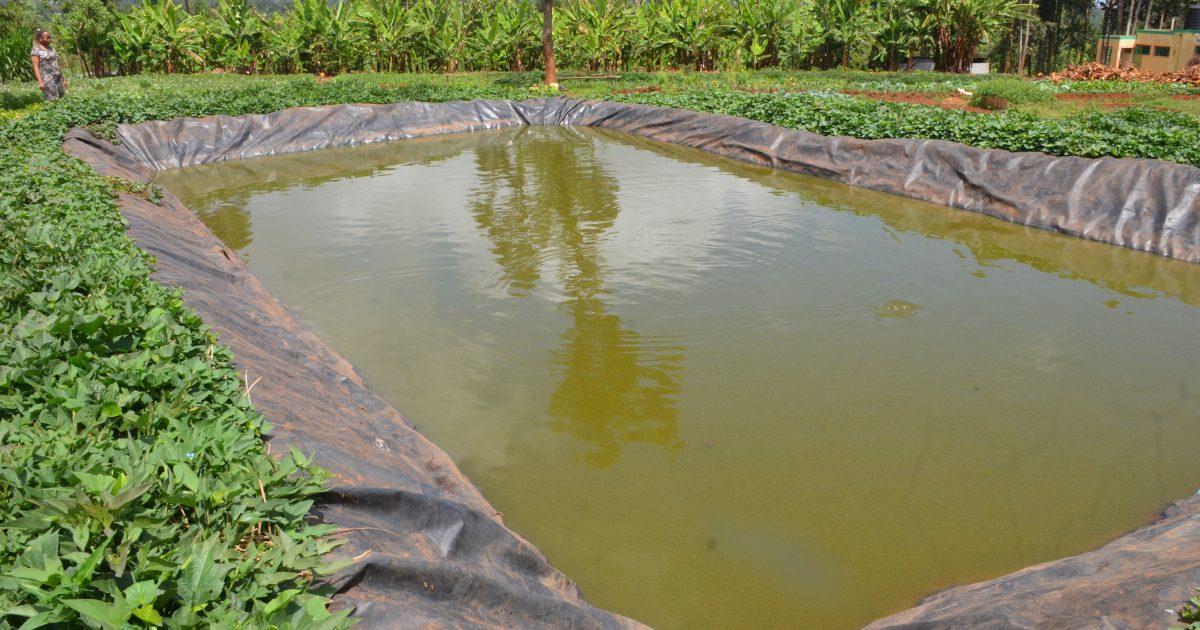
Among the ongoing projects is fish farming, where the institute at the moment operates two ponds stocked with 500 tilapia and 500 catfish.
Last month, the inaugural sale of 200 tilapia helped support some basic operations.
Having received adequate skills from the County fishery officers, the school plans to double production to 1,000 fish per pond, expecting up to Sh800,000 in revenue once harvesting begins.
The institute also runs a tea farm that brings in at least Sh150,000 every six months and sells Napier grass to the community.
To further diversify revenue, the school will from January introduce short vocational courses lasting three to four weeks.
The courses which will be offered at Sh3,000 to Sh4,000 will target students waiting to join colleges and universities and will include barbering, hair braiding, baking, solar installation, CCTV installation, phone repairs among many others.
The institution expects to enroll between 400 and 600 trainees in each cycle from January to August and get a good amount of money for its operations.
In a bid to cut food costs, Muraga TTI is expanding vegetable production for use in student meals and food production practicals.
Plans are also underway to start rearing Dorper sheep, which will graze within the compound while supplying meat for catering students.
“One Dorper can provide enough meat for a whole month, yet currently we buy meat at Sh750 per kilo for classes that use about six kilograms daily. This initiative is targeted to save huge amounts of money,” Ms Murithi said.
Beginning January, the institute will also start packaging bottled water using its existing plant, before later diversifying into yoghurt production depending on performance of the former.
The water will be sold locally during events to generate income.
Despite these efforts, the principal said the institution faces persistent challenges, including a shortage of training equipment and a high turnover of trainers due to low remuneration, which pushes them to better-paying institutions.
However, she noted there is strong support from local leaders, with learners receiving bursaries from the area MP and the county governor.
To ensure that commercial activities do not disrupt training, Muraga TTI plans to establish an Office of the Registrar of Administration and Finance to manage the income-generating ventures and ensure accountability.
“We have started small, but these initiatives will help us sustain operations and meet the government’s call for innovation in TVETs without compromising our core mandate of training,” Ms Murithi said.
By Dickson Mwiti