Construction of the historic Mombasa Municipal Stadium is set to resume after an eleven-year hiatus following the National Government’s takeover of the stalled project.
The move is part of a bold government initiative aimed at fast-tracking the completion of the stadium, which is expected to serve as an alternative venue for hosting matches during the African Cup of Nations (AFCON) football tournament scheduled for next year.
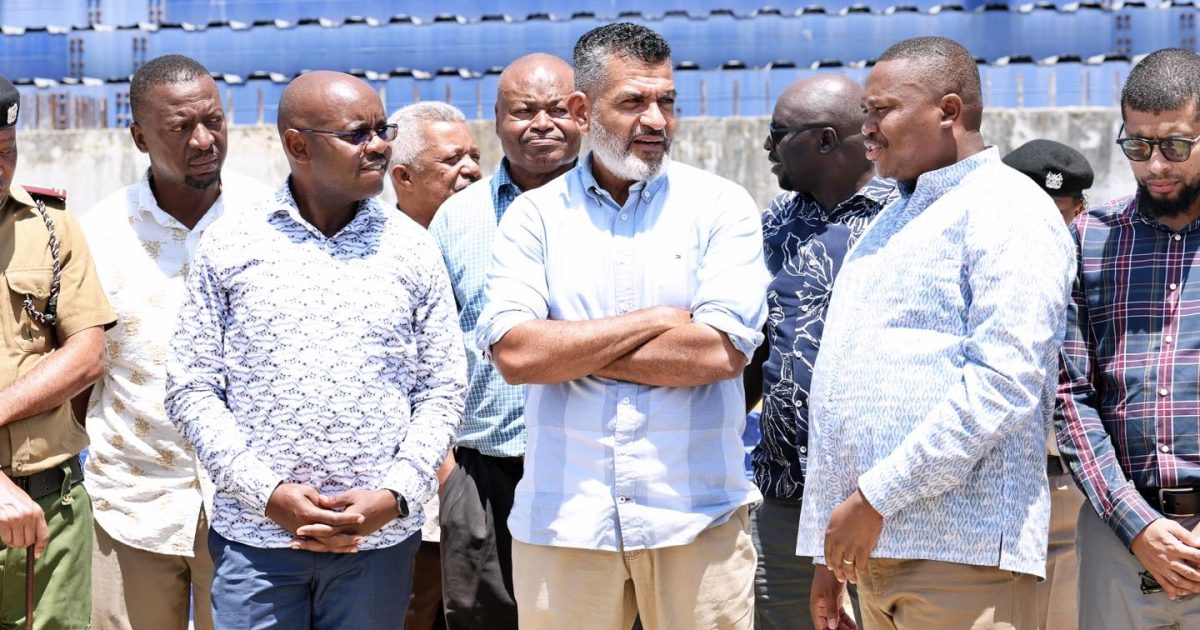
The agreement allowing the national government to take over the project was reached after extensive deliberations during a meeting attended by the leadership of the Mombasa County government and senior national government officials from the ministries of sports and defence.
Those present included Mombasa Governor Abdulswamad Shariff Nassir, Principal Secretary for Sports Elijah Mwangi, and his Defence counterpart, Patrick Mariru.
Speaking during the meeting Governor Nassir said the national government’s decision to take over the project, whose construction began in 2015, was timely and would enable the county to fully utilise the facility to nurture and grow diverse talents in the region.
He disclosed that the county government would underwrite the cost of the project up to its current phase and ascertain the status of progress within a week before the national government team formally takes over construction works.
“Some critical works have already been completed, including laying a firm foundation for the entire structure. We are awaiting the final accounts for verification, after which the National Government will take over the project,” he said.
Beyond AFCON, Governor Nassir said the stadium is expected to catalyse youth talent development, boost sports tourism, create employment opportunities, and provide a modern platform for large-scale events and community engagement.
The Governor reaffirmed his administration’s commitment to delivering the project, noting that the revival of Mombasa Stadium aligns with a broader agenda of reviving stalled infrastructure, strengthening collaboration with the National Government, and investing in facilities that directly benefit young people.
PS Sports Elijah Mwangi said the 15,000-seater Mombasa Stadium is a unique facility within Kenya’s sports ecosystem, noting that it is the only low-altitude training venue in the country. He added that the stadium would be ideal for teams seeking to acclimatise before international engagements in regions with similar climate conditions.
The PS further revealed that the government was considering the facility as an alternative venue for hosting AFCON matches next year, as it is poised to meet FIFA standards for international competitions.
“We are excited by the structure and location of this stadium. It presents a suitable venue for hosting matches outside Nairobi. While this stadium can host matches, the other county-developed stadium can serve as a training ground,” said Mwangi.
PS Mariru said the project, which will be undertaken by the Kenya Defence Forces, is expected to take approximately one year to complete, assuring that it will meet the required standards and timelines.
“We are targeting a one-year completion period from the start date, and we are committed to adhering to the set timeframe,” he said.
With construction now firmly back on track, the completion of Mombasa Stadium is set to become one of the most significant sports infrastructure milestones for the Coast region.
According to records from the contractor, the project is currently 40 per cent complete. Heavy concrete and steel works have already been undertaken, while the installation of metal pillars to support the terraces was ongoing.
Due to the stadium’s unique design, the government will build upon the existing infrastructure through to completion.
Once complete, the stadium will be the largest and most modern facility in the Coast region and is expected to redefine the growth of sports tourism in Mombasa County, with both regional and international tournaments anticipated to be hosted at the venue.
The stadium is among the sports facilities that have been given top priority under a presidential directive for completion within strict deadlines. Other facilities include those in Nyamira, Wajir, and Kipchoge Keino.
By Sadik Hassan