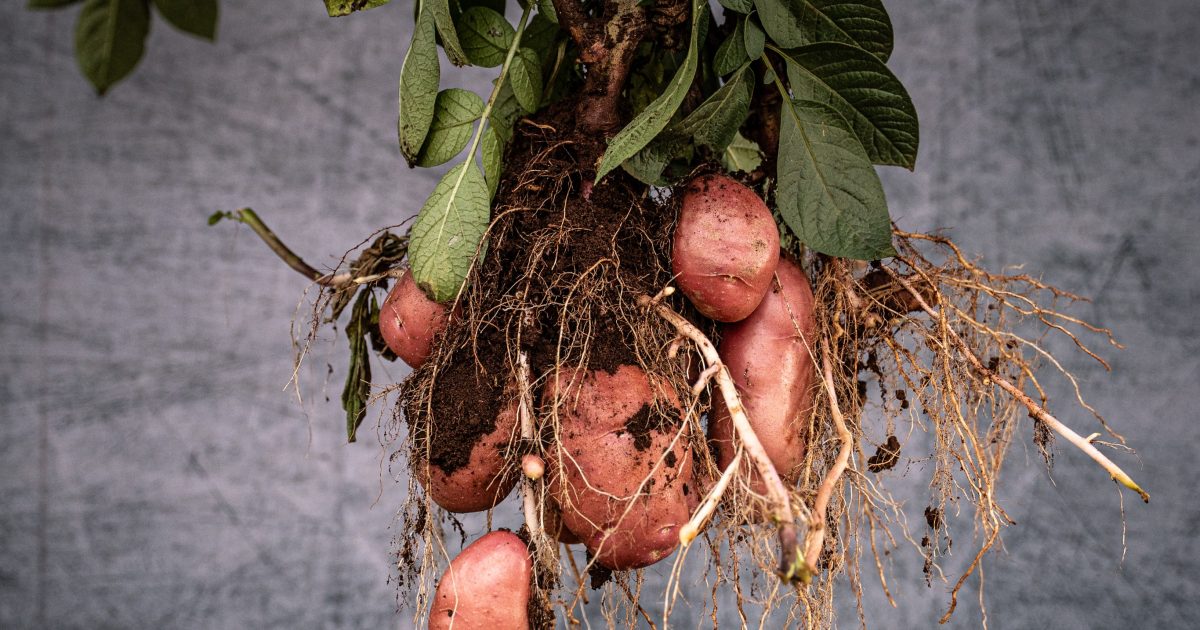
Ahead of the COP30 UN Climate Change Conference in Brazil, a new disease-resistant potato variety highlights the innovation farmers need to thrive in the ever changing climate.
Developed by scientists from the International Potato Center (CIP) with the participation of Indigenous communities, the new potato variety, called CIP-Asiryq, resists the disease that struck Ireland in the late 1840s—late blight
Late blight is a devastating disease of potato, a water mold that spreads quickly and still devastates potato crops worldwide, inflicting up to USD 10 billion in annual losses.
In Kenya, potato is the second most used food crop after maize and the disease has been causing yield losses ranging from 30 percent to 70 percent annually and, in some cases up to 100 percent
Now, climate change is driving the disease higher and threatening the livelihoods of smallholder farmers who grow one of the world’s most important staple foods.
According to scientists, the CIP-Asiryq variety requires fewer fungicide sprays, cooks 25 percent faster, and shows strong potential for both table and processing markets.
CIP-Asiryq variety was developed using Solanum cajamarquense, a wild relative of the potato conserved in the CIP genebank in Lima, Peru. This genebank safeguards the world’s largest collection of potato diversity.
Dr. Stefan Schmitz, Executive director of the Crop Trust, said that the new resistant variety gives potato farmers an option that can reduce losses, cut costs and strengthen food security in not only Peru but also around the world.
“Late blight costs billions of dollars every year in lost production. It is good news for everyone who likes potatoes,” added Dr. Schmitz
The breakthrough of this new variety was set in motion during the Crop Wild Relatives project and made possible through the Biodiversity for Opportunities, Livelihoods and Development (BOLD) project, both led by the Crop Trust and funded by the Government of Norway.
According to Dr. Thiago Mendes, CIP scientist and lead of the BOLD potato pre-breeding project, late blight has been a huge burden to potato farmers everywhere, so the development of a new resistant variety is a major step forward for food systems in the Andes and beyond
He explained that the new potato was developed in Peru by identifying wild potatoes with resistance to the disease and incorporating this resistance into cultivated varieties.
“Those parents are conserved in the CIP genebank, which can share them with potato breeding programs in any country under the rules of the International Treaty for Plant Genetic Resources for Food and Agriculture for use in developing blight-resistant varieties,” he added.
Dr. Mendes, who is now based in Kenya, is using CIP-Asiryq to develop late blight-resistant potatoes adapted to the East African highlands through the BOLD 10-year project that aims to strengthen food and nutrition security worldwide, supporting the conservation and use of crop diversity.
Dr. Benjamin Kilian, BOLD project coordinator at the Crop Trust said that crop diversity is a precious resource that can deliver meaningful climate solutions to farmers and food systems all around the world
“This new wild relative-derived potato variety offers a powerful testament to the real-world impact of global collaboration,” he said.
According to experts, in 2025, late blight still costs farmers an estimated USD 3 to 10 billion per year globally.
Besides offering late blight resistance and thus reducing the need for spraying, CIP-Asiryq has strong market potential due to its processing qualities, which meet industry standards for potato chips, and this is good for smallholder farmers, for businesses that process and sell potato products, and for consumers who love the many ways potatoes are prepared.
CIP-Asiryq will also provide hope to farmers in other parts of the world who may be struggling to contain the disease.
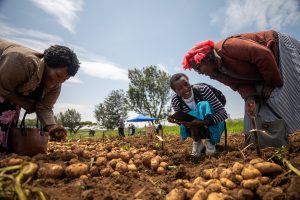
Potatoes feed 1.3 billion people globally, providing 17 percent of the world’s food crop calories. They are rich in carbohydrates, fiber, potassium, and vitamins C and B6. In Kenya, they are a crucial source of nutrition and a major cash crop for smallholder farmers who account for over 90 percent of production.
The 30th UN climate conference will take place from Monday, 10th to 21 November 2025 in Belém, Brazil, and bring together world leaders, scientists, non-governmental organizations, and civil society to discuss priority actions to tackle climate change.
COP30 will focus on the efforts needed to limit the global temperature increase to 1.5°C, the presentation of new national action plans (NDCs), and the progress on the finance pledges made at COP29.
By Wangari Ndirangu