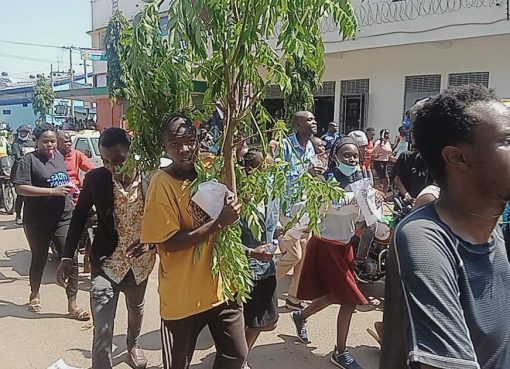
Ramula trading centre in Siaya County remained deserted a day after violent clashes between demonstrators and police left two people dead and dozens injured.
The once-busy centre was reduced to a virtual ghost town, with only heavily armed security personnel patrolling the area and restricting access. Members of the public, including leaders who attempted to enter, were forced to retreat as police officers, among them units from the General Service Unit (GSU), sealed off the area.
Key public facilities, including Ramula Health Centre, remained inaccessible as security officers manned major entry points. Residents expressed fear and uncertainty over the unfolding situation, with many staying away from the centre following the unrest.
Local residents and human rights defenders who addressed the media blamed the government for the violence, accusing it of taking sides in an ongoing dispute between a gold mining company and the local community. The residents have resisted plans to relocate them from their ancestral land to pave the way for a large-scale gold mining project.
Human rights defender Fredrick Odhiambo Ojiro alleged that the heavy police presence in the area had led to harassment of residents, with claims that officers were breaking into homes and businesses during operations.
The chairman of Ramula landowners, William Oricho, attributed the conflict to the failure by both the government and the mining firm to comply with an Environment and Land Court order halting activities in the area. He said the continued operations had angered residents, sparking protests that escalated into violence.
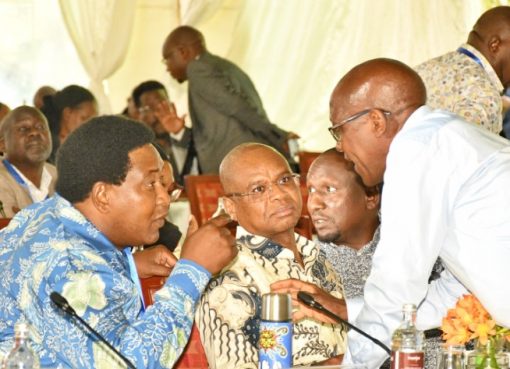
Siaya leaders, led by County Assembly Speaker George Okode and East Gem Ward MCA Seth Baraka Ochieng, condemned what they termed as excessive force by security agencies. They called for restraint and urged the government to prioritize peaceful engagement with affected communities.
Okode said it was unacceptable for innocent residents to lose their lives, homes, and property in the name of facilitating a multi-billion-shilling project. “It is not worth it. We must adopt approaches that guarantee peace and harmony after this process,” he said.
Baraka recounted how he was forced to flee for his life when armed GSU officers charged at him while he attempted to access the area. He said he sought refuge in neighbouring Seme Constituency before later making his way back to safety.
He expressed concern over the welfare of residents who had reportedly been displaced and assaulted during the clashes, noting that the community faced an uncertain future.
Together with Yala Town MCA William Kinyanyi, Baraka urged the government to initiate dialogue with the community to resolve the dispute amicably. They also condemned criminal gangs accused of targeting homes belonging to individuals perceived to support the mining project.
During the confrontation, two demonstrators were fatally shot after reportedly attempting to overrun Ramula Police Post. In the aftermath, several houses were set ablaze in suspected retaliatory attacks, further escalating tensions in the area.
Siaya County Police Commander Lucy Kananu confirmed that more than 47 police officers were injured during the clashes, underscoring the intensity of the violence.
by Philip Onyango