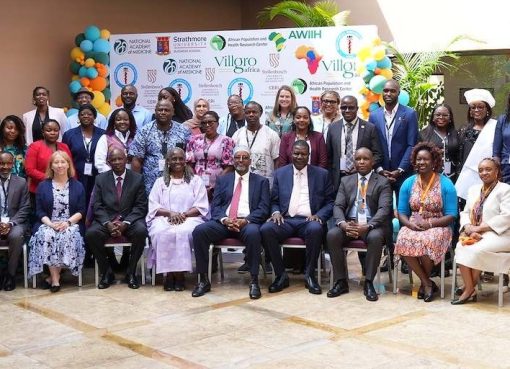
Religious leaders have called on political leaders to shun hate speech, ethnic mobilisation and violence ahead of the 2027 General Election, warning that inflammatory rhetoric, misinformation and growing political intolerance threaten national cohesion.
The Interreligious Council of Kenya (IRCK) urged politicians to promote issue-based campaigns, respect the electoral calendar and refrain from recruiting young people to intimidate opponents or disrupt political activities.
Speaking during the release of a joint statement at Ufungamano House in Nairobi on Thursday, Archbishop Dr Geoffrey Njuguna said political leaders have a responsibility to promote decency and unity, cautioning against divisive rhetoric and the exploitation of ethnic and religious identities for political gain.
“An election is a contest of ideas, not a battle between communities,” Njuguna said, urging Kenyans to remain united regardless of their political, ethnic or religious affiliations.
He called on political aspirants and their supporters to refrain from insults, bullying and inflammatory statements, saying the country needed leaders who addressed citizens’ concerns, including unemployment, the high cost of living and declining public services.
“Political leaders should sell policies, not hate, not fear, nor division,” he said.
Njuguna further urged politicians to observe the Electoral Code of Conduct, honour peace commitments and refrain from financing or spreading fake news and artificial intelligence-generated misinformation.
The leaders noted that the official campaign period is scheduled to begin on May 29, 2027, and called on political actors to respect the electoral calendar.
Sheikh Yusuf Abu Hamza condemned harassment, intimidation and censorship of journalists, expressing concern over shrinking civic space and threats to media freedom as the country approaches the elections.
He cited the arrest of television journalists while undertaking their professional duties, calling on the government, security agencies and political factions to guarantee the safety of media practitioners.
Abu Hamza said journalists played a critical role in informing the electorate and must be allowed to discharge their constitutional mandate without fear or intimidation.
He, however, urged media houses to uphold professional ethics, accuracy and impartiality, warning against sensational reporting and the spread of hate speech, misinformation and divisive propaganda.
He called for responsible journalism that prioritises national cohesion and equips voters with objective information to make informed decisions.
Reverend Charles Kilonzi called on electoral management institutions to strengthen public confidence through transparency, accountability and regular engagement with citizens.
He acknowledged progress by the Independent Electoral and Boundaries Commission (IEBC), including continuous voter registration, expanded diaspora registration and plans for an independent forensic audit of the voter register.
However, he expressed concern over funding gaps, delayed electoral reforms, procurement of election technology and questions surrounding the integrity of results transmission.
Kilonzi urged the IEBC to hold regular public briefings on its preparedness and ensure procurement processes were conducted openly and on time.
He called on the National Treasury to release funds to the commission in good time, warning that budgetary constraints could compromise electoral credibility.
He further urged the Office of the Registrar of Political Parties to ensure transparent and fair nomination processes, noting that party primaries had often been flashpoints for violence.
Parliament was asked to expedite pending amendments to electoral laws and campaign finance regulations, while the judiciary, Office of the Director of Public Prosecutions and National Police Service were urged to communicate their preparedness to handle electoral disputes and offences impartially.
Zaheer Abbas Khimji called for stronger action against ethnic profiling, hate speech and political incitement, warning that divisive mobilisation could undermine peaceful coexistence.
He commended the National Cohesion and Integration Commission (NCIC) for its recent action against suspected perpetrators of hate speech across the political divide.
Khimji urged authorities to ensure the law was applied equally, irrespective of political affiliation, position or community, while respecting due process and the presumption of innocence.
He called on the NCIC, police, the Office of the Director of Public Prosecutions and the courts to expedite investigations and prosecutions of hate speech cases, warning that prolonged delays could erode public confidence.
He further urged the government to adequately resource constitutional commissions to strengthen monitoring and early-warning mechanisms at national and county levels.
Political leaders were cautioned against ethnic profiling, derogatory remarks and inflammatory statements at rallies, funerals, places of worship and on social media.
Sujatha Kotamraju said the council would use religious platforms to promote peace, tolerance and civic education throughout the electoral period.
She said the IRCK would develop and popularise a guide for electing leaders based on values, facilitate grassroots interfaith dialogue and promote positive narratives to counter misinformation.
Kotamraju said religious institutions would remain neutral and would not allow their platforms to be used for political campaigns, division or the legitimisation of partisan interests.
She further noted that the council would work with like-minded partners and stakeholders to disseminate fact-checked information and promote peaceful political participation.
Reverend Kephas Nyandega said peace was a collective responsibility requiring the commitment of citizens, political leaders and institutions.
He announced that the IRCK would mobilise and equip a National Peace and Mediation Team comprising respected religious and non-religious mediators drawn from different faiths and communities.
The team will be deployed at national and county levels to help resolve disputes arising from party nominations, campaigns and election results before they escalate.
Nyandega said the mediators would work closely with the NCIC, the National Steering Committee on Peacebuilding and Conflict Management, local peace committees and security agencies through early-warning and rapid-response mechanisms.
He urged Kenyans to approach the 2027 General Election as one nation, competing on ideas and peacefully accepting the will of the electorate.
“Kenya belongs to all of us, and peace is the responsibility of every citizen, every leader and every institution,” Nyandega said.
The religious leaders called on all stakeholders to work towards delivering a free, fair, credible and peaceful election.
By Nancy Omondi and Samuel Njoroge