Nakuru Deputy Governor Dr David Kones has hailed the Rironi-Mau Summit Highway upgrade as a transformative project that will ease travel, boost trade, and enhance safety along the busy Nairobi-Western Kenya corridor.
Dr Kones stated that the project is more than a road construction exercise, as it is also an investment in commerce and community, noting that through the upgrade Nakuru City will feature an elevated road to ease traffic flow in the city centre.
The Deputy Governor indicated that the Sh 160 billion Rironi-Mau Summit Road project that was commissioned by President Ruto last year will stimulate economic activity in Nakuru by facilitating trade, attracting investment and creating new business opportunities and better integrate Nakuru with other parts of the country and therefore foster regional development and trade.
He said the construction and maintenance of the road will directly create jobs in Nakuru and surrounding areas, boosting employment.
The project is being executed by China Town and Bridge Corporation and Shandong Hi-Speed Road and Bridge International Engineering Company Limited, working on different sections simultaneously.
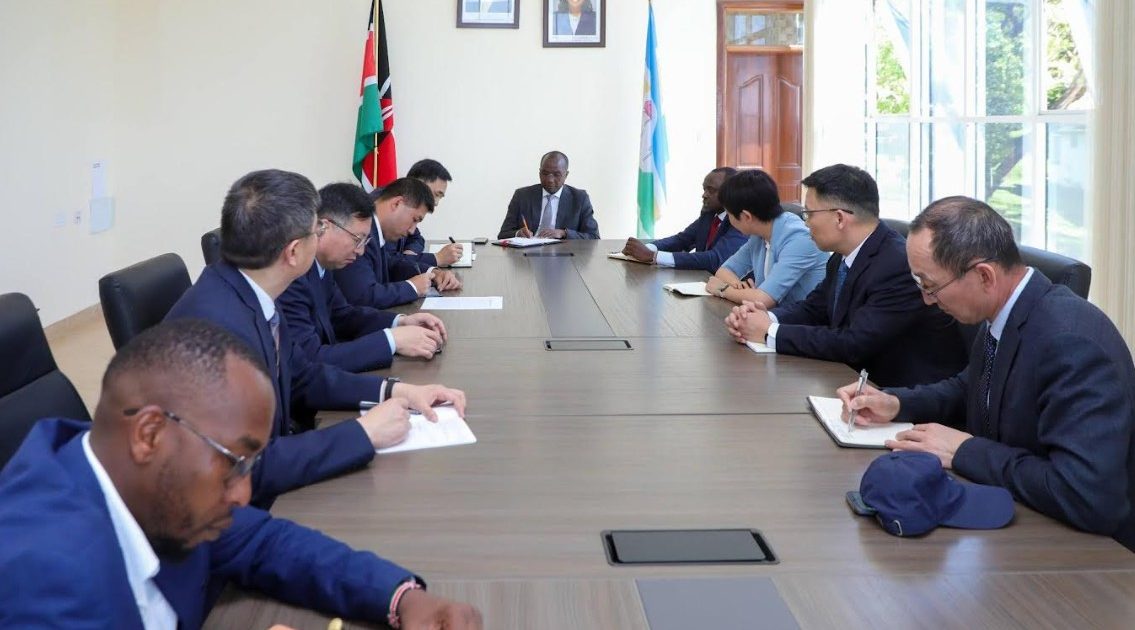
Speaking in his office during a meeting with a delegation from Shandong Hi-Speed Road and Bridge International Engineering Company Limited, led by its Board Director Mr Li Guangjin, the Deputy Governor stressed that the upgraded highway will support national economic growth by facilitating trade, improving supply chains and creating safer conditions for long-distance drivers and commuters alike.
By the end of 2027, he noted, travel along the Nairobi-Western Kenya corridor is expected to be faster, safer and more predictable, benefiting travellers, traders and local communities and demonstrating Kenya’s commitment to modern, citizen-focused infrastructure development.
He pointed out that the highway, spanning 233 kilometres, has for years been a major bottleneck for drivers, with frequent traffic jams, slow movement on the escarpment and congestion in Nakuru.
The discussions centred on the 94-kilometre Gilgil–Mau Summit stretch, a critical component of the broader A8 project being implemented by the Chinese firm. This comes as construction activities along the Corridor ramp up following the official groundbreaking by the Head of State.
Dr Kones reaffirmed the County Government’s full support for the project, emphasising its role in streamlining trade and improving road safety.
Beyond infrastructure, the Deputy Governor invited the Company to explore investment opportunities in Nakuru’s Energy, Mining and Manufacturing sectors, highlighting the county’s status as a burgeoning economic hub.
The Chinese delegation also included Chairman of Shandong Hi-Speed Road and Bridge International Engineering Co. Ltd Mr Wang Li; General Manager Mr Wan Yufan; Deputy Head of International Business Department Ms Zheng Hongyu; and General Manager-Operations Mr Li Hongyin.
The Rironi–Mau Summit upgrade project aims to harness private capital to improve connectivity, reduce travel time and enhance safety along the Northern Corridor.
The 175-kilometre-long Rironi-Mau Summit Road will feature four lanes from Rironi to Naivasha town, as well as improvements to the Maai Mahiu-Naivasha Road. The road will then expand to six lanes from Naivasha town to Nakuru City to adequately accommodate the high volume of traffic on this route.
The road’s expansion, part of the Northern Corridor connecting Nairobi to the western parts of Kenya and neighbouring countries, is considered urgent due to frequent and severe traffic jams along the route, especially on weekends and holidays.
It is used in the transportation of goods and passengers from the port city of Mombasa and the capital city of Nairobi.
Kenya’s western counties and the land-locked countries of Uganda, South Sudan, Rwanda, Burundi and the eastern parts of the Democratic Republic of the Congo are the main beneficiaries of this road corridor.
It carries the bulk of cargo and passenger traffic from the Port of Mombasa to landlocked countries in the region.
The dualling of this corridor is expected to ease congestion, improve logistics efficiency and stimulate economic growth across multiple sectors—including real estate, agribusiness, tourism and trade.
The project will include pedestrian walkways, cycling lanes and other non-motorised transport infrastructure to ensure accessibility and sustainability.
Dr Kones, who was flanked by County Secretary Dr Samuel Mwaura, noted that the project, once completed, will significantly improve mobility, reduce accidents and enhance the efficiency of transport services across the busy corridor linking Nairobi to the Rift Valley and beyond.
He disclosed that a mutual agreement to maintain open lines of communication between the contractor and the County Government had been entered to address arising issues such as prioritising the employment of local youth and professionals during the construction phase.
“During the meeting, we raised several pertinent issues to be considered during the construction phases. Key among them included the creation of effective diversions to ensure the safety of motorists during construction, fair compensation for land and infrastructure affected by the project and protection of upcoming towns,” noted Dr Kones.
He disclosed that they had deliberated on how the project could create linkages to markets and other local centers along the corridor, maximising employment opportunities for local residents, including sourcing some raw materials locally and implementing social and environmental safeguards to protect communities and ecosystems.
“Additionally, proposals have been made for the provision of truck parking bays at various stations along the route, relocation of the Gilgil Weighbridge away from the main highway, redesign of the road along Ngata bridge to establish an overpass or an underpass for the safety of pedestrians, and a fair tolling system, among other suggestions,” stated the Deputy Governor.
Dr Kones indicated that the proposed safeguards aim to protect the livelihoods of Nakuru County residents and minimise disruption during the expansion of one of the region’s busiest and most economically significant trade routes and to ensure that the project not only improves infrastructure but also benefits the communities along the corridor.
Dr Kones stated that the construction phase will generate thousands of jobs for both skilled and unskilled workers, while local suppliers and businesses along the corridor are poised to benefit from increased activity.
He said dualling of the highway will offer a transformative solution to the chronic gridlocks that plague this vital transport corridor.
“By expanding the road into a dual carriageway, traffic flow will be significantly streamlined, reducing bottlenecks caused by slow-moving trucks, holiday congestion and frequent accidents. This upgrade will not only enhance mobility between Nairobi and western Kenya but also strengthen regional trade links,” offered the Deputy Governor.
Dr Kones emphasised that the Rironi-Mau Summit project marks a significant step in Kenya’s infrastructure development, promising improved safety, economic growth and regional integration.
By Jane Ngugi