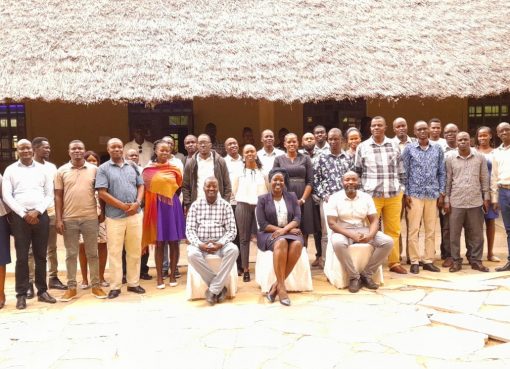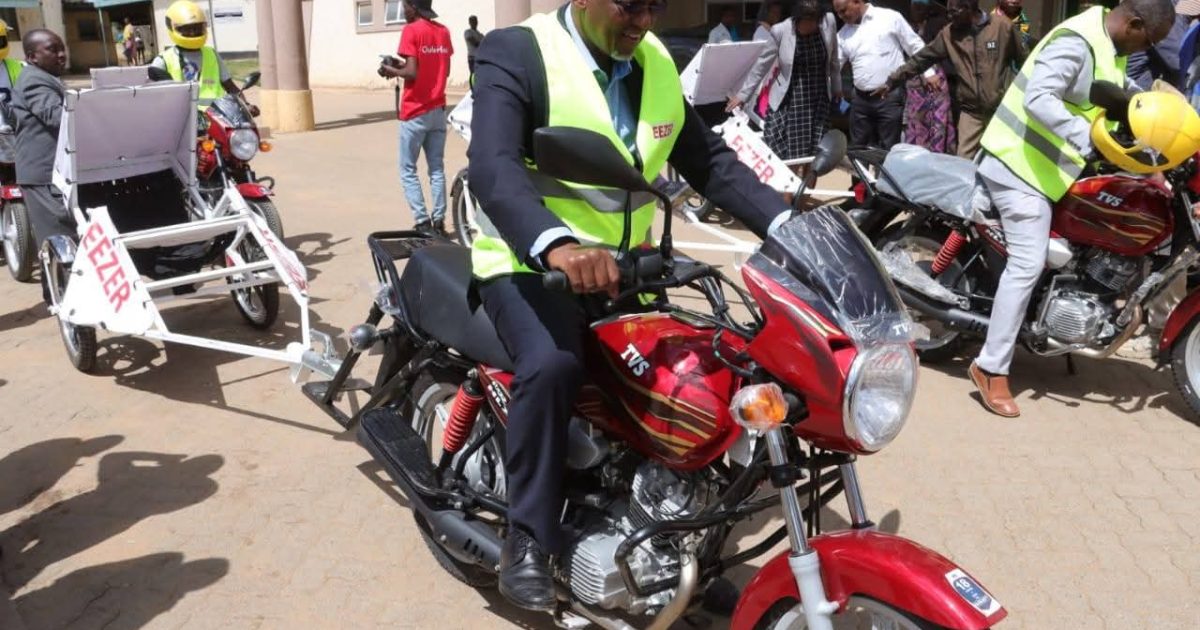
Samburu County Teaching and Referral Hospital has received a major boost to its emergency healthcare services following the donation of five motorcycle ambulances by EEZER Company.
Speaking after receiving the donation, Samburu County Executive Committee Member (CECM) for Medical Services and Public Health, Dr Nasir Lekudere, said the motorcycle ambulances will greatly enhance medical outreach and emergency response services, particularly in the remote and hard-to-reach parts of the county.
Dr Lekudere noted that Samburu County faces unique challenges due to its vast terrain and poor road infrastructure, which often limit the effectiveness of conventional ambulances. He expressed optimism that the flexibility and mobility of motorcycle ambulances will significantly reduce response times and improve access to timely medical care.
“The introduction of motorcycle ambulances is a game-changer for Samburu County, where regular ambulances have faced challenges accessing remote areas because of poor road networks,” said Dr Lekudere. “These motorcycles are designed to navigate rough and challenging terrain, enabling health workers to reach patients faster and save lives.”
He added that the ambulances will be deployed to various health facilities across the county, including centres in Samburu East and Samburu North sub-counties, to strengthen emergency referrals and community-based health services.
According to Dr Lekudere, the donation aligns with the county government’s broader efforts to strengthen the healthcare system and improve service delivery at all levels. He cited the recent distribution of medical supplies worth Sh50 million to all government health facilities in the county as part of ongoing investments in the health sector.
The CECM thanked EEZER Company for its support, noting that partnerships with the private sector play a critical role in addressing healthcare gaps and enhancing service delivery in underserved regions.
The motorcycle ambulances are expected to support emergency referrals, maternal and child health services, and rapid response during medical emergencies, particularly in areas where access to health facilities has traditionally been limited.
By Robert Githu