For decades, navigating the corridor between Nairobi, Kitale, and Lodwar and the far reaches of Turkana was more of an endurance test, with transporters routinely spending a minimum of seven grueling days to conquer the terrain.
It was a passage defined by unrelenting dust, deep rutted tracks, and relentless mechanical wear as truck axles snapped, suspensions shattered, and tires disintegrated, forcing drivers into costly, prolonged roadside repairs that ate into the narrow profit margins, leaving cargo stranded under the scorching sun.
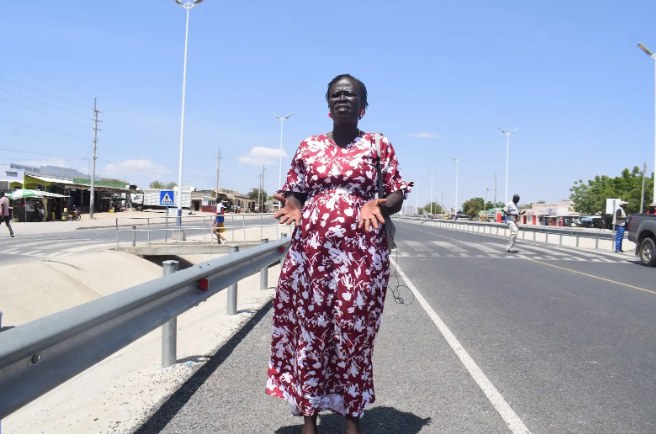
Today, that grueling reality has been buried in the annals of history with the completion of the Kitale–Lodwar road, a massive undertaking funded jointly by the Kenyan government and the World Bank at a cost of 100 billion Kenyan shillings, which has entirely re-engineered the mobility of both people and commerce in Northern Kenya.
As a vital part of the A1 standard highway, this upgraded corridor stretches northward from Kitale through Kapenguria, Marich Pass, Kainuk, Lokichar, and Lodwar before extending further to Lokichogio and the Nadapal border with South Sudan.
According to James Kinuthia, a long-distance truck driver who has navigated the route for several years. What was once an arduous, week-long journey across these expansive terrains has been slashed to a reliable, swift transit network for both cargo haulers and everyday commuters.
Kinuthia says for long-distance operators, the impact was immediate, with fleet operators who once managed a maximum of four trips a month now completing two round trips in a single week, with breakdown expenses plunging.
The driver, who regularly plies the Nairobi–Kitale–Lodwar–
Mwalimu Moses Lekware says this newfound logistical speed mirrors a parallel revolution in passenger transit, saying local travelers who historically braced themselves for a grueling three-day journey now reach their destinations in a mere four hours.
“This drastic reduction in time is matched by reduced transit costs as commuters who once paid Sh2,500 from Kitale to Lodwar now pay just Sh1,000 by bus and Sh1,500 by shuttle,” he says.
He says the synchronized transport savings directly feed back into the micro-economy, leaving both traders and passengers with significantly higher profit margins.
Martha Emone, a small-scale trader at Lokichar who gets her wares from Ortum in neighboring West Pokot County, says they no longer need to plan expensive, multi-day sourcing expeditions.
“I used to suffer losses as I spent days on the road, as vegetables are highly perishable. Now I can leave Lokichar at dawn, buy fresh vegetables directly from farmers in Ortum by midday, and be back at my stall before nightfall, ensuring my customers get the vegetables while still fresh,” she said.
Yet the smooth tarmac is only half of the transformation, as hand-in-hand with physical mobility, the government, according to reports from the Presidential Delivery Unit (PDU), has spent Sh16.5 million to supply power to towns by connecting electricity to over 1,200 local residents who previously operated in total darkness and various public institutions.
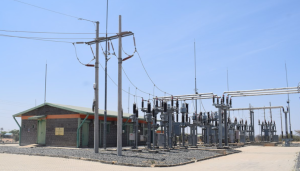
Mwalimu Lekware says before these interventions and the installation of solar-powered street lighting, a self-imposed security curfew governed local life.
“By 6:00 PM, this town would remain a ghost town with everybody having left for home for fear of insecurity, but nowadays the situation has changed entirely with the town becoming vibrant and alive well into the evening,” he said.
Thomas Ekai, a village elder, says with reliable grid electricity and well-lit main streets, local economies no longer grind to a halt when the sun sets, as the extended trading hours have sparked entirely new industries.
He said specialized local businesses like metal fabricators and welders have taken off while modern salons and barbershops run uninterrupted, adding that in a region known for its intense, relentless heat, access to continuous power has turned refrigeration into a lucrative business.
“Before the power came, it was hard to get a cold soda or bottle of water. Today refrigerators run all day and night, and therefore keeping drinks icy cold in this heat isn’t a luxury anymore,” he narrated.
This dual triumph of infrastructure, Ekai says, has fundamentally reshaped public service delivery and healthcare in the region, saying connecting the local hospital to the electricity grid has completely revolutionized community medical care.
The stable power supply has enabled our health facility to offer critical, lifesaving services locally, including fully functional theater operations, laboratory testing, and mortuary services, eliminating the need for residents to travel hundreds of kilometers to seek the same.
Consolata Lomer notes that these improvements have also dramatically boosted public servant retention, saying with reliable roads, functioning healthcare facilities, and widespread electricity, teachers, doctors, and administrative staff are now eager to stay and work in the region, whereas previously they would demand immediate transfers upon reporting for duty.
Together, smooth tarmac and widespread electrification have reshaped the region’s identity. Remote outposts once viewed as desolate frontier settlements are rapidly evolving into bustling urban centers, with towns like Lokichar now fully lit up in the night, making them glow beautifully just like any other modern town.
These strides represent tangible milestones under Kenya’s Vision 2030 development blueprint, which has long prioritized infrastructural expansion and reliable energy grids as foundational pillars for national equity and prosperity, thus laying the foundational framework for the country’s broader Vision 2063 goals.
By connecting markets and powering communities, infrastructure is turning vast geographic distances into economic opportunity across Northern Kenya. Through unlocking the vast, dormant economic capacity of the north, projects like the Kitale–Lodwar corridor demonstrate how localized investments fulfill macroeconomic goals.
By Alice Wanjiru
Continue using AI Cursor?Keep it onTurn Off