The government has rolled out a Sh670 million solar power project at Baricho Water Works in Kilifi County in a major push to cut the high cost of pumping water to Kilifi and Mombasa counties.
The multi-million-shilling Baricho Solar Water Project is being implemented by the Coast Water Works Development Agency (CWWDA) with funding from the World Bank under the Water and Sanitation Development Project (WSDP).
Once completed, it is expected to significantly reduce electricity bills, which currently range between Sh60 million and Sh70 million per month, enhance the reliability of water supply, lower long-term operational costs and generally strengthen water security for millions of residents in Kenya’s coastal region The project is set to be completed in March 2026.
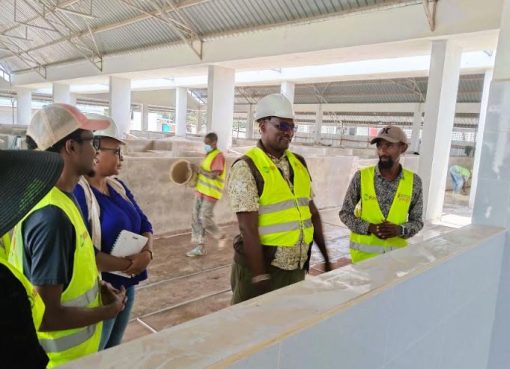
Speaking during a project inspection tour, CWWDA project coordinator Engineer David Kanui said the agency has for years grappled with soaring power costs due to its heavy reliance on grid electricity to pump water from boreholes and lift it over long distances to consumers.
“Power costs have been a major challenge for this facility. Water is pumped from boreholes and then lifted again to supply consumers in Kilifi and Mombasa, and that process consumes a lot of electricity,” Kanui said.
The 4.6-megawatt solar power plant will run 11 boreholes and the high-lift pumping system supplying Malindi under the first phase of the project.
Once Phase One becomes fully operational, the agency expects to cut its monthly electricity bill by about Sh10 million. These savings are expected to reduce operational costs for water service providers and ultimately benefit consumers.
“When this phase is complete, the cost of power will come down, and the savings will translate into reduced operating expenses for water companies,” Kanui said.
The project has been designed as a hybrid system that combines solar energy and grid electricity. Pumping operations will rely on solar power during the day, while grid electricity will be used at night and during periods of low sunlight.
“We will run on solar power for about eight hours during the day and on grid power for the remaining hours. That alone will reduce the power bill proportionately,” he explained.
He added that plans are underway for a second phase that will extend solar power to the high-lift pumps supplying Mombasa, although funding for Phase Two has yet to be secured.
Kanui explained that implementation of the second phase could cut power costs by up to 30 per cent, with future upgrades likely to include battery storage to allow full off-grid operation.
Construction of the solar plant began in October 2025 and is scheduled for completion by March 31, 2026. However, the contractor is ahead of schedule and could complete the work by mid-February.
Baricho Water Project Solar Engineer Sarah Mbuaya said the project is about 60 per cent complete, with the first section expected to be commissioned before the end of the month.
“The main objective of this project is to reduce operational costs and make the water supply more sustainable. It also supports the transition to green energy, which is good for the environment,” Ms Mbuaya said.
She added that the solar panels have a lifespan of more than 25 years, while the lithium-ion batteries used for system stability are expected to last between 10 and 15 years.
The project also positions the agency to benefit from future net-metering arrangements, which would allow excess power generated during the day to be fed back into the national grid.
By Mohamed Hassan