The County Climate Resilient Investment Grant (CCRIG) has allocated Sh7.3 billion to 45 counties in the first phase of the program. This initiative, funded by the World Bank in collaboration with the German, Danish, and Swedish Embassies, along with the German Development Bank (KfW), aims to enhance climate resilience and sustainability at the county level across Kenya.
During an assessment of the Financing Locally-Led Climate Action (FLLoCCA)-funded projects in Elgeyo Marakwet County, Abraham Barsosio, the Program Manager for the FLLoCCA Coordination Program, outlined the two types of grants available under the initiative.
“We have the County Climate Institutional Support Grant, where we have been disbursing Sh11 million annually for the past three years. This phase is now complete under the FLLoCCA program,” Barsosio stated.
“Our current focus is the second grant—the County Climate Resilience Investment Grant (CCRIG). Under this, 45 counties are eligible, and in the first phase, Sh7.3 billion has already been disbursed. Out of this, Sh1.2 billion is from KfW, which is specifically allocated to 16 western agro-ecological counties, including Elgeyo Marakwet and Uasin Gishu,” he explained.
Elgeyo Marakwet County has received Sh151 million under the program, with allocations directed toward water, agriculture, and environmental conservation projects. The county has ensured compliance with the grant’s requirement to allocate at least 20 percent of the funds to each of these key sectors.
Barsosio expressed satisfaction with the progress of the first phase, emphasizing that the program is locally led and community-driven. He commended Governor Wisley Rotich for ensuring the inclusion of indigenous communities in the projects and called for increased communal participation in future phases.
Addressing misinformation regarding funding, Barsosio dismissed claims that the World Bank had blacklisted Elgeyo Marakwet County.
“For a county to be blacklisted by the World Bank, multiple serious issues would need to be at play. It is not something determined by social media rumors circulating on WhatsApp or Facebook. These claims are baseless, and the county has not reached that point,” he clarified.
The German Development Bank, one of FLLoCCA’s key sponsors, has prioritized agriculture and youth employment within the program. Barsosio urged young people to seize the opportunities provided by the projects, engage in agricultural value chains, and build sustainable livelihoods.
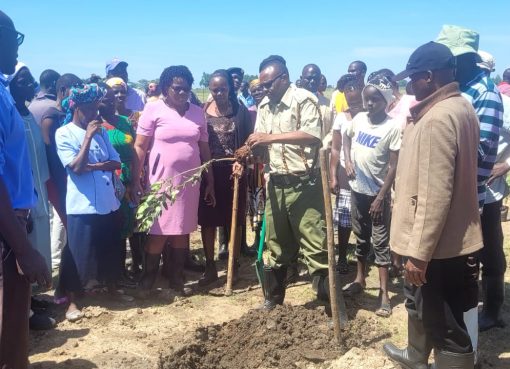
During a visit to the Barasin Water Project in Bugar, Kapchemutwa Ward, Keiyo North Sub-county, Elgeyo Marakwet Governor Wisley Rotich expressed gratitude to the program’s international supporters, including the German, Swedish, and Danish governments, as well as the World Bank.
Barasin Water Project is one of the projects done under the FLLoCCA-County Resilient Climate Grant (CCRIG).
“We have been implementing the FLLoCCA program for a year now, and we are pleased with the benefits the community has gained. We have invested in water projects, agriculture, and environmental conservation, and we are beginning to see tangible results,” Governor Rotich said.
“This initiative also aligns with our economic empowerment strategy, encouraging every household to cultivate at least one cash crop. This not only enhances family income but also promotes environmental conservation at the grassroots level,” he added.
Governor Rotich reiterated his administration’s commitment to making Elgeyo Marakwet one of the best-performing counties in implementing FLLoCCA-funded projects.
Marie Ottoson, Head of Operations at the Embassy of Sweden, highlighted FLLoCCA’s significance in their investment portfolio.
“FLLoCCA is one of our most crucial investments because it directly addresses climate change and supports locally-led development. This ensures the community takes ownership, with full participation from all members,” Ottoson stated.
She concluded that the continued collaboration between development partners and county governments underscores the importance of such programs in fostering climate resilience and improving livelihoods at the community level.
By Rennish Okong’o