The Government has intensified efforts to restore the Nairobi River, confirming that the next phase of the programme will pair the ongoing clean-up with the development of social and affordable housing along the river corridor.
Deputy Head of the Public Service (DHOPS) Amos Gathecha said the initiative has made significant progress and is now moving into a phase that integrates housing and supporting infrastructure to secure and beautify the river basin.
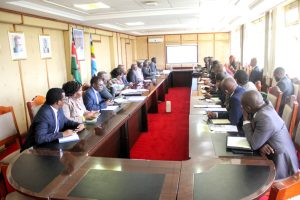
Speaking at Harambee House yesterday, while chairing the fifth meeting of the Nairobi River Regeneration Programme Steering Committee.
Gathecha reaffirmed the Government’s commitment to a cleaner, safer and more liveable city: “The Government’s collective efforts to restore the Nairobi River are on course, with great strides already realised,” he said.
The meeting reviewed designs for social and affordable housing projects and supporting works, including drainage, access roads, sanitation services and public amenities, aimed at stabilising riverbanks and preventing a relapse into pollution and unsafe settlements.
“We are advancing an integrated plan that protects, restores and beautifies the river basin while improving the quality of life for Nairobi residents,” Mr Gathecha added.
The Nairobi River Regeneration Programme is a multi-agency initiative to reclaim and rehabilitate the Nairobi River Basin.
It brings together national and county institutions to control pollution, protect riparian areas and ensure safe resettlements. The programme also ensures climate-resilient infrastructure and sustained maintenance of the river ecosystem.
The Committee confirmed that public participation is ongoing in riverine neighbourhoods, including Gikomba, to guide relocation, business continuity and environmental safeguards. “Public participation remains central to this work,” Mr Gathecha noted, adding, “We are engaging residents and traders transparently so that solutions are humane, lawful and durable.”
He further cited continued awareness and media campaigns, such as activities during Mazingira Day, to mobilise citizens against illegal dumping, unblock waterways and protect riparian reserves.
While acknowledging persistent hurdles, the Committee resolved to strengthen enforcement and inter-agency coordination.
Gathecha said the team would address challenges such as encroachment and dumping, which have slowed parts of the project, and outlined lawful solutions with clear follow-up actions for each responsible agency.
The housing component, he added, will advance in tandem with river remediation to ensure resettlement, essential services and livelihood support progress alongside the decongestion of riparian areas.
Relevant agencies in water, housing, security and urban planning will align timelines to avoid duplication and accelerate delivery.
Gathecha urged residents, businesses and public entities to support the clean-up and protect completed works.
“Revitalising the Nairobi River is a shared responsibility. With disciplined enforcement, community involvement and coordinated investment in housing and infrastructure, we will restore this corridor to health and pride in our city,” the DHOPS added.
Present at the meeting were Principal Secretaries Charles Hinga (Housing), Julius Korir (Water and Sanitation), Stephen Isaboke (Broadcasting and Telecommunications) and Dr Patrick Mariru (Defence). Others were Nairobi Rivers Commission Chairperson Bishop Margaret Wanjiru, the Commission’s CEO Brig. (Eng.) Joseph Muracia, WRA CEO Eng. Mohamed Moulid Shurie and Regional Commissioner Gilbert Kitiyo.
By Jacqueline Adyang