The government has reaffirmed its commitment to ensuring equitable sharing of mining royalties with host communities and county governments, to reduce poverty, promote local development and ensure communities benefit directly from mineral resources found in their areas.
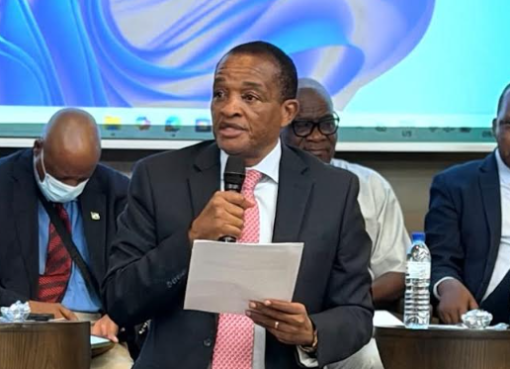
Principal Secretary (PS) for Mining Harry Kimtai said the government was committed to transparent revenue-sharing arrangements, in-country value addition and environmental protection to ensure mining activities translate into tangible socio-economic benefits for local communities.
The assurance comes in the wake of the issuance of notices of intention to award exploration rights for strategic mineral deposits to three firms following a rigorous and transparent competitive public tendering process.
M/s Frontier Minerals Consortium emerged as the successful bidder for the Mrima Hill Niobium, Rare Earth Elements and Other Minerals Project in Kwale County.
Meanwhile, M/s Fangda Special Steel Technology Company Limited, through a joint venture with Sinohydro Corporation, secured the Kang’ura Chromite Development Project in Samburu County and the Kamacabi Copper Development Project in Tharaka Nithi County.
Speaking in Mombasa during a gala dinner and awards ceremony marking the conclusion of the 2026 Annual National Sustainable Development Goals (SDGs) Multi-Stakeholder Conference, PS Kimtai said the government was keen on tackling poverty in line with SDG 1, assuring mining communities that they would receive their rightful share of revenue generated from mineral extraction.
He noted that the Mining Act clearly stipulates how royalties collected from mining activities should be distributed among the national government, county governments and host communities.
“What we have done is that we have ensured that the revenue is shared accordingly. Number one is that all those resources belong to the people of Kenya, and therefore the national government takes the lion’s share,” explained the PS.
“The national government takes 70 per cent of the royalty that we collect, and then the county governments take 20 per cent of that royalty that has been collected, and the community where these resources are based, where these companies do operate from, we give the community 10 per cent,” he added.
Beyond the 10 per cent royalty allocation, Kimtai said host communities were also entitled to an additional one per cent of a mining company’s gross sales through Community Development Agreements.
He cited Shanta Gold Mining in Kakamega County, which, according to feasibility studies, is projected to generate Sh680 billion in revenue over eight years.
The Isulu-Bushiangala community in Kakamega is expected to receive Sh6.8 billion during the period following the signing of a Community Development Agreement with the mining company.
“What we are trying to advocate here and our policies are to ensure that the community gets its revenue. So, wherever you are now, as a Kenyan, where you see resources available, we want you to sensitise the communities. Tell the communities that they don’t need to worry anymore because they are entitled to get revenue from their resources. We give them the one per cent directly, and that does not go to the national treasury,” stated the PS.
PS Kimtai acknowledged that there had previously been challenges in remitting some of the royalties collected and earmarked for county governments and host communities.
However, he said the recently enacted Sharing of Revenue Regulations 2026 had addressed the outstanding issues, paving the way for the disbursement of the funds.
The Kwale County Government is expected to receive the largest allocation, amounting to Sh895 million. “We have now made it very easy, and this money will be remitted directly,” said the PS.
He further noted that all mining revenue accruing to the National Government would be channelled into the Sovereign Wealth Fund to safeguard the country’s mineral wealth for the benefit of future generations.
“This will be kept in a manner that our future generation will also come and benefit. Minerals are depletable. They don’t live with us for long. Some take 25 years. Some take eight years. Some even take one year, but we need to preserve that also for our community,” he said.
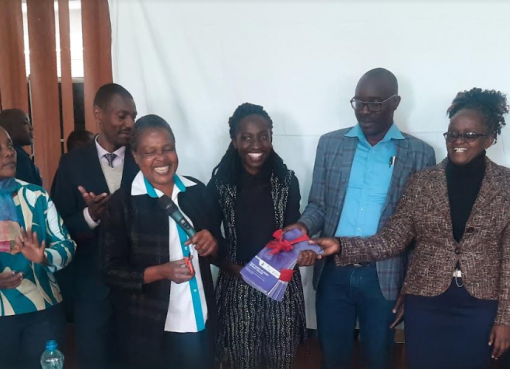
In the awards, the State Department for Mining was recognised for its significant role in transparent, responsible and value-added mining.
The PS affirmed that the State Department for Mining had mainstreamed SDGs into its policies, strategic plans, annual work plans, performance contracts and budgeting processes, in alignment with Kenya Vision 2030, the Bottom-Up Economic Transformation Agenda (BETA) and the Fourth Medium Term Plan.
He said the department’s programmes were contributing to SDGs 1, 5, 8, 9, 12, 13 and 15, which focus on poverty eradication, gender equality, decent work and economic growth, industrialisation, responsible production, climate action and environmental sustainability.
Under SDG 1 on poverty eradication, Kimtai said the Department was promoting alternative livelihood opportunities through the formalisation of artisanal and small-scale mining, including the establishment and operationalisation of Artisanal Mining Committees in 42 counties.
He said the draft Minerals, Mining and Beneficiation Policy 2026 recognised gender disparities in the mining sector and proposed mechanisms to promote equitable participation and ownership across the mining value chain.
Additionally, in advancing SDG 8 on decent work and economic growth, the Department was promoting mineral exploration, mobilisation of investments and formalisation of artisanal and small-scale mining to create employment opportunities and increase the mining sector’s contribution to the country’s Gross Domestic Product (GDP) to 10 per cent.
By Sadik Hassan