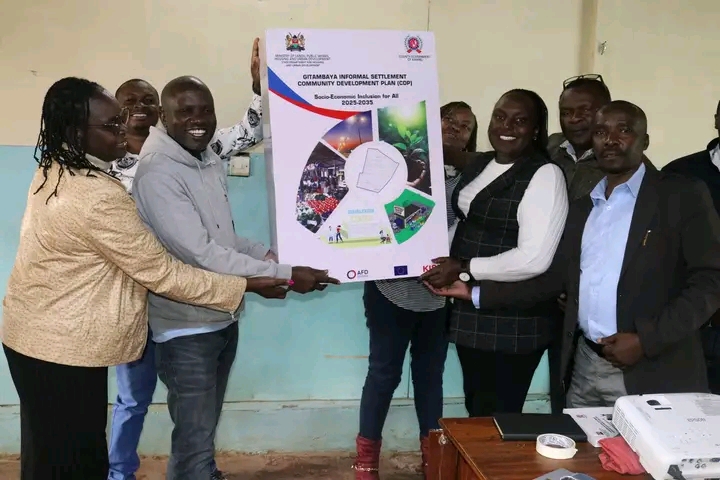
Gitambaya and Fort Jesus, two densely populated informal settlements in Kiambu County, are set for a significant transformation as part of a 10-year Community Development Plan (CDP) aimed at improving the quality of life for residents.
Central to this vision is the construction of a multipurpose social hall, a flagship facility that promises to become the social and economic heartbeat of the community.
The plan, spearheaded under the Kenya Informal Settlements Improvement Project Phase 2 (KISIP 2), is part of a broader effort to address historical underdevelopment in informal areas.
For residents of Gitambaya who gathered in large numbers to celebrate and officially endorse their newly launched CDP, a 10-year blueprint that offers more than just roads and street lights but one that introduces spaces for learning, enterprise, and childcare, creating a foundation for long-term community empowerment.
The CDP, which proposes the construction of a multipurpose social hall that will house an ICT hub, a bakery, a daycare centre, and other vital amenities, will be operated by local Community-Based Organizations (CBOs), ensuring that the development remains community-led and sustainable.
“This plan is a direct result of the community’s voice,” said Ms. Joann Kihori, Ruiru Municipal Manager. “It reflects their hopes, and it provides a platform for inclusive development, where residents are not just beneficiaries but active drivers of their future.”
The initiative falls under Component 2 of the Kenya Informal Settlements Improvement Project Phase 2 (KISIP 2), which focuses on socio-economic inclusion.
The plan is funded by the World Bank and implemented by Kiambu County Government with support from the Pamoja Trust and other technical partners.
According to the County KISIP Coordinator Mr. Julius Mwololo, “The CDP will not only guide infrastructure but also ensure residents are socio-economically uplifted. Through community-driven models, we aim to reduce poverty, connect people to employment, and build resilience.”
By tapping into the energy of local CBOs, the plan aims to empower women and youth, improve service delivery, and create opportunities for entrepreneurship, especially in underserved populations.
The event drew participation from various stakeholders, including the County Project Coordination Team (CPCT), Biashara Ward MCA Kimani Nduta, representatives from the Settlement Executive Committee (SEC), the Grievance Redress Committee (GRC), and Gitambaya resident leaders.
The Gitambaya CDP represents a unified community vision, one that looks beyond physical infrastructure to build a resilient, connected, and empowered settlement.
By Laura Mundeye