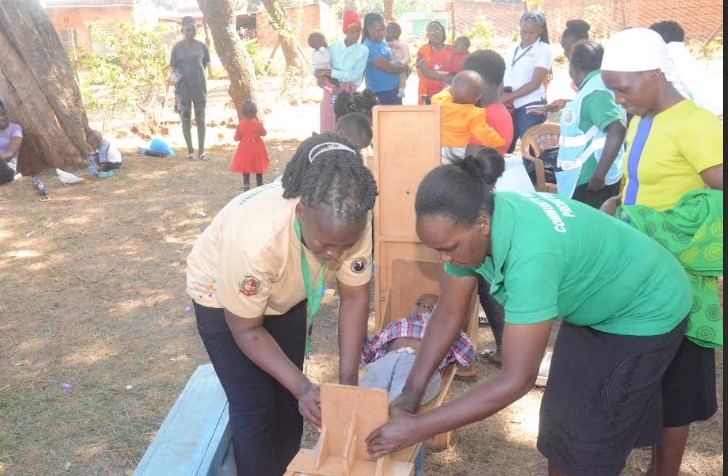
More than 300 malnourished children in Tharaka Nithi County are benefiting from a village-to-village nutrition programme targeting vulnerable children and their mothers.
The Lishe Mtaani programme, implemented by Village HopeCore International (VHI) in collaboration with the Tharaka Nithi County Government and Vitamin Angels, takes nutrition services closer to families facing challenges accessing health facilities.
The household-based intervention empowers communities to identify, prevent and manage malnutrition while promoting sustainable sources of nutritious food.
According to Lindah Mukami, a clinical nutritionist at HopeCore , the organisation conducts regular village outreaches where children under five and mothers are screened and supported.
“The clinics mainly involve growth monitoring of children under five years, clinical testing of pregnant and lactating mothers, Vitamin A supplementation and deworming,” Ms Mukami said.
She said Vitamin Angels supports the programme with Vitamin A supplements and deworming commodities, while HopeCore follows up families to ensure children receive proper care and nutrition.
“We follow up the cases and ensure parents and caregivers continue feeding their children on a proper diet. We are getting good results, with more caregivers embracing locally available foods instead of waiting for supplements from donors,” she said.
The programme also educates caregivers on balanced diets and the importance of using locally available and affordable foods to improve household nutrition.
The intervention has enabled health workers to move closer to communities, where they examine children, provide supplements and offer practical advice to mothers and caregivers. Children requiring specialised medical attention are referred to health facilities for further assessment and treatment.
The programme also promotes climate-smart kitchen gardens, with more than 400 gardens already established in households across the county.
The gardens enable families to grow vegetables and fruits for household consumption, helping them access diverse and nutritious foods while reducing dependence on purchased produce.
Kenneth Micheni, an officer in the Office of the Director of Health in the Tharaka Nithi County Government, said the county continues to face a significant challenge of stunting, currently estimated at 21 per cent.
Mr Micheni said partnerships with organisations such as HopeCore were helping the county reach children and mothers who might otherwise miss nutrition services because of distance or lack of transport to health facilities.
“We are glad to move around with HopeCore Village International and other partners where we hold outreaches because not all children are able to come to our health facilities. Some live far while others have no means of getting there,” he said.
He said the outreach approach enabled health workers to deliver nutrition services directly to communities while providing caregivers with information on appropriate feeding practices.
Mr Micheni noted that some families have access to nutritious foods but lack knowledge on how to prepare and use them effectively. He cited cases where families sell nutritious foods such as eggs and use the proceeds to buy less nutritious products, saying nutrition education was therefore critical in changing household practices.
“We give health messages to caregivers because we know many people in our community may have the necessary food but they do not know what to do with it. These are important nutritional messages on how to utilise locally available foods,” he said.
Nicholas Muriungi of HopeCore Village International said Lishe Mtaani was designed to address malnutrition at household level by involving communities in identifying children at risk and supporting their recovery.
He said Community Health Promoters (CHPs) mobilise households, build trust with families and identify children and pregnant women who may be at risk of malnutrition.
The CHPs conduct screening and assessment using Mid-Upper Arm Circumference (MUAC) measurements and clinical assessment, with information recorded through the CommCare digital platform.
Children identified as malnourished receive therapeutic foods from HopeCore, while their caregivers are provided with nutrition counselling. The programme also provides education on breastfeeding, complementary feeding, hygiene and childcare practices.
Mr Muriungi said the organisation provides families with seedlings and training to establish climate-smart kitchen gardens, enabling them to produce a variety of nutritious foods throughout the year.
Regular home visits are conducted by CHPs to monitor the progress of children and mothers, provide continued counselling and identify cases requiring additional intervention.
He said recovered mothers and children are eventually recognised as programme graduates and encouraged to become peer mentors, helping other families overcome malnutrition.
Data collected by HopeCore in 2026 in the Muthambi and Mwimbi regions shows that 1,631 people have so far been screened, while 56 children and 12 mothers have been fully discharged from the programme after recovery.
The organisation has also established more than 400 climate-smart kitchen gardens, while 16 Lishe Heroes, who are CHPs trained in nutrition, are supporting the programme across 11 community units.
Mr Muriungi said the approach was intended to create lasting change by combining early identification of malnutrition, treatment, nutrition education, household food production and continuous follow-up.
By Dickson Mwiti