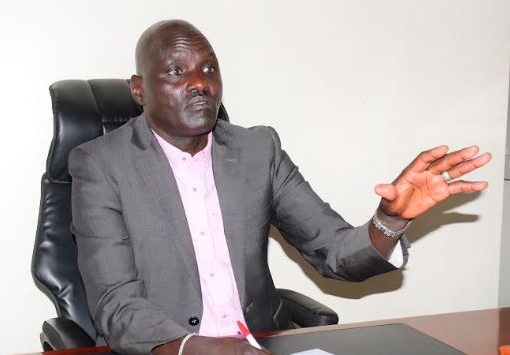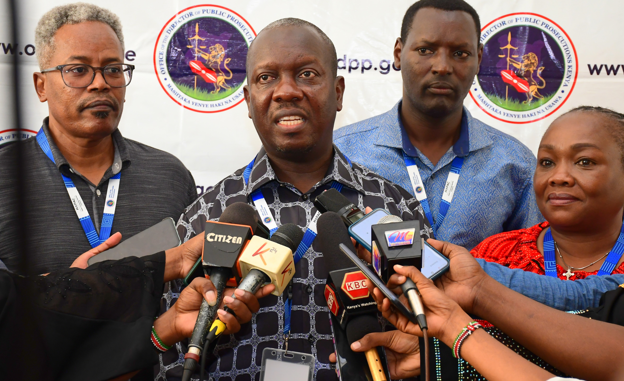
The Director of Public Prosecution (DPP) in Kenya Renson Ingonga has reiterated the commitment of the Office of the Director of Public Prosecution (ODPP) in leveraging technology to improve its systems to be able to combat terrorism, terrorism money transfer and money laundering.
Ingonga said that transnational criminal organizations are increasingly relying on advanced technologies thus emphasized the growing role of technology in combating these global crimes.
Addressing the media in Mombasa, he underscored the need for collaboration among member states to tackle complex crimes that transcend borders.
He said terrorism as a crime calls for international cooperation, recalling the investigation following the Doucet attack, where Kenyan authorities had to rely on forensic experts and international partners to collect and analyze evidence.
“These are crimes which are of an international nature. They cannot be tackled by one single entity; that’s why we need this kind of collaboration to effectively fight these offenses,” he said.
The DPP also highlighted a recent high-profile case involving the acquittal of foreign nationals who were convicted for life, a decision which has been appealed awaiting the court of appeal’s verdict.
He noted that the reason they were able to secure the conviction was because they appealed a decision where the court had initially refused to accept electronic evidence but after the court’s approval, crucial electronic evidence was presented that led to the conviction, adding that terrorists now rely on technology for their operations.
He explained the independent nature of ODPP noting that the DPP follows strict guidelines when deciding whether or not to take cases to court.
“When cases go to trial, it doesn’t always result in a conviction. Evidence is a key and it can shift. If the evidence is insufficient, the DPP may decide to withdraw a case,” he added.
He noted that evidence is a critical part of the process, as cases are sometimes withdrawn after defense lawyers’ present new evidence that could potentially undermine the prosecution’s case adding that, in some instances, defendants are acquitted when their defense teams successfully challenge the prosecution’s evidence.
A particular challenge, according to Ingonga, is finding competent lawyers who can provide technological support and expertise in international cases.
He said it is quite difficult to find the right legal expertise, especially when dealing with complex cases that require specialized knowledge.
The Attorney General of Kenya (AG) Dorcas Agik Oduor said there is a need for countries to harness technological innovations in order to stay ahead of the fight against cyber terrorism and money laundering crimes.
“We must develop the best practices in the legal sector and work in collaboration with the financial sector to combat financial crimes. Financial crimes are not just confined to the financial sector but they permeate various facets of our daily lives. It therefore calls for a whole of nation approach as Common Wealth countries,” she said.
Agik added that the menace of Illicit Financial Flows (IFFs) transcends borders and greatly impacts on the ability of countries to raise the finances needed for investment in sustainable development.
The AG highlighted that as globalization advances there is an increased share of illicit finances ten-fold thus the need to come up with innovative strategies to handle cross borders financial threats.
“We cannot reemphasize the importance of international cooperation, collaboration and coordination in the fight against terrorism, terrorism financing and money laundering. There is a need for mutual legal assistance especially in extradition cases revolving around transnational and international crimes,” she said.
She said that the fate of certain criminals who commit transnational crimes, especially those outside their home countries can only be resolved if countries adopt best practices around Mutual Legal Assistance (MLA) and extradition.
She added that Mutual Legal Assistance offers a mutually advantageous option for countries since it provides an avenue for obtaining evidence, including witness testimony and promoting international interpersonal contacts that could facilitate international cooperation in the future.
She said there is a primary responsibility for states to take decisive and concrete action in order for the deterrence of transnational and international crimes to be successful.
“States are the main actors in the fields of international relations and international law. They conclude treaties, enact domestic laws and direct the activities of regional and other inter-governmental organizations. I am optimistic that the deliberations will create better working relationships between the commonwealth countries,” she said.
By Chari Suche and Shamim Musa