At least 12,000 trainees across the country have already gone through the dual Technical and Vocational Education and Training (TVET) programme, signalling growing momentum in efforts to align technical education with industry needs.
The dual training model allows trainees to split their time between classroom instruction and practical training in industry, ensuring graduates acquire hands-on skills required in the job market.
Implemented through partnerships between training institutions and companies, the programme, has so far attracted about 3,700 industries nationwide, according to TVET officials.
Regional TVET Director for Kisumu and Siaya, Audrey Monica, said the initiative is steadily transforming skills training by exposing trainees to real workplace environments while still in school.
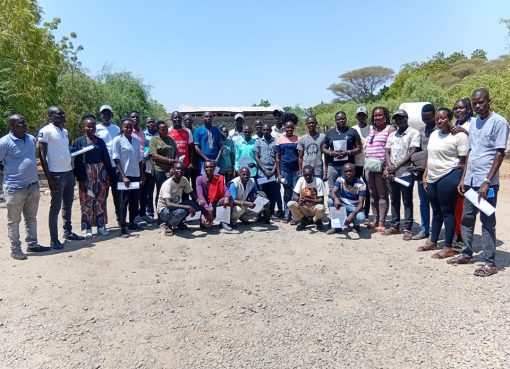
She spoke in Kisumu on Friday during the Western Region Dual TVET Week at Ramogi Institute of Advanced Technology, where institutions and companies showcased technical programmes and innovations to students, industry players and education stakeholders.
“We are committed to turning out a skilled workforce at tertiary level that is not only relevant locally and nationally, but also internationally,” Monica said.
Monica said the growing involvement of industry players has strengthened the programme, noting that companies benefit directly from participating in the training process.
“Once industries take in trainees, they reduce labour costs and also have the opportunity to shape them according to the skills they require. Many employers eventually retain them once the training is completed,” she said.
She added that the programme also supports the government’s Kazi Majuu initiative by producing technically competent graduates capable of competing in the international labour market.
The regional director said the Western Region Dual TVET Week had also attracted junior and senior secondary school learners, giving them an opportunity to explore technical career pathways before making education choices.
According to Monica, early exposure to technical fields helps learners make informed decisions and avoid costly mistakes associated with choosing unsuitable courses.
Participants at the event toured exhibitions showcasing programmes in mechanical engineering, electrical engineering, building and civil engineering, plumbing, ICT, cosmetology, hairdressing and food and beverage, among other disciplines.
Speaking during the same occassion, Shamberere National Polytechnic Principal Dr. Elisha Nyamu said the collaboration between TVET institutions and industry partners had helped bridge long-standing gaps between training and labour market requirements
“This partnership has gone a long way in filling gaps in training. Our trainees acquire the requisite skills that make them industry-ready,” Nyamu said.
He added that the practical exposure gained through the programme has enabled a growing number of students to secure employment opportunities even before completing their studies.
Easter Ndichu, Senior Project Manager of Vocational Training Services at AHK Eastern Africa, said the dual TVET concept, introduced in Kenya in 2019, had proven effective but still required greater awareness among stakeholders.
Ndichu said the initiative was inspired by Germany’s dual training model and is designed to strengthen collaboration between training institutions and industry.
“We still need to create more traction and awareness around the dual TVET model because we have seen it work when institutions and industry collaborate,” she said.
The Western Region Dual TVET Week is the second such event in the country, following the inaugural edition held earlier in Nairobi and Kiambu counties, as stakeholders seek to expand industry linkages and strengthen Kenya’s technical workforce pipeline.
By Chris Mahandara