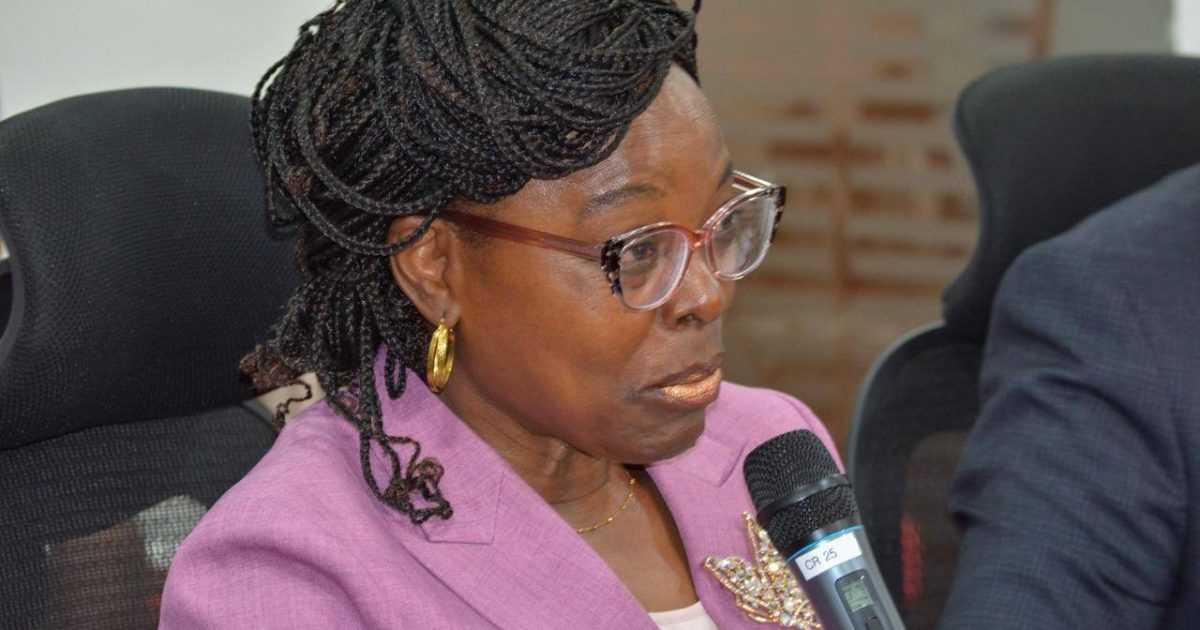
Kenya’s fiscal stability has come under renewed scrutiny after the Controller of Budget (CoB), Dr Margaret Nyakang’o, warned Parliament that the country risks sinking deeper into a debt trap driven by costly borrowing and poor coordination in project implementation.
Appearing before the National Assembly’s Committee on Public Debt and Privatisation, chaired by Mbalambala MP Shurie Abdi Omar, Dr Nyakang’o painted a grim picture of the country’s financial health, describing a “vicious cycle of debt accumulation” that is steadily eroding fiscal space and undermining effective budget execution.
She revealed that Kenya’s public debt had risen to Sh12.29 trillion as of December 2025, equivalent to 67.8 percent of the Gross Domestic Product (GDP) well above the statutory ceiling of 55 percent.
Of greater concern, she noted, is the growing cost of servicing this debt.
“Half of debt payments are only financial costs rather than debt reduction. The principal figure is not reducing, we are just paying interest,” said Dr Nyakang’o, adding that interest payments alone now stand at Sh464.49 billion, accounting for 54 percent of total debt service.
The CoB further warned of what she termed “hazardous borrowing,” where the government takes on new loans to service existing ones.
When pressed by legislators on whether domestic borrowing is being used to repay external obligations, she responded candidly: “Yes. Yes. And yes… we do this all the time.”
Lawmakers were particularly alarmed by revelations that billions of shillings have been lost through commitment fees charges incurred on loans that remain unused due to delayed or unprepared projects. Dr Nyakang’o attributed this to a disconnect between the National Treasury and implementing agencies.
“We find ourselves in a debt trap where we sign for loans when we are not ready. Treasury mobilises funds without ensuring implementers are prepared,” she said, citing cases involving Konza Technopolis and Kenya Power projects, some dating back to 2017.
The heavy debt burden, she added, has triggered a liquidity crunch, forcing the government into cash rationing and leading to delayed payments, including salaries.
“We are seeing a situation where even salaries are paid in bits due to cash flow constraints,” she noted.
Dr Nyakang’o also criticised the use of Article 223 of the Constitution to finance previously rejected expenditures, terming it a “back door” that undermines fiscal discipline.
To restore stability, the CoB recommended a shift toward concessional borrowing, improved debt transparency, and stronger oversight mechanisms. “We must undertake evidence-based analysis before acquiring new debt to ensure it serves the country’s best interests,” she urged.
The committee resolved to launch a separate inquiry into commitment fees, signaling a push to hold accountable those responsible for the mounting losses.
By Joseph Ng’ang’a