In an era of rapid technological advancement, medical practitioners are being urged to adopt emerging technologies such as Artificial Intelligence (AI) ethically and responsibly in diagnosis and patient care.
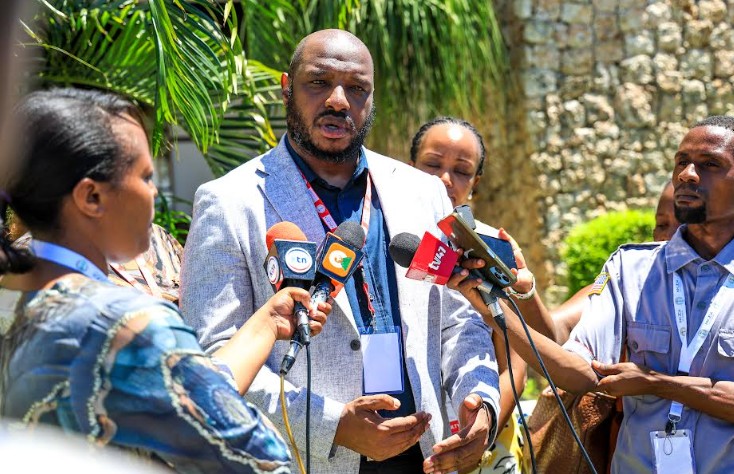
Kenya Association of Physicians (KAP) President, Dr Erick Njenga, said during the association’s annual conference in Mombasa that as health challenges grow increasingly complex and interconnected, physicians must rely on collaboration, innovation, and evidence-based practice to drive meaningful progress.
He described this year’s theme, “Cutting Edge Innovations in the AI Era to Equip the Next Generation of Physicians”, as timely, noting that physicians and healthcare leaders across the continent are uniquely positioned to build partnerships that will shape the future of medicine in Africa.
Dr Njenga acknowledged that while AI presents challenges, the country has established robust regulatory frameworks to guide its adoption in the medical sector through the Kenya Medical Practitioners and Dentists Council.
“There are now laws that have been enacted into how AI is used and governed, especially in the issue of data protection when you’re looking at patient data. AI is being used to collect research data. How do you protect this data? How is it stored? For how long should it be stored? So all these are actually government acts from the ICT Commission,” he stated.
The KAP President affirmed that AI is already widely used by medical practitioners, offering both benefits and limitations.
“You also have to ensure that the information that AI provides is accurate because it’s highly accessible to all our patients. There are also ways in which to ensure that we provide the correct platforms where they can accurately access this information, and it’s a reliable source which can be backed up by clinical evidence,” he explained.
KAP Executive Committee member Dr Irene Njeri echoed these sentiments, noting that most physicians in Kenya are concentrated in Nairobi, leaving some counties underserved. However, she said AI is helping bridge this gap by improving communication.
“AI is enhancing communication among physicians, especially those in remote and underserved areas. It enables better collaboration across distant and far-flung counties,” said Dr Njeri.
She added that physicians are increasingly using AI for diagnosis, patient follow-up, and predicting health outcomes.
“In diagnostics, for instance, radiology technologies allow us to collaborate with specialists both locally and internationally. Our programme focuses on key subspecialties including cardiology, nephrology, gastroenterology, infectious diseases, neurology, and rheumatology,” she explained.
East, Central and Southern Africa College of Physicians (ECSACOP) Coordinator, Dr Olive Kunga said training remains one of KAP’s core mandates. She noted that the conference provides a platform for trainees to engage with senior physicians for mentorship.
“Beyond networking, the conference offers extensive mentorship opportunities in research, current medical practice, and the application of AI in today’s healthcare landscape,” said Dr Kunga.
By Sadik Hassan