The beneficiaries of the National Youth Opportunities Towards Advancement (NYOTA) Fund in Kirinyaga County have reported remarkable progress in their businesses.
They reported increased job creation, improved livelihoods, and increased market opportunities following the first phase of disbursement.
During a mentorship forum with Susan Mang’eni, the Principal Secretary (PS) State Department of Micro, Small, and Medium Enterprises (MSMEs) Development, beneficiaries, alongside their mentors, shared success stories that underscored the transformative potential of the fund at the grassroots level.
Mentor Edward Mugo praised the Kirinyaga cohort for their commitment and prudent use of the funds, describing them as a disciplined and forward-thinking group that has maximized the opportunity to improve their economic standing.
“The Kirinyaga team is among the most promising groups we have worked with. They have shown great responsibility in utilizing the funds, and many of them have already established sustainable startup businesses,” said Mugo.
He noted that beyond personal gains, several beneficiaries have gone a step further to create employment opportunities within their communities. Mugo cited a notable example of a beneficiary who ventured into a milk distribution business and has since employed five people to assist in operations.
According to Mugo, the visible progress made by the beneficiaries is a strong indicator that the second disbursement will yield even greater impact.
“With what has already been achieved using the initial funding, we are confident that the next phase of support will accelerate growth, expand businesses, and create even more jobs,” he added.
One of the beneficiaries, Michelle Moraa, who started a crocheting business, shared how the fund has enabled her access to raw materials and expanded the production capacity.
“The money helped me purchase enough raw materials, and since then I have been able to meet customer demand more effectively. I have even received more orders,” said Moraa.
Moraa revealed plans to establish a physical shop in Kutus town once she receives the second disbursement, noting that the town presents a strategic business location due to the presence of Kirinyaga University, which offers a ready and dynamic market for her products.
“I believe setting up a shop in Kutus will boost my visibility and sales. The university community provides a strong customer base for creative products like mine,” she added.
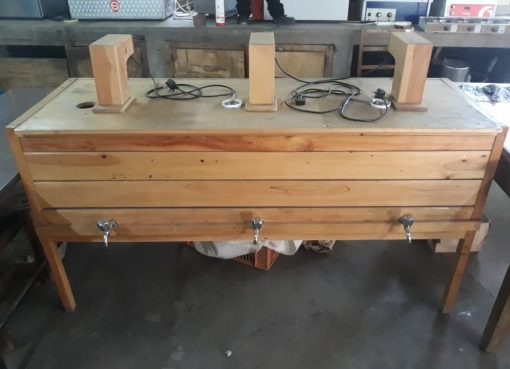
In the carpentry sector, Kelvin Mwangi narrated how collaboration among beneficiaries has enhanced productivity and quality. Mwangi, together with three other youths, pooled their resources from the fund to invest in modern carpentry equipment, enabling them to transition from basic workmanship to professional-grade furniture production.
“By working together, we were able to purchase better tools that we could not afford individually. This has improved the quality of our products significantly,” Mwangi explained.
He further noted that simple value addition strategies, such as proper finishing, painting, and branding, have played a crucial role in attracting more customers and building a strong reputation for their products.
Despite the success stories, some beneficiaries highlighted challenges that continue to hinder business expansion. Brian Macharia, a milk dealer, pointed out that licensing requirements remain a significant barrier for small-scale entrepreneurs in the dairy sector.
Macharia called on both the national government and the Kirinyaga County administration to consider introducing waivers or simplifying licensing procedures to ease the burden on emerging businesses.
On her part, PS Mang’eni expressed strong appreciation for Kirinyaga County, noting that all beneficiaries turned up for the session. She encouraged the continuation of similar training programs within the next six months.
She explained that beneficiaries will undergo a structured three-day training program. This will include two days of classroom sessions addressing key business concepts and identified skills gaps, followed by one day of market exposure, where participants will interact with experienced business people.
The training will take place at constituency centers. To ensure full participation, beneficiaries with young children will be provided with daycare services, allowing them to fully concentrate on the training. She urged all participants to take the sessions seriously.
“Because we will need your attention for at least those three days. It’s a progressive process. Every day that passes by you can learn and continue to grow stronger in business. So when you are called upon again, make sure you come,” she said.
PS Mang’eni also emphasized the importance of obtaining accurate information from verified sources, particularly NGAO, to avoid falling victim to fraudsters. She assured beneficiaries of continued support beyond the six months and after the second disbursement, to help them integrate effectively into the business ecosystem.
She further noted that the Ministry is working on a Memorandum of Understanding and a legal framework aimed at promoting youth entrepreneurship. This framework will include temporary exemptions from certain national and county government requirements during an incubation period.
In a bid to enhance market linkages, the PS revealed that the Ministry is collaborating with organizations such as the Kenya National Chamber of Commerce and Industry and the Kenya Association of Manufacturers. These partnerships will help enroll NYOTA beneficiaries into business networks and improve their access to markets.
By Mutai Kipng’etich