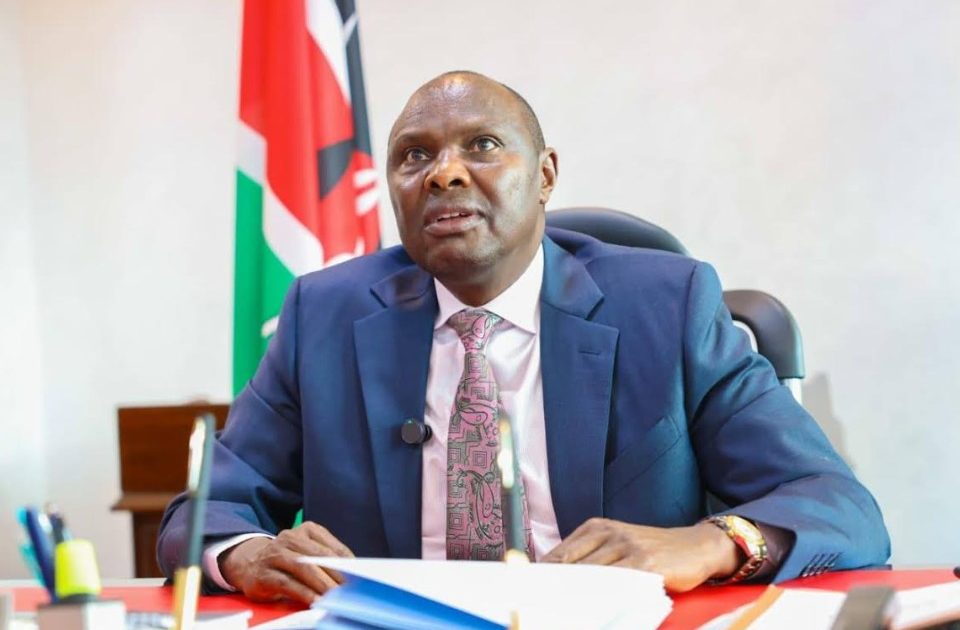
Kenya has reaffirmed its commitment to strengthening environmental governance and advancing climate action following a high-level virtual consultative meeting convened by the Head of Public Service and Chief of Staff, Felix Koskei.
The meeting brought together senior officials from the Ministry of Environment, Climate Change and Forestry, heads of agencies, board chairpersons, technical experts and field officers from across the country.
In his address, the Head of Public Service commended staff for their continued dedication in safeguarding the country’s natural resources, acknowledging that much of their work takes place behind the scenes but remains vital to Kenya’s future.
Further, Koskei noted encouraging progress in ecosystem restoration, forest cover growth and increasing public awareness on environmental conservation and emphasised the importance of building on these gains in line with the government’s priorities under the Bottom-Up Economic Transformation Agenda (BETA).
He similarly observed that the environment, forestry and climate change sectors play an important role in supporting Kenya’s economic transformation, resilience and sustainable development.
The Chief of Staff highlighted the national programme to grow 15 billion trees by 2032, noting that the initiative seeks not only to increase tree cover but also to support ecosystem restoration, protect water towers, conserve biodiversity and create green jobs, particularly for young people.
“While Kenya has surpassed the constitutional requirement of 10 per cent forest cover and now stands at over 12 per cent, there is still more to be done in addressing deforestation, land degradation and climate-related challenges,” stated Koskei, pointing out that a significant portion of the country remains arid and semi-arid, making it vulnerable to climate variability and environmental shocks.
The Head of Public Service also highlighted Kenya’s continued leadership in global climate action, including its commitment to reducing greenhouse gas emissions by 32 per cent by 2030 under its Nationally Determined Contributions.
He, at the same time, emphasised the importance of strengthening coordination, enhancing data systems, supporting effective policy implementation and mobilising climate finance to achieve these goals.
Koskei established that climate change continues to present real challenges, including prolonged droughts, erratic rainfall and occasional flooding, which impact key sectors such as agriculture, water and energy.
He also referenced ongoing initiatives such as the restoration of the Nairobi River, underscoring the value of sustained collaboration, improved waste management and collective responsibility in ensuring their success.
The Chief of Staff encouraged institutions to continue strengthening implementation, enhance coordination and focus on measurable outcomes.
He observed that while significant efforts are being made, there is an opportunity to place greater emphasis on long-term impact, including tree survival rates and sustained ecosystem restoration.
He further stressed the importance of maintaining high standards of professionalism, integrity and accountability in service delivery, noting that citizens value tangible improvements such as access to clean water, reduced pollution and well-protected natural resources.
The Head of Public Service called for continued collaboration across institutions and alignment with national priorities to enhance service delivery.
During the meeting, Principal Secretary (PS) for Environment and Climate Change, Dr. Eng. Festus Ng’eno, reaffirmed the State Department’s commitment to advancing Kenya’s climate and environmental agenda.
The PS outlined key priorities under Executive Order No. 1 of June 2025, including strengthening environmental governance, promoting conservation and restoration of wetlands, mobilising resources for climate action and enhancing research and development in climate and weather services.
“The Department has aligned its policies, programmes and projects with BETA, with a focus on delivering people-centred and sustainable solutions, including efforts to reduce greenhouse gas emissions and promote sustainable waste management value chains,” Dr. Ng’eno disclosed.
He added that the Department’s Strategic Plan (2023–2027), performance contracts and annual work plans are aligned with national and global development frameworks, including Kenya Vision 2030, the Sustainable Development Goals and Africa Agenda 2063.
Dr Ng’eno highlighted progress made in areas such as environmental governance, waste management, wetland restoration and modernisation of meteorological services, noting that these initiatives continue to support livelihoods and create opportunities, particularly for young people.
Nevertheless, he also acknowledged ongoing challenges, including resource constraints, climate-related pressures, human resource gaps and technological limitations.
The Principal Secretary for Forestry, Gitonga Mugambi, emphasized the importance of the 15 billion tree-growing programme, noting that its success will be strengthened through partnerships with communities, the private sector and county governments.
He highlighted the role of commercial forestry in supporting livelihoods, creating jobs and contributing to economic growth through various forestry value chains.
Dr. Ng’eno underscored the importance of continued collaboration and support, noting that environmental and climate challenges require a coordinated, whole-of-government approach.
He reiterated the State Department’s commitment to inclusive, stakeholder-driven solutions in line with the Bottom-Up Economic Transformation Agenda.
The meeting forms part of ongoing efforts to enhance coordination, strengthen public service delivery and advance Kenya’s environmental and climate priorities.
By Michael Omondi