Construction of the Escarpment Belt Irrigation Project in Lari Constituency is progressing smoothly, with key milestones already achieved at the intake site along the Gatamaiyu River in Kinale Forest.
The project, being implemented by the State Department for Irrigation in collaboration with local leadership, aims to address persistent water shortages and boost agricultural productivity in the drought-prone escarpment belt.
The Sh316 million project targets to irrigate approximately 500 acres of land using a gravity-fed piped sprinkler system, drawing water from the Gatamaiyu River.
It is expected to directly benefit over 1,500 residents, while more than 10,000 families across Kijabe, Machani, Mbau-ini, Korio, Kabunge, Escarpment and Gitithia areas stand to gain indirectly.
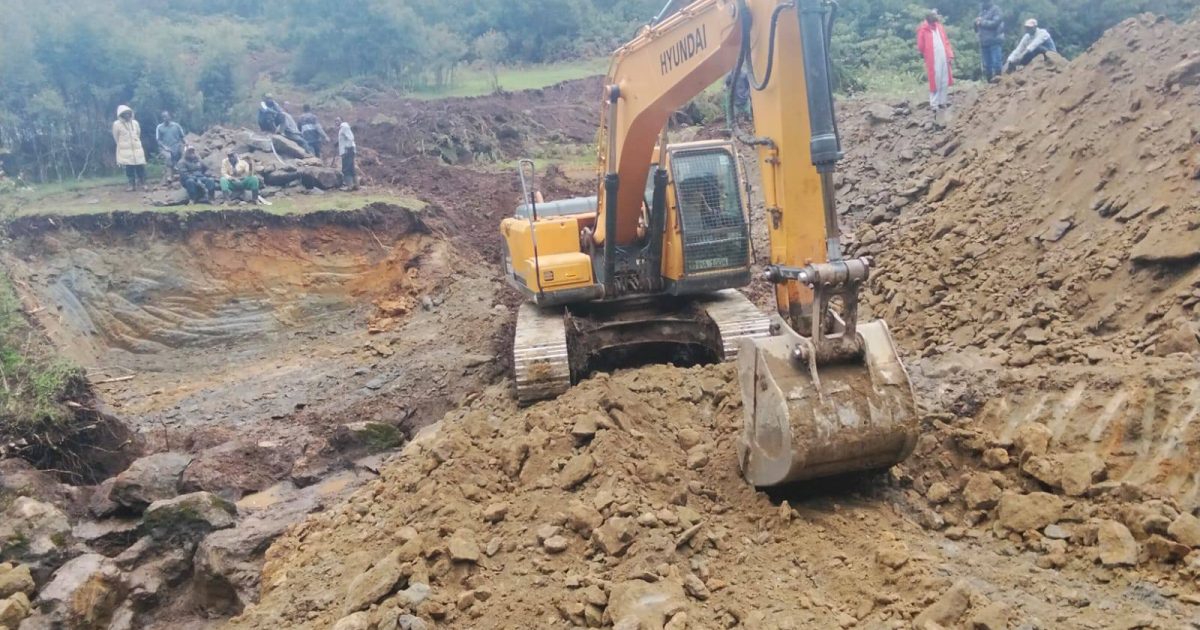
So far, river diversion works at the intake point have been successfully completed. Engineers have since shifted focus to excavation and rock chiseling to prepare the foundation for the construction of a weir and associated head works.
Survey teams are also on site undertaking beaconing exercises to determine the final height of the weir, a critical step that will guide the next phase of construction. Once the survey is complete, contractors are expected to commence the actual construction of the weir, with delivery of materials set to begin shortly.
At the same time, preparations are underway for the installation of a conveyance system, including a 1,450-metre pipeline that will distribute water to farms across the region.
Speaking during previous site inspections, Irrigation Principal Secretary Ephantus Kimotho said the initiative is part of the government’s broader strategy to enhance food security and climate resilience in arid and semi-arid regions.
Lari Member of Parliament Mburu Kahangara noted that the escarpment region has for years grappled with water scarcity, particularly during prolonged dry seasons, affecting both domestic use and farming activities. He said the irrigation project is a sustainable solution that will enable residents to transition from reliance on relief food to consistent crop production.
Residents have welcomed the project, expressing optimism that it will transform agriculture and improve livelihoods. Some noted that the planned pipeline will also enable the formation of water user associations to manage the resource sustainably.
In addition to improving food production, the project is expected to create employment opportunities for local residents, with both skilled and unskilled labor engaged at the construction site.
Heavy machinery has also been deployed to speed up works, particularly in clearing access routes and preparing the intake area.
The intake construction phase is expected to be completed within one month, after which work on the conveyance system will begin. Overall, the project is projected to be completed within one year.
The Escarpment Belt Irrigation Project aligns with Kenya’s Vision 2030 and President William Ruto’s Bottom-Up Economic Transformation Agenda (BETA) by promoting food security, supporting smallholder farmers and enhancing climate resilience through irrigation, while boosting rural livelihoods and economic growth.
By Grace Naishoo