The Centre for Mathematics, Science and Technology Education in Africa (CEMASTEA) has intensified its nationwide teacher capacity-building efforts, positioning itself at the centre of Kenya’s transition to technology-driven education through a structured Artificial Intelligence (AI) training programme for senior school teachers.
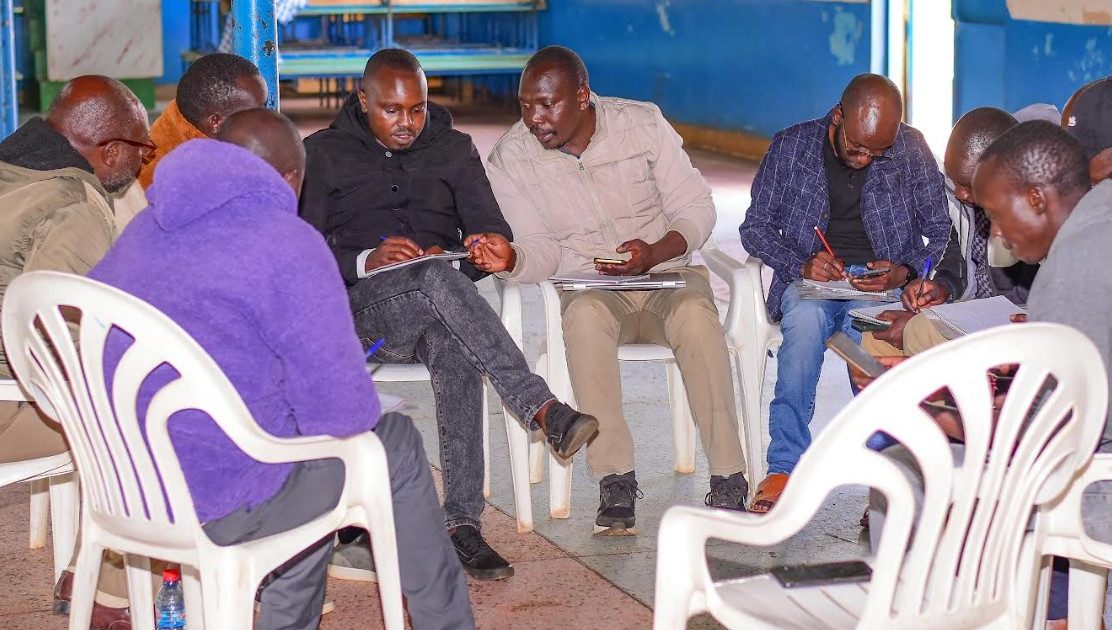
The 2026 ICT training programme, themed ‘Navigating the Transition: AI Literacy for Senior School Teachers’, is currently taking place at Kaptagat Girls High School, bringing together teachers drawn from across Elgeyo Marakwet County.
The programme is designed to strengthen STEM instruction under the Competency-Based Education (CBE) by equipping educators with practical AI knowledge and learner-centred pedagogical approaches.
Speaking during the training, CEMASTEA trainer Joel Rutto said the initiative is informed by findings from a national training needs assessment that revealed gaps in teachers’ preparedness to integrate emerging technologies in teaching.
“We are conducting training on AI for senior school teachers, particularly within the STEM pathway, following an assessment that showed about 40 per cent of teachers were not receptive to new technology,” said Rutto.
He noted that the findings underscored the urgency of upskilling teachers to match the rapidly evolving digital landscape and the growing technological awareness among learners.
“Today’s learners, especially in Grade 10, are highly tech-savvy. If the learner becomes more knowledgeable than the teacher, then a gap emerges. This programme is meant to bridge that gap through targeted capacity building,” he explained.
Rutto emphasized that CEMASTEA’s mandate is anchored on teacher professional development, with the institution focusing on delivering tailored modules that integrate AI into learner-centred education.
“We are concentrating on integrating AI into classroom practice. Our modules are designed to align with the STEM pathway while enhancing practical, hands-on learning experiences for both teachers and students,” he said.
He added that the training is implemented through a cascade model to ensure scalability and sustainability. “Training begins at the national level, cascades to counties, and finally to institutions. Once Heads of Departments are trained, they are expected to train other teachers, creating a multiplier effect across the education system,” Rutto noted.
So far, 142 teachers in the county have been reached, with 71 trained in the current phase and another 71 previously equipped with similar skills.
Despite the progress, Rutto acknowledged that the transition to full AI integration remains a work in progress. “We cannot conclusively say we are fully ready, but we are making significant strides. Currently, we estimate that about 50 to 60 per cent of teachers are ready to integrate AI into teaching,” he said.
He called for a shift in mindset among educators and school leadership to fully realise the benefits of the programme. “The world is changing rapidly, and our approach to teaching must also evolve. For improved performance under CBE, particularly at Grade 10, teachers and institutional leaders must embrace innovation and adapt to new methodologies,” he stated.
While CEMASTEA continues to lead in teacher training, Rutto reiterated that successful implementation requires complementary support in infrastructure and resources from the Ministry of Education.
Teachers attending the training acknowledged the impact of AI and ICT integration in enhancing classroom delivery, while also highlighting existing gaps.
Gloria Maiyo, a teacher from Koitilial Secondary school in Kerio Valley sub-county, said the integration of ICT in teaching will improve lesson delivery and learner engagement. “We are here for integration of ICT in learning. It reduces workload, makes abstract lessons easier to understand, and helps students grasp concepts better,” she said.
Maiyo noted that AI and ICT integration makes work easier for teachers and learning more interesting for students. It does not encourage laziness. When all aspects are considered, it actually makes teachers more competent by bringing more into the lesson.
However, she noted disparities in readiness among schools. “We are not fully prepared, especially in my school where ICT tools are limited. The Government should invest more in infrastructure and resources and expand training on AI and ICT integration in the teaching and learning process,” she urged.
Similarly, Mathew Cheruiyot, a teacher from AIC Chebaibai Senior School, cited infrastructural challenges as a major barrier. “We have a great challenge. Teachers have acquired skills, but there is no infrastructure in schools such as computer laboratories and reliable internet. We urge the Government to improve infrastructure to support effective implementation,” he said.
Rutto concluded that the programme reinforces CEMASTEA’s strategic role as a key driver of education reform in Kenya, as the country accelerates the integration of digital technologies into teaching and learning. By focusing on teacher preparedness through structured and scalable training, the agency is laying the foundation for a more adaptive, innovative, and globally competitive education system.
By Rennish Okong’o