The Archdiocese of Nyeri has commissioned a Sh125 million solar power project that will reduce the reliance of 34 institutions in Mathari on the Kenya Power and Lighting Company by more than 85 per cent.
The project dubbed ‘Seeds of Hope’ has the capacity to produce approximately one megawatt of electricity.
It features a 765.4 Kilowatt-peak solar photovoltaic system and a 783.36 Kilowatt-hour battery storage capacity.
The project which is located at the Consolata Hospital in Mathari will significantly reduce the cost of electricity for the institutions whose current cumulative expenditure stands at an estimated Sh 32 million per year.
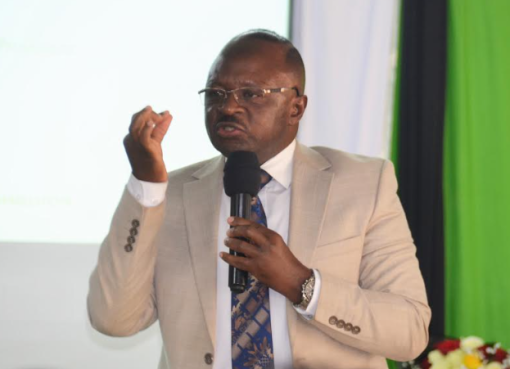
Speaking during the commissioning, the chairman of the technical committee, Engineer Joseph Njoroge said that the initiative was driven by the need to reduce the energy costs while supporting the church’s missionary work.
He said that the project will also boost service delivery across the benefitting institutions which include a medical college, a diagnostic centre, a rehabilitation centre and printing press.
The one time- Energy Principal Secretary noted that the shift to green energy will reduce carbon emissions by nearly 500 tonnes annually, a significant contribution to efforts geared at combating climate change.
“This unique project will contribute to de-carbonization by displacing energy that sometimes has harmful emission. Solar power will be the main source of electricity therefore reducing about 500 tonnes of carbon dioxide. The carbon dioxide that we are displacing is actually equivalent to planting 27,000 trees,” said Eng Njoroge.
His sentiments were echoed by Nyeri Governor, Dr Mutahi Kahiga who hailed the project as a huge milestone in improving energy security in the country.
The governor noted that Kenya is currently grappling with energy shortage, a situation that has forced her to supplement through purchases from Ethiopia and Uganda. Dr Kahiga said that as a result the situation has resulted in high electricity bills and immensely hampers industrialization, something that he said could be remedied by embracing similar clean energy initiatives.
“If we could focus on many such projects, we would in fact reduce our reliance on the National grid by a huge sum. The project which harnesses solar power translates to better healthcare delivery, uninterrupted educational programmes, safer worship places and more sustainable infrastructure for the communities that we serve. It harnesses solar power and will lower the cost of operations for vital facilities, curb overreliance on fossil fuels and improve resilience in the face of climate change,” said the governor.
The project was financed by the Archdiocese of Cologne in Germany with the benefitting institutions being expected to clear the cost by the year 2031.Other partners include Starkmacher Impact and Deutsche Gesellschaft für Internationale Zusammenarbeit (GIZ)Kenya.
Nyeri Diocese Catholic Archbishop, Anthony Muheria described the project as a 360-degree response to climate change.
He revealed that the project will serve as a blueprint for similar initiatives aimed at expanding access to clean and affordable energy across the country.
Archbishop Muheria said that beyond power generation, the project will also support additional innovations including production of medical oxygen for the hospital and green fertilizer which will be used to improve food production.
In her remarks, Director General of the United Nations Office in Nairobi, Zainab Bangura, described the project as a model for sustainable development. She said that in addition to providing clean energy alternatives to the benefitting institutions, the project will also strengthen healthcare and education provision as well as support food systems adding that the money saved from the cost cutting measures will now be channeled to other community investments.
“The project shows that development rooted in values, guided by science and strengthened by partnership can be both transformative and scalable. Let us see the project as a beginning to usher in increased access to electricity and power where its more needed, improved and more resilient food security system, better maternal and child health and greener and more sustainable environment,” she said.
By Wangari Mwangi